
Cinema Lighting Design 2026: Dimming, Blackout & Foyer Guide
Quick answer
Explore our 2026 guide to cinema lighting design. Learn about DALI-2 dimming, blackout requirements, foyer ambience, and EN 12464-1 standards for your next ci
Introduction — the Design Problem in This Space
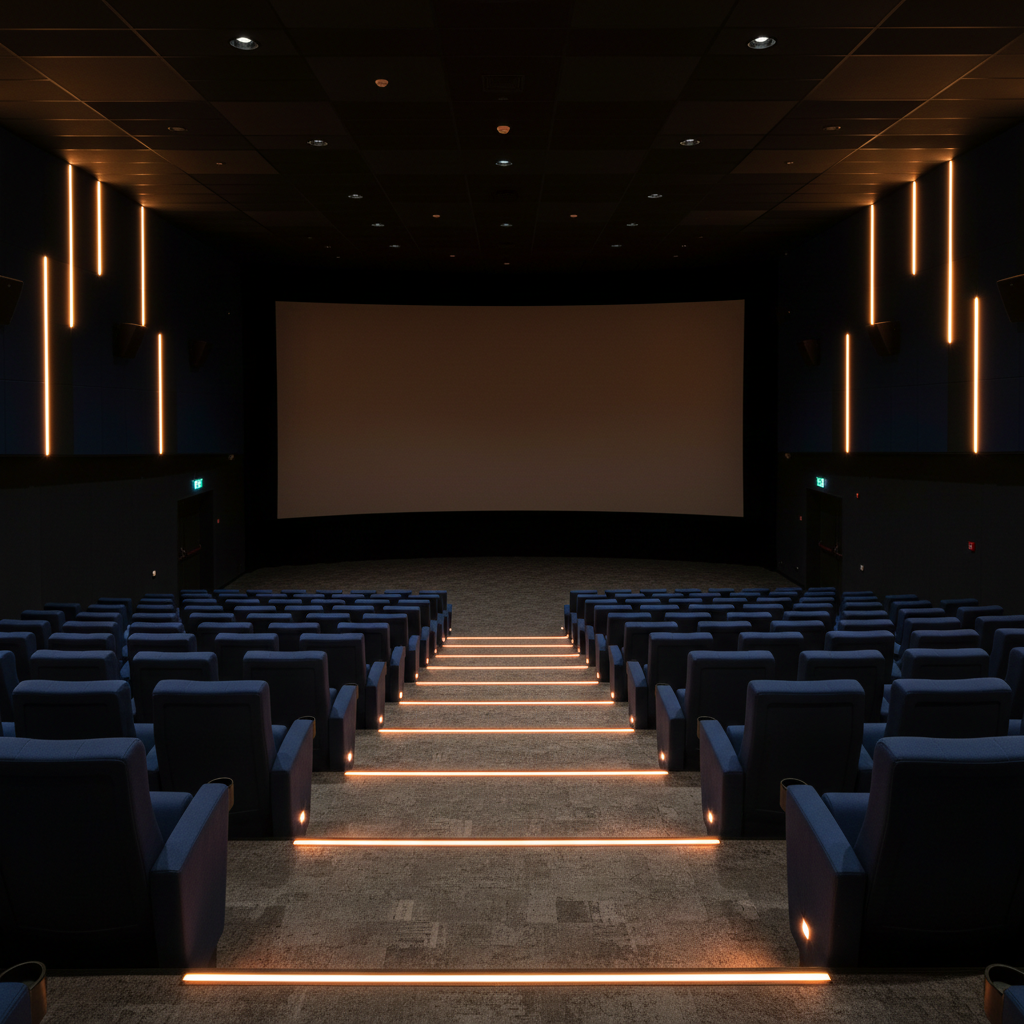
At XHLWX (led-project-light.com), a Custom Indoor LED Lighting Manufacturer based in China, we understand that cinema lighting is a delicate balance of art and science. The core design problem is creating a seamless journey for patrons, transitioning them from the bright, stimulating outside world to the focused, immersive darkness of the auditorium. This requires a multi-layered lighting strategy that ensures safety and comfort in foyers and corridors, creates ambiance during pre-show, and, most critically, achieves a flawless, flicker-free dim-to-black experience that doesn't compromise the film presentation. Every luminaire, from the foyer downlight to the step nosing, plays a role in the theatrical narrative.
Lighting Criteria and Standards for This Application
Effective cinema lighting design must meet stringent performance and safety standards across different zones. The lighting system needs to support various functions, from high-brightness cleaning modes to ultra-low ambient light during entry and exit. European standards like EN 12464-1 provide baseline illuminance (lux) and Unified Glare Rating (UGR) targets for circulation spaces like foyers and corridors, while IES recommendations and WELL v2 provide further guidance on visual comfort and quality. Deep dimming capability, high color fidelity (CRI/TM-30), and robust controls are non-negotiable technical requirements.
| Parameter | Recommended Specification | Standard / Best Practice | Notes |
|---|---|---|---|
| Optics & Color | CCT: 2700K-3000K (Foyer), 2700K (Auditorium); CRI: Ra >90; TM-30: Rf >90, Rg >100 | WELL v2, IES RP | Warm CCT creates a welcoming ambiance. High CRI ensures brand colors and concessions look appealing. |
| Glare Control | UGR < 19 (Foyers, Corridors); UGR < 16 (Auditorium, when on) | EN 12464-1:2021 | Low UGR is critical to prevent visual discomfort, especially as patrons' eyes adapt to low light levels. |
| Control Protocol | DALI-2 (Digital Addressable Lighting Interface) | IEC 62386 | Essential for smooth, flicker-free dimming to 0.1% (dim-to-black), individual luminaire control, and scene setting. |
| Driver/Chip | Tridonic DALI-2 Driver; Samsung / Bridgelux LED Chip | Manufacturer Spec | Premium components ensure long-term reliability, consistent color, and deep dimming performance. |
| Housing & Safety | IP44 (Downlights), IP67 (Step Lights); IK08 | IEC 60529, IEC 62262 | IP rating ensures protection against dust and cleaning fluids. IK rating ensures durability in high-traffic areas. |
| Compliance | CE, RoHS, ErP, ISO9001:2015 | EU/International Directives | Mandatory for market access in Europe and demonstrates quality manufacturing processes. |
Luminaire Selection and Optics
Choosing the right luminaires and optical configurations is fundamental to a successful cinema lighting scheme. The goal is to layer light, using different fixture types to perform specific tasks while maintaining a cohesive aesthetic. This involves a mix of general, accent, and safety lighting. For instance, wide-beam, low-glare downlights provide ambient illumination in foyers, while narrow-beam adjustable spotlights accent posters and architectural features. In the auditorium, the focus shifts to indirect sources like cove lights and highly specialized, low-profile step lighting to ensure safety without distracting from the screen.
| Luminaire Type | Application | Key Optical Feature | Verdict |
|---|---|---|---|
| Adjustable Gimbal Downlight | Auditorium Seating Accents, Poster Highlighting | Narrow Beam (15°-24°), Deep Baffle | Excellent. Allows precise aiming to highlight seating blocks or features without spilling light onto the screen area. Deep regression and honeycomb louvers minimize glare. |
| Fixed Low-Glare Downlight | Foyer, Corridors, Restrooms (General) | Wide Beam (38°-60°), UGR < 19 Lens | Good. Provides efficient and comfortable ambient light for circulation spaces. Must be specified with high-quality dimming drivers to integrate into sitewide control scenes. |
| Linear LED Cove Lighting | Auditorium Ceilings, Foyer Features | Asymmetric Distribution | Excellent. Creates a soft, indirect ambient glow that can fill a large space without direct view of the source. Perfect for setting a pre-show mood and providing house lighting. |
| Integrated LED Step Nosing | Auditorium Stairs and Aisles | Low-level, Forward-throw Asymmetric Optic | Essential. The primary safety lighting element. Must provide just enough light on the stair tread (~20 lux) to be visible but be completely shielded from the audience's view to avoid distraction. |
How Do You Achieve Perfect Blackout Dimming?
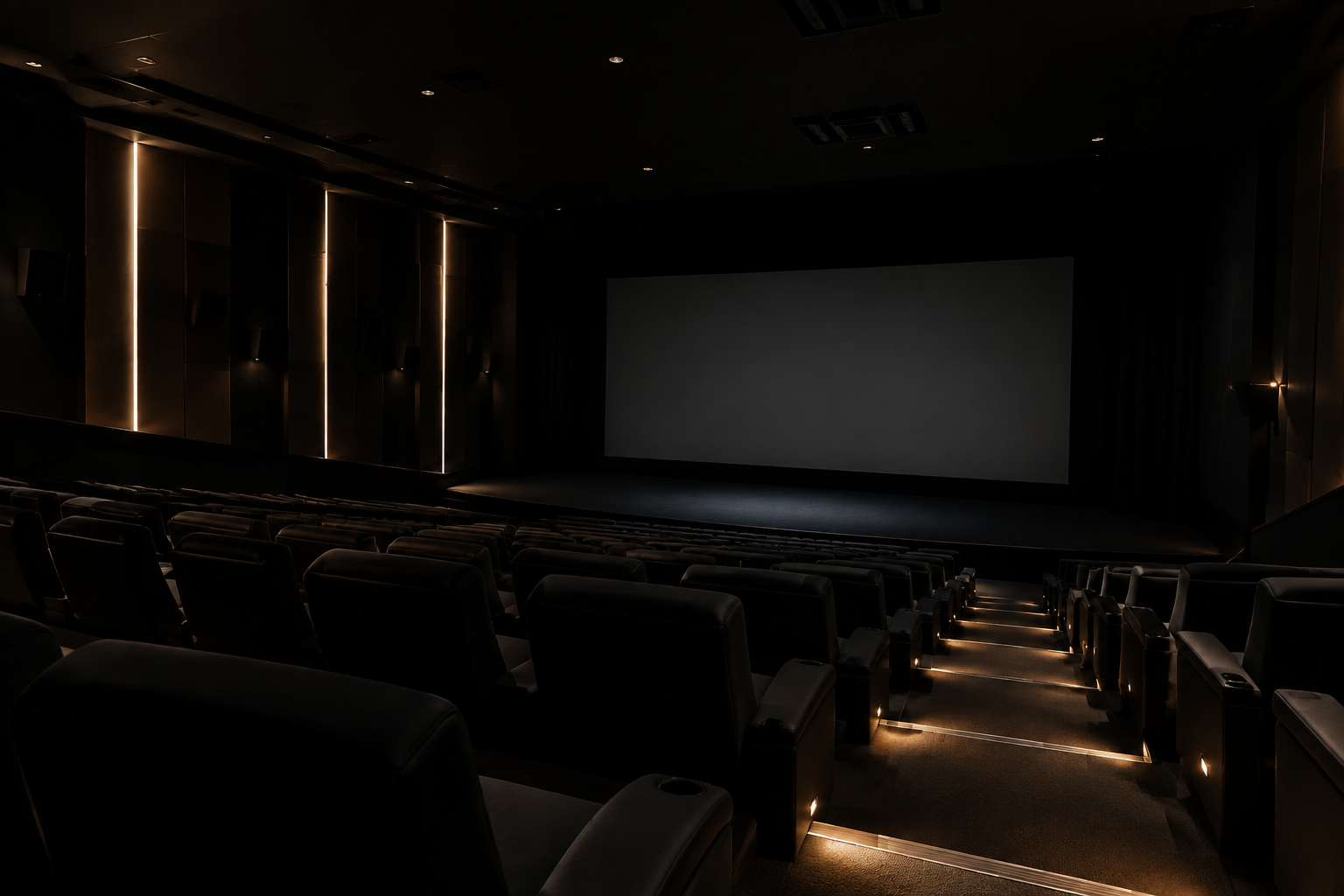
Perfect blackout dimming requires a synergetic relationship between the LED luminaire and its driver. The key is specifying a system capable of deep dimming, which means smoothly reducing output to 0.1% or even 0.01% of its maximum brightness without any perceptible flicker or stepping. This is a primary feature of the DALI-2 control protocol when paired with premium drivers, such as those from Tridonic. Unlike standard 0-10V systems which often bottom out at 1% or 10%, DALI-2 provides a logarithmic dimming curve that better matches the human eye's perception, ensuring a seamless and truly theatrical fade-to-black.
What Makes LED Step Lighting Safe and Effective?
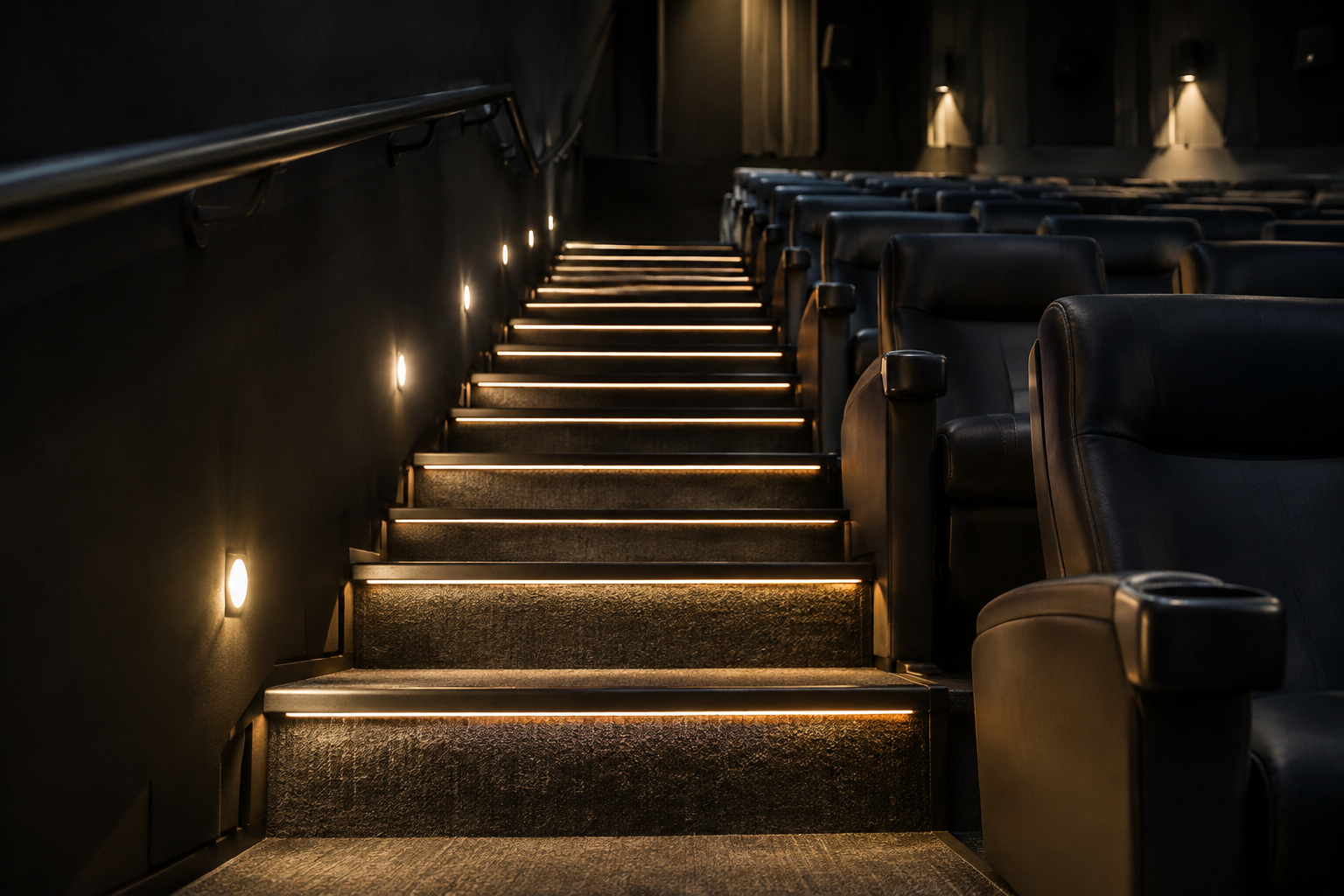
Effective LED step lighting prioritizes safety through visibility and durability without creating a visual distraction. The optical design is paramount; luminaires should cast light forward and downward onto the tread and riser, but have a sharp cutoff to prevent any light from traveling upwards toward the audience's eyes. Durability is addressed with a robust housing, typically extruded and anodized aluminum, and high IP/IK ratings (e.g., IP67, IK08) to withstand foot traffic, cleaning chemicals, and impacts. A recommended specification is to achieve 15-25 lux on the horizontal tread surface, ensuring patrons can navigate stairs confidently in a dimly lit environment.
How Does Foyer Lighting Influence Guest Experience?
Foyer lighting is the critical first impression and acts as a psychological transition zone. It sets the tone for the entire cinema experience, guiding patrons from a bright exterior to the dark auditorium. A successful design uses layers of light: low-glare ambient lighting from downlights (e.g., 150 lux) provides general circulation, while accent lighting with a high CRI (>90) makes movie posters and concession products pop with vibrant color. Using a warm color temperature (2700K-3000K) creates a welcoming, premium atmosphere, differentiating the experience from a typical commercial environment and beginning the process of visual adaptation before entering the theatre.
 Cinema Lighting Design 2026: Dimming, Blackout & Foyer Guide: How do you achieve perfect blackout dimming?
Controls, Energy and Commissioning
A centralized, programmable control system is the brain of a modern cinema lighting installation. DALI-2 is the superior protocol for this application due to its digital, addressable nature. It allows every single luminaire to be controlled individually or in groups, enabling the creation of complex scenes at the touch of a button: 'Welcome,' 'Pre-Show,' 'Intermission,' 'Cleaning,' and 'Emergency.' This addressability also provides valuable feedback on luminaire and driver status for streamlined maintenance. For energy efficiency, occupancy sensors can be integrated in restrooms and corridors to dim or switch off lights when vacant. In foyers with natural light, daylight sensors can automatically adjust electric lighting levels, reducing energy consumption during the day in compliance with local energy codes.
Photometric Files & Compliance
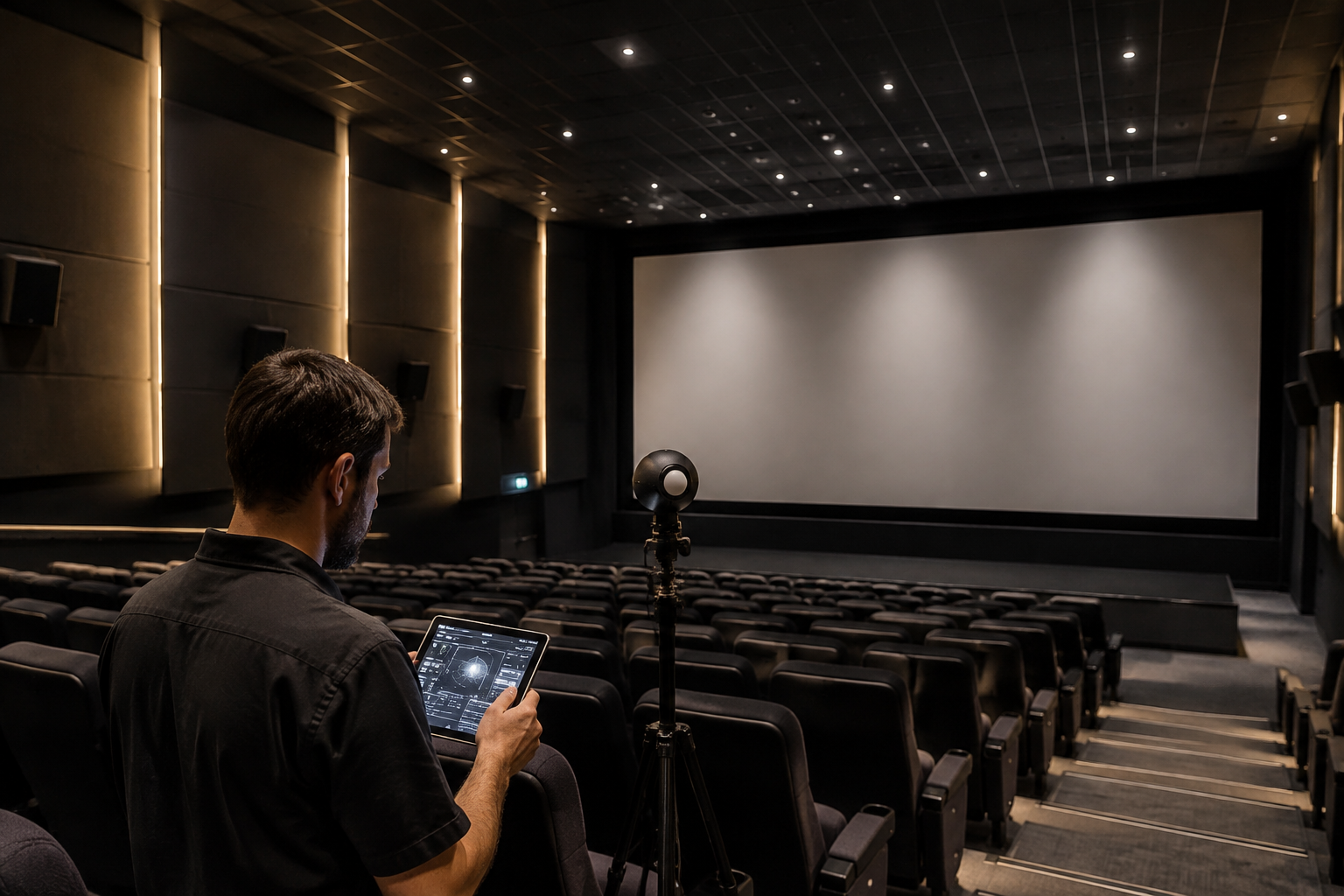
Verifying a lighting design before installation is crucial for guaranteeing performance and avoiding costly rework. At XHLWX, we provide comprehensive photometric data for all our custom luminaires. These are supplied as IES and LDT photometric files, which are industry-standard formats. Lighting designers, architects, and engineers import these files into simulation software like DIALux, AGi32, or Relux. Inside this software, they can build a 3D model of the cinema and accurately predict illuminance levels, uniformity, and glare ratings (UGR). This simulation process provides documented proof that the proposed design meets the required targets set by standards like EN 12464-1 and fulfills the client's aesthetic and functional brief. Furthermore, our products are certified to meet regional requirements, including CE, RoHS, and ErP for the European market, ensuring full compliance.
 Cinema Lighting Design 2026: Dimming, Blackout & Foyer Guide: Photometric files & compliance
Frequently Asked Questions
Q: What Is the Ideal CCT for a Cinema Foyer?
A warm Correlated Color Temperature (CCT), typically between 2700K and 3000K, is recommended. This creates a welcoming, comfortable atmosphere that contrasts with the dark auditorium, enhancing the guest experience. A high Color Rendering Index (CRI) of 90+ ensures that colors on posters and concession items appear vibrant and appealing, which can directly influence sales and brand perception.
Q: How Low Must Auditorium Lights Dim for a Screening?
For a true blackout effect, auditorium lighting must dim to 0.1% or lower, a feature often called "dim-to-dark" or "dim-to-black". This requires high-quality DALI-2 or specialized 0-10V drivers that can smoothly handle the logarithmic transition without any flicker or stepping. This capability ensures the projected film is the sole focus of visual attention, preserving the immersive cinematic experience.
Q: Are There Specific Lux Level Requirements for Cinema Steps?
While overarching standards like EN 12464-1 focus on general circulation areas, best practice for safety dictates that stair treads be clearly illuminated. A common design target is to achieve 15-25 lux directly on the tread surface using dedicated LED step lighting. This ensures patrons can navigate safely during pre-show and exit without causing distracting glare that could impact other audience members.
Q: Can One Lighting System Handle Both Cleaning and Show Lighting?
Yes, a well-designed DALI-2 control system is perfectly suited for this dual function. Different lighting scenes can be pre-programmed and recalled with a single command. For instance, a "Cleaning" scene can bring lights to 100% brightness, providing 200 lux as recommended by EN 12464-1 for workplace cleaning. A "Pre-Show" scene can dim the same fixtures to an ambient 30% for atmosphere.
Sources and Technical References
- EN 12464-1:2021: Light and lighting — Lighting of work places — Part 1: Indoor work places.
- DIN EN 12464-1: The German implementation of the European standard.
- IES RP-28-16: Lighting and the Visual Environment for Senior Living.
- WELL Building Standard v2: Features L03 and L04 regarding Circadian Lighting Design and Glare Control.
- DALI Alliance (DiiA): IEC 62386, the international standard for DALI.
- ISO 9001:2015: Quality management systems.
 Cinema Lighting Design 2026: Dimming, Blackout & Foyer Guide: Q: Are there specific lux level requirements for cinema steps?
Request a Custom Quote
At XHLWX (led-project-light.com), a Custom Indoor LED Lighting Manufacturer based in China, we specialize in developing and producing specification-grade luminaires for complex projects like cinemas. From flicker-free, dim-to-black downlights and wall washers to durable, IP-rated LED step lighting, our engineering team works with you to meet precise optical, control, and architectural requirements. We provide full support with IES files for DIALux planning and ensure compliance with CE, RoHS, and ErP standards for export to the EU, US, and Middle East. Contact us to discuss your project and request a custom quote.
Need a tailored lighting plan for your project?
Our senior lighting designers reply within 48 hours with a free design proposal & quotation.