
Cleanroom Lighting Design 2026: ISO 14644 & IP65 Guide
Quick answer
A guide to designing lighting for ISO 14644 cleanrooms. Learn about IP65 sealed luminaires, EN 12464-1 standards, optics, and DALI-2 controls for pharmaceutic
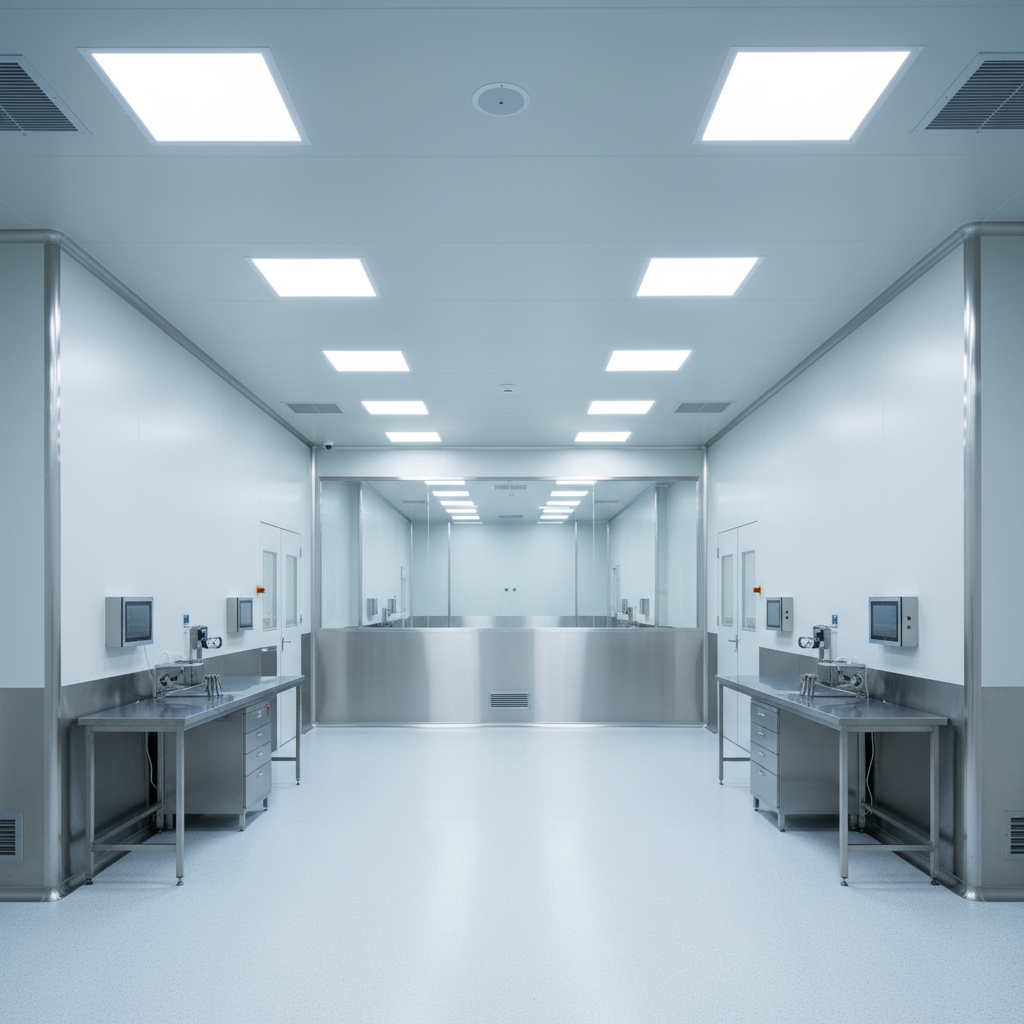
Introduction — the Design Problem in This Space
At XHLWX (led-project-light.com), a Custom Indoor LED Lighting Manufacturer based in China, we understand that designing for controlled environments like pharmaceutical or electronics cleanrooms presents unique challenges far beyond simple illumination. These spaces demand a holistic approach where the lighting system is an integral part of the contamination control strategy, not just an accessory. The primary design problem is balancing stringent requirements for particulate control, chemical resistance, and airflow integrity with the need for exceptional visual performance to ensure safety, accuracy, and compliance with standards like ISO 14644-1.
Unlike standard commercial spaces, every component introduced into a cleanroom, including luminaires, is a potential source of contamination. Fixtures must be fully sealed, constructed from non-shedding, non-outgassing materials, and able to withstand aggressive cleaning and sterilization regimes, such as Vaporized Hydrogen Peroxide (VHP).
Furthermore, their physical design must integrate seamlessly with the cleanroom's ceiling grid and airflow systems—often laminar or non-unidirectional—to prevent turbulence that could distribute contaminants. Achieving this while delivering high-quality, low-glare light required for intricate tasks is the core challenge addressed by specialized cleanroom lighting solutions.
Lighting Criteria and Standards for This Application
Specifying cleanroom lighting requires adherence to both contamination control and photometric performance standards. The luminaire must function as a high-performance lighting instrument and a compliant piece of cleanroom architecture. International standards like EN 12464-1 and IES Recommended Practices provide clear targets for illuminance, glare, and color quality, which are critical for the detailed visual tasks common in pharmaceutical and microelectronics manufacturing. These are not mere suggestions; they are fundamental to ensuring operator productivity, reducing errors, and maintaining a safe working environment. The luminaire's physical construction is equally governed by standards, with IP (Ingress Protection) ratings being a primary indicator of its suitability for sealed environments.
Below is a table outlining the typical recommended specifications for a high-performance recessed cleanroom luminaire designed for an ISO Class 5-8 environment.
| Parameter | Recommended Specification | Standard / Guideline | Notes |
|---|---|---|---|
| Ingress Protection | IP65 (from all sides) | EN 60529 | Essential for sealing against dust, moisture, and cleaning agents from both the room and plenum. |
| Illuminance (Ēm) | 500 - 1000 lux on task area | EN 12464-1 / IES RP-7 | Task-dependent; higher levels (750-1000 lux) needed for fine inspection or micro-assembly. |
| Unified Glare Rating (UGR) | <19 | EN 12464-1 | Critical for visual comfort and reducing errors during sustained, detailed visual tasks. |
| Color Rendering / Fidelity | CRI Ra > 90 / TM-30 Rf > 88 | IES TM-30-20 | Ensures accurate color perception for inspecting materials, chemicals, and electronic components. |
| Control Interface | DALI-2 (IEC 62386) / 0-10V | IEC 62386 | DALI-2 provides addressability, monitoring, and integration with Building Management Systems (BMS). |
| Certifications | CE / RoHS / ErP / ISO9001 | EU Directives / ISO | Mandatory for EU market access (Safety/Hazardous Subs./Energy) and quality manufacturing. |
| LED Chip / Driver | Samsung / Osram / Bridgelux | - | Example high-quality components ensuring reliability, efficacy, and long lifetime (L80B10 > 50,000h). |
| Housing Material | Powder-coated Aluminium, PMMA/Glass Diffuser | ASTM D3359 (adhesion) | Materials must be non-shedding, non-outgassing, and resistant to chemical cleaning agents. |
Luminaire Selection and Optics
Choosing the right luminaire form factor is as critical as specifying its performance. The physical integration of the fixture into the cleanroom ceiling system directly impacts contamination control, airflow patterns, and long-term maintenance. For modern cleanrooms, fully recessed luminaires that create a flush, monolithic ceiling surface are the preferred solution. These designs minimize ledges and surfaces where particles can accumulate and simplify cleaning protocols. The choice between a standard recessed panel and a specialized teardrop or walkable fixture depends on the ceiling type and the required maintenance access—from the room side or the plenum (walkable ceiling) side.
The optic design, typically a diffuser or a lens system, must balance high light transmission efficiency with excellent glare control (UGR < 19). Micro-prismatic diffusers made from high-stability PMMA are a popular choice as they provide smooth, uniform light distribution while effectively shielding the high brightness of the LED sources. This combination ensures visual comfort for technicians performing demanding tasks for extended periods.
| Luminaire Type | Contamination Risk | Airflow Disruption | Maintenance Access | Verdict |
|---|---|---|---|---|
| Recessed IP65 Panel (Teardrop) | Low | Minimal | Room-side or Top | Best Overall: Ideal for both new and retrofit T-grid ceilings. Aerodynamic profile integrates well with laminar flow. |
| Recessed IP65 Panel (Walkable) | Very Low | Minimal | Top-side (Plenum) | Ideal for Walkable Ceilings: Allows all maintenance to occur from the technical space above, eliminating room entry. |
| Gasketed IP65 Troffer | Medium | Moderate | Room-side | A viable retrofit option, but the frame creates a small ledge that requires diligent cleaning. Less ideal for strict laminar flow. |
| Surface Mount IP65 Batten | High | High | Room-side | Not Recommended for ISO 7 or cleaner: The body protrudes significantly, disrupting airflow and creating multiple particle traps. |
How Does Luminaire Design Impact Cleanroom Airflow and Pressure?
A luminaire's physical shape profoundly affects the cleanroom's critical airflow and pressure differential. Aerodynamically optimized designs, like teardrop-shaped or fully flush-recessed fixtures, are essential for preserving the laminar or unidirectional airflow that sweeps particles away from critical zones. A bulky or surface-mounted fixture creates turbulence, causing airborne particles to swirl and settle on surfaces rather than being efficiently removed by the HVAC system. Furthermore, an improperly sealed luminaire (e.g., not IP65 from all sides) can create a leak path, compromising the carefully maintained positive or negative air pressure between the cleanroom and adjacent spaces, which is a primary barrier against contaminant infiltration.
What Materials Are Suitable for Cleanroom Luminaire Construction?
Materials for cleanroom luminaires must be non-shedding, non-outgassing, and resistant to chemical sterilization. The housing is typically made from high-grade 6063 extruded aluminum, chosen for its strength and thermal dissipation properties, and finished with a durable, non-porous powder coat that passes cross-hatch adhesion tests to ensure it won't flake. For the optical cover, UV-stabilized PMMA (acrylic) is a common choice for its resistance to yellowing and excellent light transmission. In applications requiring extreme chemical resistance or impact strength, tempered glass or polycarbonate (PC) may be specified, though PC requires a UV-resistant coating. Gaskets must be closed-cell, non-porous materials like silicone or EPDM to ensure a perfect, long-lasting seal.
Why Is a UGR < 19 Important for Electronics and Pharma Labs?
A Unified Glare Rating (UGR) below 19 is crucial for reducing eye strain and preventing errors in demanding work environments. In pharmaceutical labs, technicians perform critical tasks like inspecting vials for minute particulates or reading precision instrumentation, where reflected glare can obscure details. Similarly, in electronics manufacturing, soldering micro-components or inspecting circuit boards requires sustained visual focus. According to EN 12464-1, a UGR of 19 is the recommended limit for such demanding tasks. Exceeding this value leads to discomfort, visual fatigue, and a significantly higher probability of costly or dangerous mistakes.
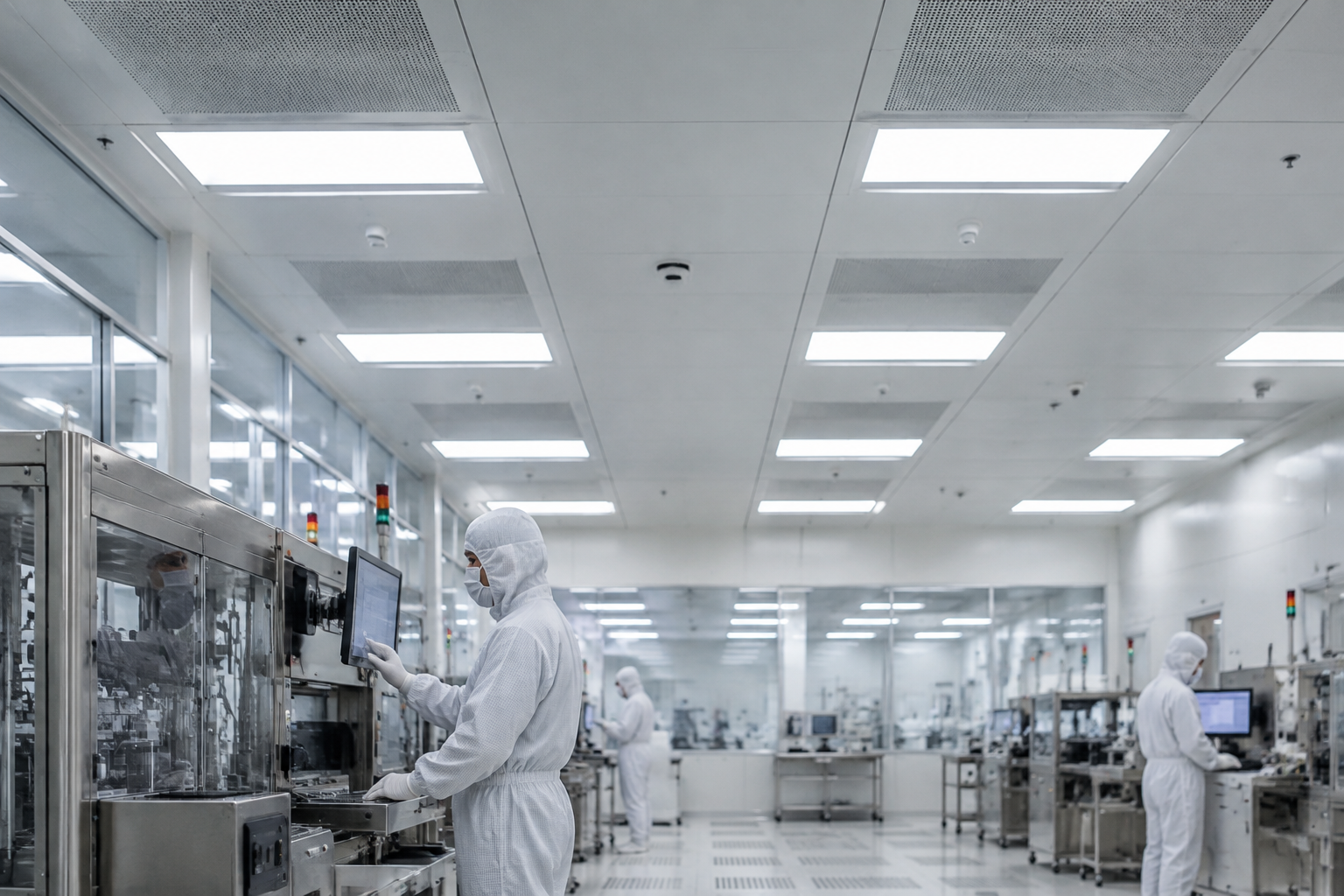 Cleanroom Lighting Design 2026: ISO 14644 & IP65 Guide: How does luminaire design impact cleanroom airflow and pressure?
Controls, Energy and Commissioning (DALI-2 / Casambi / Sensors)
Intelligent lighting controls are essential for optimizing energy use and operational flexibility in modern cleanrooms. DALI-2 (Digital Addressable Lighting Interface) is the preeminent wired control protocol, offering granular, addressable control over each individual luminaire. This allows for precise scene setting, daylight harvesting in perimeter zones, and scheduling based on operational hours. Crucially, DALI-2 provides luminaire-level diagnostics, enabling proactive maintenance by reporting driver failures or lamp outages to the central Building Management System (BMS). For facilities requiring circadian lighting strategies as outlined in the WELL v2 standard, DALI-2 DT8 enables tunable white control, allowing CCT to be adjusted throughout the day.
In retrofit scenarios or areas where running new control wiring is impractical, wireless mesh systems like Casambi offer a robust and flexible alternative. Commissioning is a vital final step, where a qualified technician programs the system to meet the specific design intent—setting light levels, group behaviors, and sensor parameters to ensure both compliance and energy efficiency. Integrating cleanroom-rated occupancy sensors in ancillary areas like gowning and de-gowning rooms can yield significant energy savings by ensuring lights are only active when the space is in use.
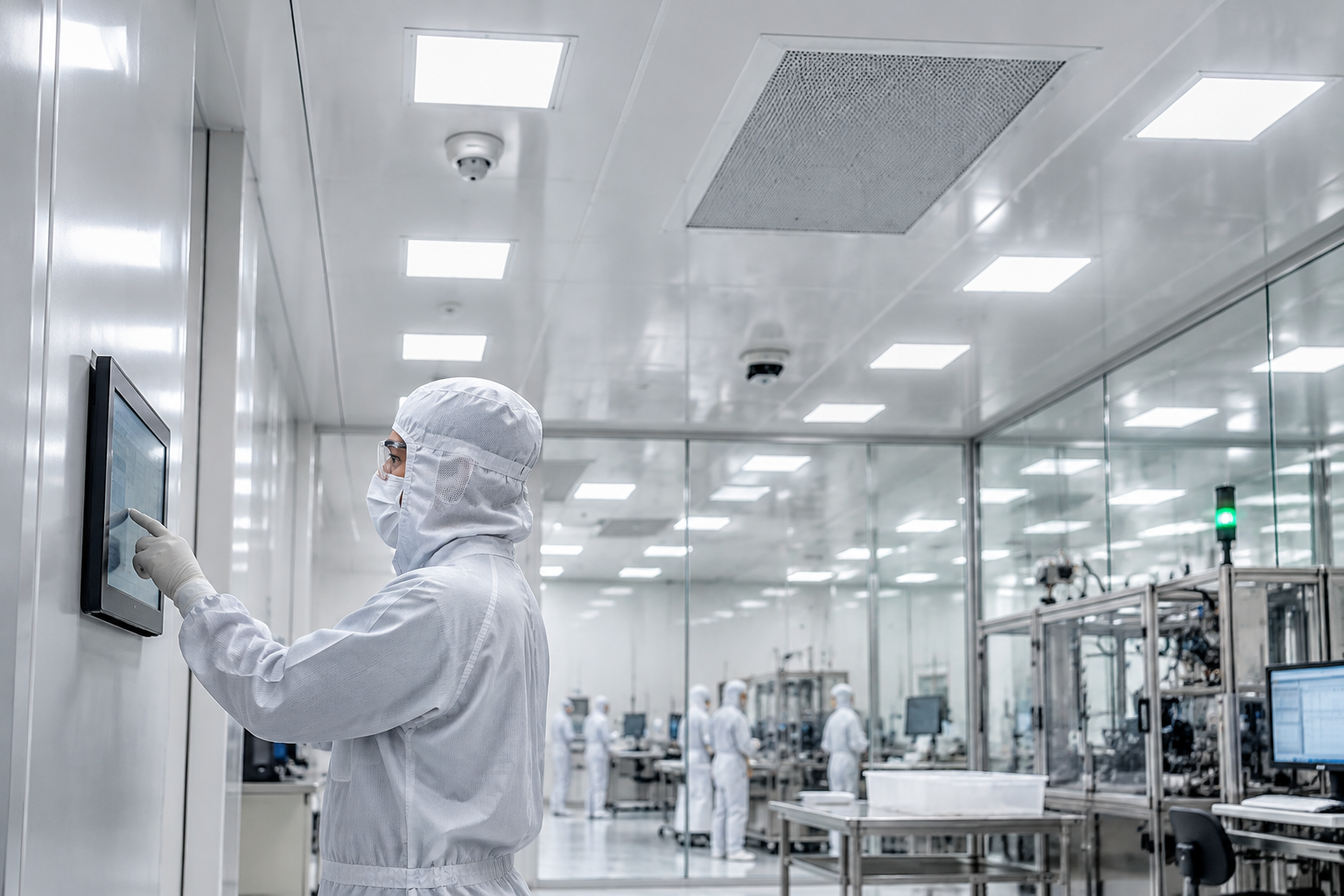 Cleanroom Lighting Design 2026: ISO 14644 & IP65 Guide: Controls, energy and commissioning (DALI-2 / Casambi / sensors)
Photometric Files & Compliance (DIALux / IES / LDT / CE / RoHS / ErP)
A compliant lighting design is a validated lighting design, verified through rigorous simulation before installation. We provide comprehensive IES and LDT photometric files for all our luminaires, which serve as a digital blueprint of their light output characteristics. Lighting designers and engineers import these files into simulation software like DIALux to create a precise 3D model of the cleanroom. This simulation accurately predicts key metrics—average illuminance (lux), uniformity (U₀), and Unified Glare Rating (UGR)—across all work surfaces. This process ensures the proposed design will meet the strict targets of EN 12464-1 or IES RP standards, eliminating costly guesswork and rework.
Beyond photometric performance, compliance with market regulations is non-negotiable., EN 60598).
The RoHS directive restricts the use of specific hazardous materials in electronic equipment, while the ErP directive sets minimum energy efficiency requirements. At XHLWX, our manufacturing processes are ISO9001 certified, guaranteeing a foundation of quality and consistency for every luminaire we produce.
Frequently Asked Questions
Q: What Is the Difference Between IP65 from Below and IP65 from All Sides?
IP65 rating from below protects a luminaire against dust and water jets only from the room side. A true cleanroom luminaire must be rated IP65 from all sides, meaning it is also sealed from the ceiling plenum above. This prevents particle exchange between the plenum and the cleanroom, which is critical for maintaining the integrity of ISO 14644-1 cleanliness classes like ISO 5 or ISO 7 and ensuring stable room pressurization.
Q: Can We Use Standard Office LED Panels in an ISO 8 Cleanroom?
It is strongly advised against. Standard office panels, typically rated IP20 or IP40, have gaps and crevices that trap contaminants and cannot be properly sterilized. They also fail to seal the ceiling grid, compromising room pressure. For long-term compliance and operational safety, a purpose-built, IP65-rated sealed luminaire is the recommended specification, even for less stringent classes like ISO 8, to withstand cleaning protocols and prevent contamination.
Q: What CCT Is Best for a Pharmaceutical Cleanroom?
A Correlated Color Temperature (CCT) of 4000K is a widely accepted industry standard, providing a neutral white light that enhances visual acuity without appearing too harsh or sterile. For tasks requiring extreme alertness, 5000K may be preferred. In facilities following circadian principles under the WELL v2 standard, a tunable white system (e.g., 2700K to 6500K) controlled via DALI-2 DT8 allows the light spectrum to be adjusted throughout the day to support occupant well-being.
Q: How Does CRI Affect Quality Control Tasks in Cleanrooms?
A high CRI (Color Rendering Index), with a recommended specification of Ra > 90, ensures that the colors of objects are rendered accurately and naturally. This is absolutely critical for quality control. In pharmaceuticals, it allows for the correct identification of chemical titration endpoints or subtle discolorations in product. In electronics, it enables clear differentiation of color-coded wiring and components, minimizing assembly errors and improving inspection reliability by over 15% in some studies.
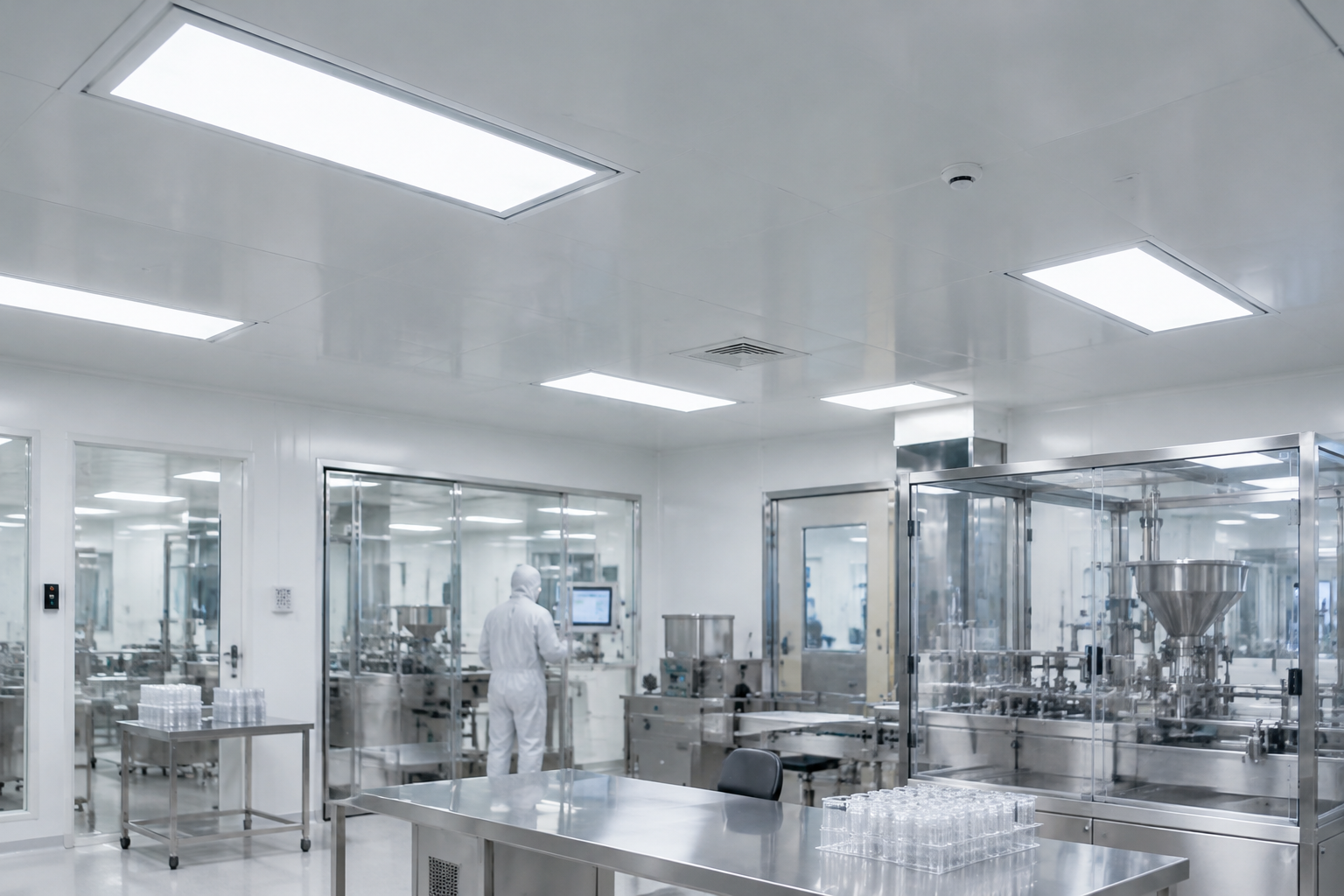 Cleanroom Lighting Design 2026: ISO 14644 & IP65 Guide: Q: What is the difference between IP65 from below and IP65 from all sides?
Sources and Technical References
- ISO 14644-1:2015, Cleanrooms and associated controlled environments — Part 1: Classification of air cleanliness by particle concentration.
- EN 12464-1:2021, Light and lighting — Lighting of work places — Part 1: Indoor work places.
- IES RP-7-17, Recommended Practice: Lighting for Manufacturing Facilities.
- WELL Building Standard v2, Light Concept.
- IEC 62386, Digital addressable lighting interface.
- EN 60529, Degrees of protection provided by enclosures (IP Code).
 Cleanroom Lighting Design 2026: ISO 14644 & IP65 Guide: Q: How does CRI affect quality control tasks in cleanrooms?
Request a Custom Quote
At XHLWX (led-project-light.com), a Custom Indoor LED Lighting Manufacturer based in China, we specialize in developing and producing luminaires that meet the most demanding technical specifications for cleanroom environments across the EU, US, and Middle East. Our engineering team works directly with designers and contractors to deliver solutions that are fully compliant, highly efficient, and tailored to your project's unique requirements. Contact us today to discuss your cleanroom lighting project and request a custom quote or photometric design support.
Need a tailored lighting plan for your project?
Our senior lighting designers reply within 48 hours with a free design proposal & quotation.