
Courthouse Lighting Design 2026: EN 12464 UGR<16 Guide
Quick answer
A comprehensive guide to courthouse lighting design for 2026. Learn how to meet EN 12464-1 UGR<16, select luminaires, and use DALI-2 for judicial and public s
Introduction — the Design Problem in This Space
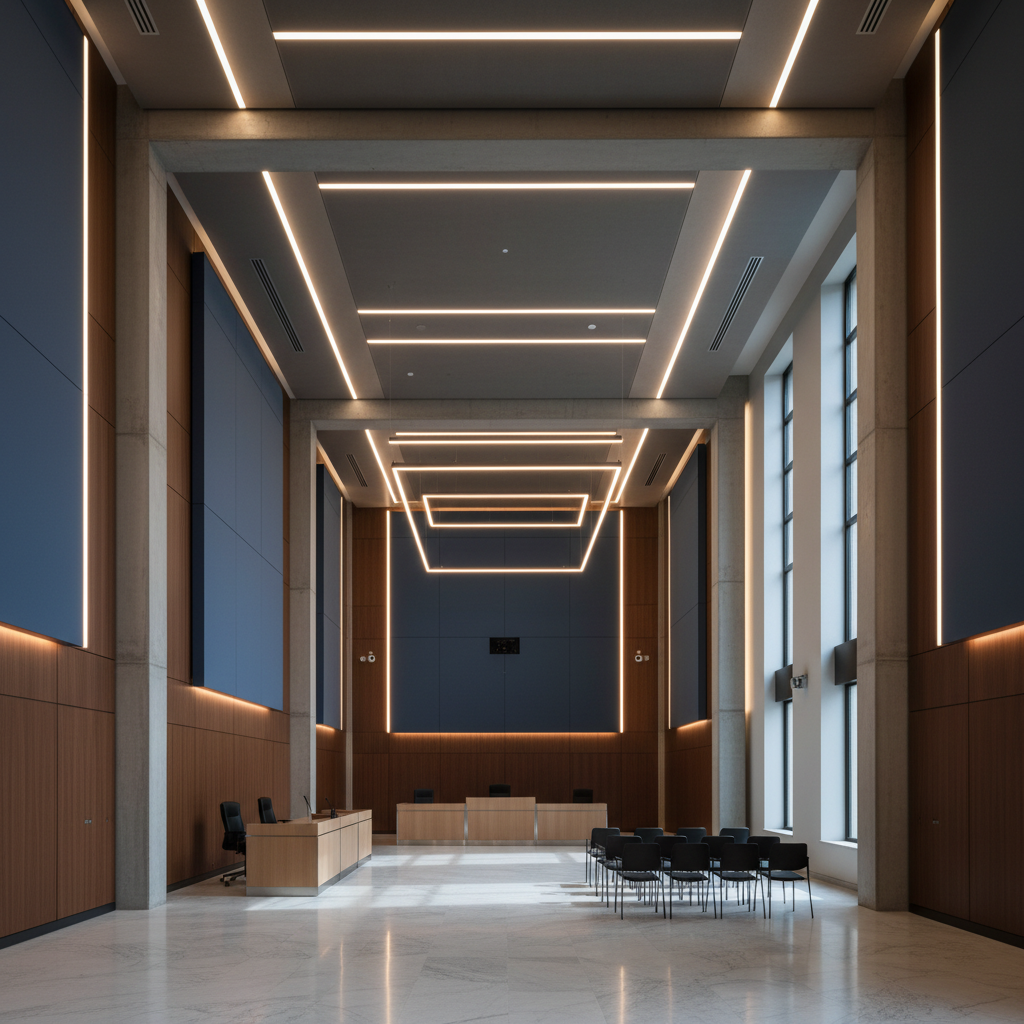
At XHLWX (led-project-light.com), a Custom Indoor LED Lighting Manufacturer based in China, we understand that illuminating a courthouse is a complex challenge of balancing authority, transparency, and human comfort. Effective courthouse lighting must serve multiple, often conflicting, purposes. It must provide exceptional visual acuity for judges, jurors, and attorneys to discern truth from testimony and evidence. It needs to be camera-ready for broadcast and archival purposes without creating glare or harsh shadows. Furthermore, it must create a secure, yet accessible, environment for the public, all while adhering to stringent energy codes and ensuring long-term operational reliability. This requires a nuanced approach that goes beyond simply providing lumens, focusing instead on the quality of light, its control, and its seamless integration into the civic architecture.
Lighting Criteria and Standards for This Application
Meeting stringent international standards is the foundation of successful courthouse lighting. While regional requirements vary, the principles of high-quality illumination are universal, focusing on visual task performance, comfort, and safety. For projects in the European Union, EN 12464-1:2021 (and its national adoptions like DIN EN 12464-1) is the primary standard, dictating specific illuminance levels, uniformity, and, crucially, Unified Glare Rating (UGR) limits. In the United States, IES RP-6-15 (Recommended Practice for Courthouse Lighting) provides detailed guidance. Additionally, forward-thinking designs often incorporate principles from the WELL Building Standard v2 to enhance occupant well-being.
Key areas have distinct requirements:
- Judicial Bench, Witness Stand, and Jury Box: These are the most critical zones. The primary standard, EN 12464-1, calls for 500 lux on the task area.
However, the true challenge is managing glare and ensuring facial legibility. A UGR of <16 is a recommended design target for these seated positions to prevent visual fatigue during long proceedings.
High vertical illuminance is also paramount for clear visibility of expressions.
-
Courtroom (General Areas & Attorney Tables): These spaces typically require 500 lux on the horizontal plane (the 'task area' on desks) with a UGR of <19, consistent with high-concentration office work.
-
Public Gallery: Lighting here is less demanding, with recommended levels of 200-300 lux to maintain focus on the proceedings while allowing for safe movement and reading.
-
Corridors and Lobbies: Safety and wayfinding are the priorities.
Illuminance targets are typically 100-200 lux, with higher levels at entrances and security checkpoints.
Recommended Specification Table for Courthouse Projects
| Parameter | Recommended Specification | Standard | Notes |
|---|---|---|---|
| Color Temperature (CCT) | 3000K / 4000K (Tunable) | EN 12464-1 | Tunable white (2700K-5000K) is a recommended specification for judicial benches to adapt to different scenarios. |
| Color Rendering | CRI Ra > 90, R9 > 50; TM-30 Rf > 88, Rg > 98 | IES RP-6 / WELL v2 | Essential for accurate perception of evidence, documents, and skin tones for video and direct viewing. |
| Glare Control (UGR) | <16 (Judicial/Jury) / <19 (General) | EN 12464-1 | This is a critical design target achieved through specialized optics, not just the luminaire itself. |
| Control Protocol | DALI-2 D4i | IEC 62386 | Enables scene setting (e.g., 'In Session', 'Recess'), individual control, diagnostics, and energy monitoring. |
| Driver / LED Chipset | Tridonic DALI-2 Driver / Samsung LM281B+ | Manufacturer Spec | A simulation target using high-quality components ensures performance, reliability, and long-term serviceability. |
| Housing Integrity | IK08 minimum, IP20 | EN 60598 | Provides resistance to tampering and impact in public areas while being suitable for dry indoor environments. |
| Core Certifications | CE, RoHS, ErP, ISO9001 | EU/Global Directives | Mandatory for EU market access and demonstrates commitment to safety, environmental standards, and quality management. |
Luminaire Selection and Optics
The right luminaire is a blend of optical performance and architectural integration. In a courthouse, fixtures must deliver light precisely where needed without drawing undue attention or creating visual discomfort. The selection process involves matching the luminaire type—and more importantly, its optical system—to the specific requirements of each space, from the grand courtroom to the quiet judicial chambers.
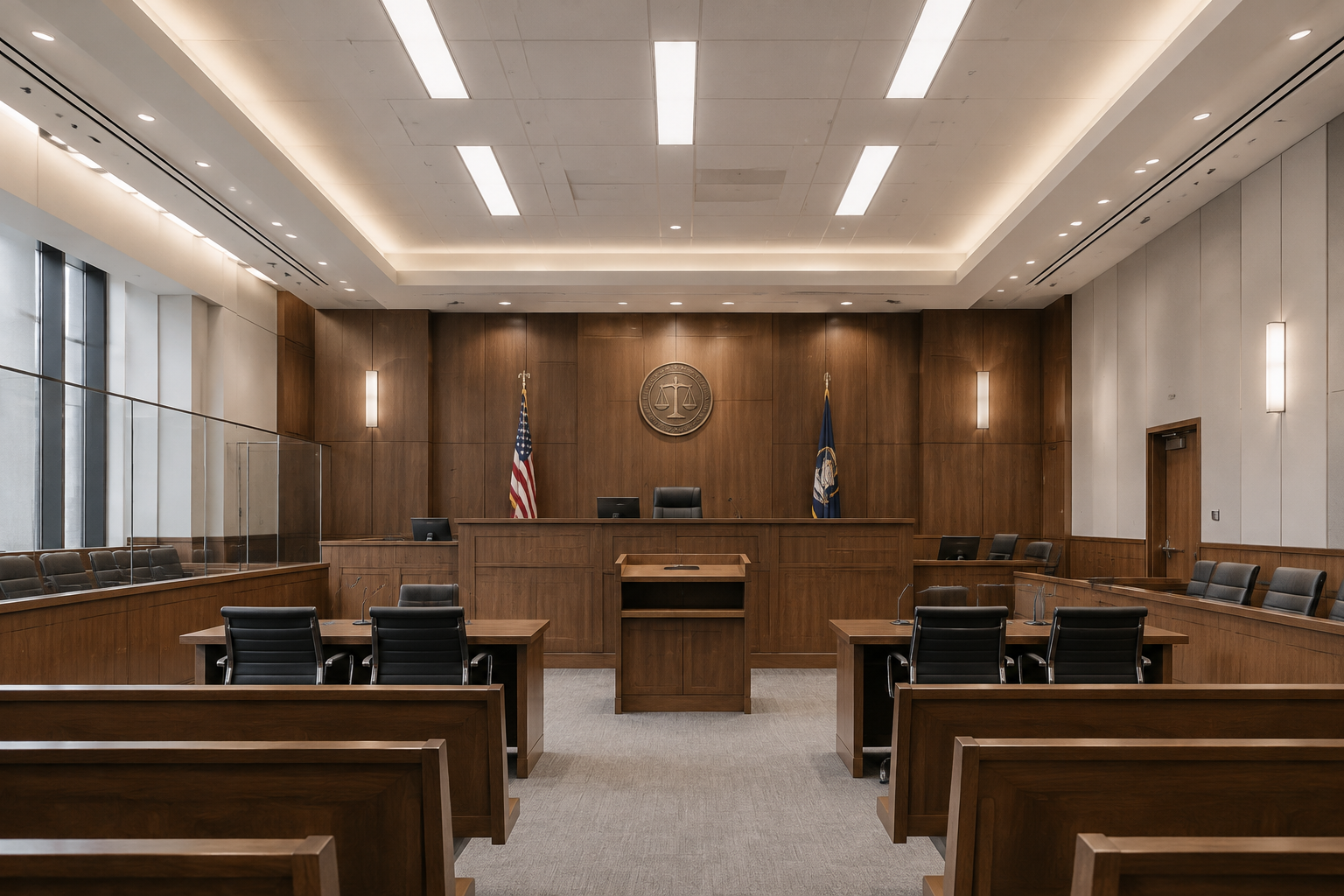
Modern courthouse design often favors clean, integrated aesthetics. This pushes designers toward recessed solutions like linear profiles and downlights.
The key is the optic: a microprismatic lens, a deep-baffle reflector, or a wall-grazer optic can take the same LED source and produce dramatically different results. For courtrooms, a combination approach is often most effective: low-glare linear fixtures for ambient light, supplemented by precisely aimed spotlights or downlights for task emphasis on key participants.
Luminaire Comparison for Courtroom General Lighting
| Fixture Type | Pros | Cons | Verdict |
|---|---|---|---|
| Low-Glare Recessed Downlights (UGR<16) | Excellent glare control; precise beam shaping for highlighting specific areas like the witness stand. | Can create a 'cave effect' if not supplemented with vertical light; requires more fixtures for even ambient coverage. | Excellent for task and accent lighting. Best used in combination with other types for general illumination. |
| Recessed Linear with Microprismatic Lens | Provides uniform, diffuse illumination; clean, modern aesthetic integrates well with ceiling grids and plaster. | Achieving UGR<16 requires careful specification of the optic and luminaire placement; wider distribution can be less efficient. | Best for general ambient lighting in courtrooms, corridors, and administrative offices. The workhorse of modern designs. |
| Asymmetric Wall Washers | Creates high vertical illuminance on walls, improving facial rendering and spatial brightness without adding glare to occupants. | Can highlight surface imperfections; requires careful placement relative to the wall. | Essential for balancing light ratios, eliminating the 'cave effect', and improving visibility for cameras. |
| Cove / Indirect Lighting | Extremely low glare and soft, comfortable light quality; enhances architectural features. | Lower overall efficacy (lumens/watt) due to light reflection; design is highly dependent on ceiling geometry and color. | Superb for supplemental ambient light in high-ceilinged rooms and for creating a sense of gravitas and visual comfort. |
How Can Lighting Balance Security and Aesthetics in a Courthouse?
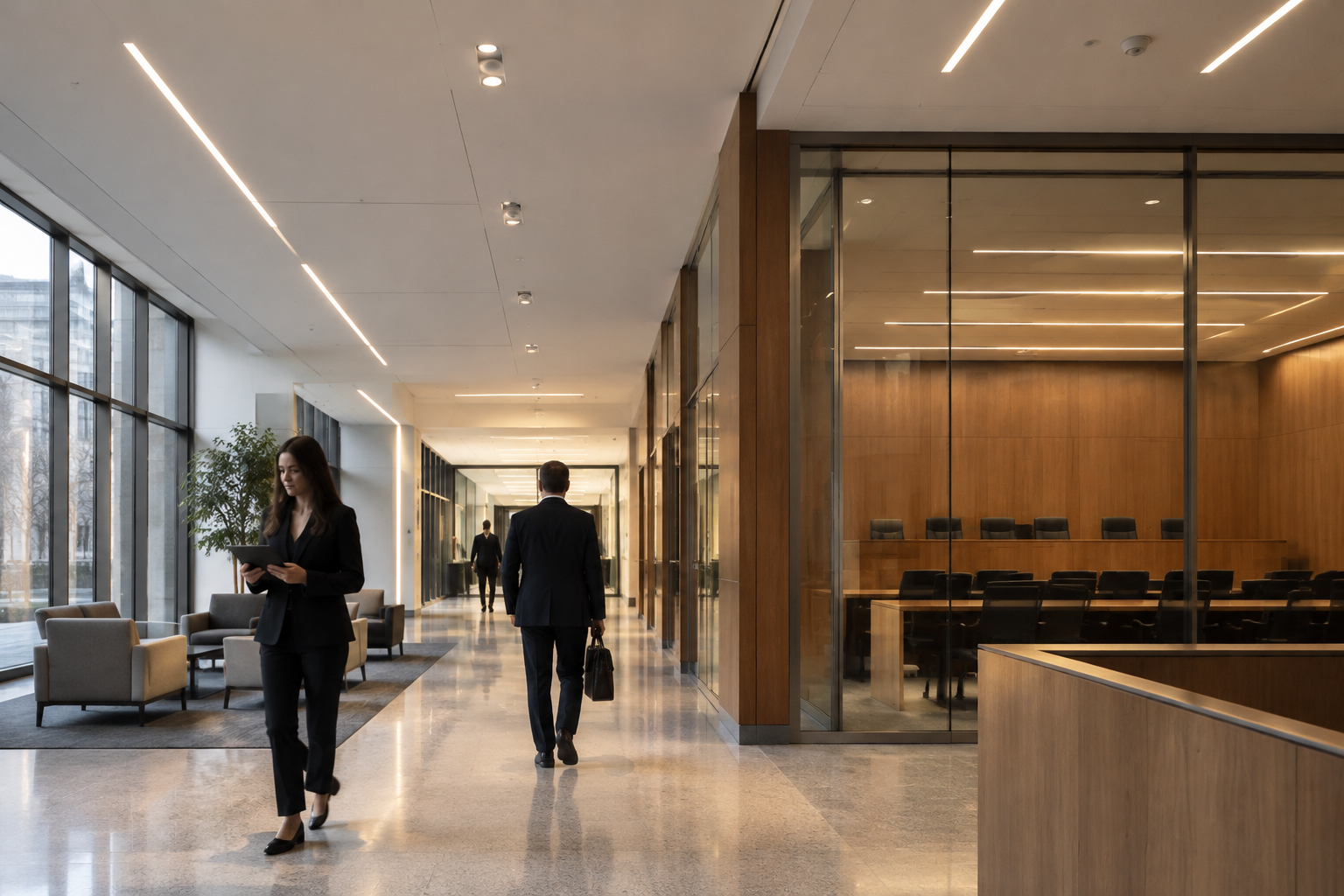
Balancing security and aesthetics requires integrated, tamper-resistant luminaire design. In public-facing areas like corridors, galleries, and waiting halls, security is paramount. This is addressed by specifying luminaires with a high impact resistance rating, such as IK08 or even IK10, ensuring they can withstand accidental or intentional impact. Fixtures should be securely fastened, often with tamper-proof screws. Recessed linear profiles and downlights are inherently more secure than suspended or surface-mounted options, as they present fewer opportunities for tampering. Aesthetically, these secure fixtures can be seamlessly integrated into the architecture, using trimless mounting options or custom lengths to align with architectural lines, proving that a secure fixture does not have to be an ugly one.
What Is the Role of Vertical Illuminance and Facial Rendering?
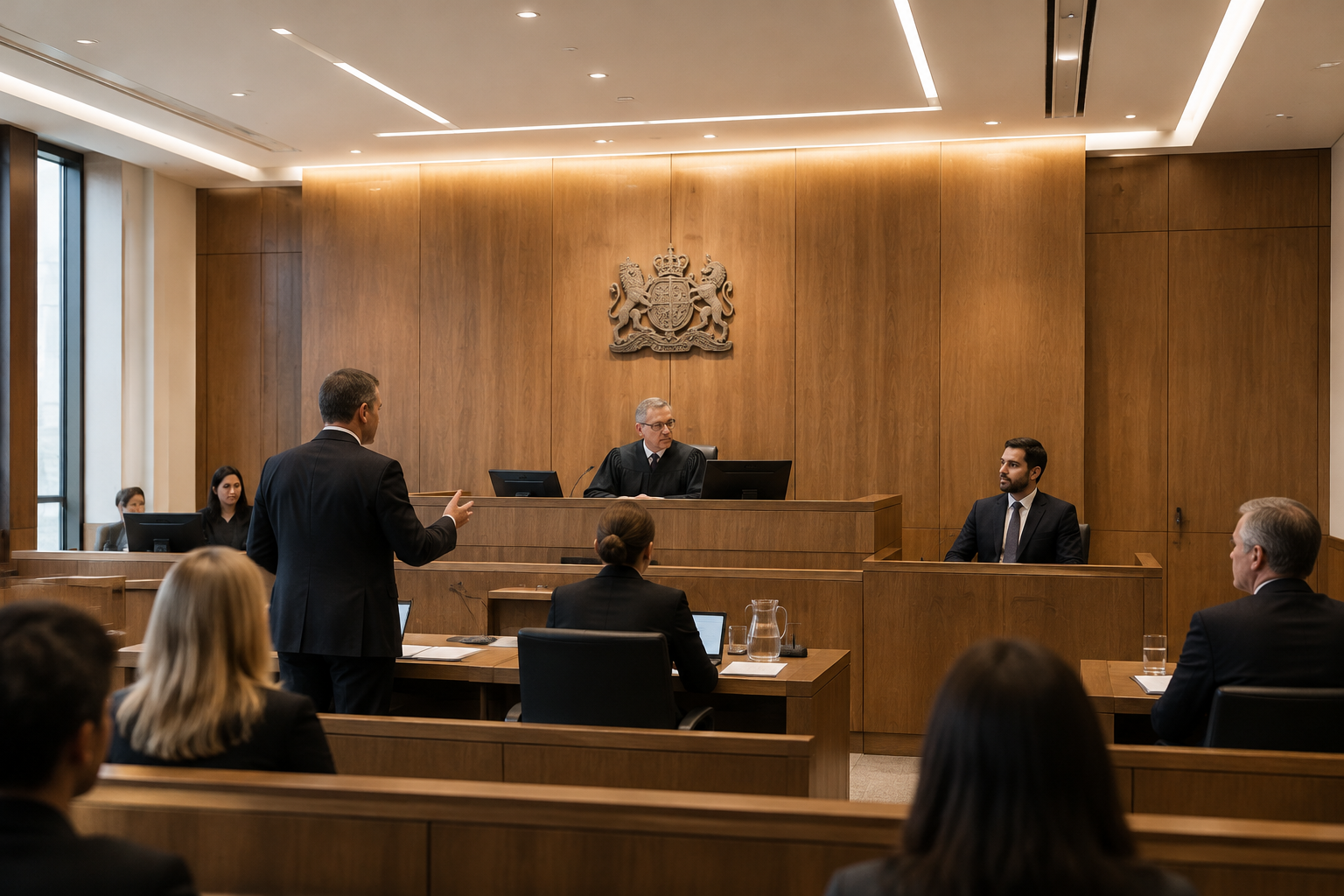
High vertical illuminance is crucial for clear facial recognition and communication. While horizontal illuminance (light falling on a desk) is important for reading, vertical illuminance (light falling on faces) is what allows a judge or juror to perceive nuance in testimony. The goal is to model faces with a gentle balance of light and shadow, avoiding harsh 'top-down' lighting that creates deep eye sockets. This is achieved using a multi-layered lighting approach. Asymmetric wall washers can illuminate the wall behind a speaker to create a bright background, while carefully aimed spotlights with soft-focus lenses add a key light to the face from a 45-degree angle. This technique, combined with high color rendering (CRI Ra>90 and TM-30 fidelity), ensures that skin tones are rendered naturally and expressions are clearly visible, both in person and on camera.
Why Is Tunable White Lighting Beneficial for Judicial Benches?
Tunable white lighting offers dynamic control to adapt to tasks and time of day. The lighting needs of a judge are not static. During a high-stakes, evidence-heavy trial, a cooler, more activating color temperature (e.g., 4000K-4500K) can support alertness and concentration. Conversely, during jury instruction or late-afternoon deliberations, a warmer, calmer CCT (e.g., 3000K-3500K) can create a less stressful environment. A tunable white system, controlled via a simple interface at the bench, empowers the user to tune the light to their personal preference and the specific task at hand. This human-centric approach aligns with the principles of the WELL Building Standard and acknowledges that the quality of light directly impacts cognitive performance and well-being.
 Courthouse Lighting Design 2026: EN 12464 UGR<16 Guide: Luminaire Comparison for Courtroom General Lighting
Controls, Energy and Commissioning (DALI-2 / Casambi / Sensors)
Advanced controls like DALI-2 unlock significant energy savings and scene-setting flexibility. A courthouse is a dynamic environment with predictable usage patterns, making it a perfect candidate for a sophisticated lighting control system. DALI-2 (Digital Addressable Lighting Interface) is the premier choice for new-build courthouse projects. Its addressable nature allows for individual control of every single luminaire, enabling precise zoning and scene setting. Pre-programmed scenes such as 'In Session', 'Recess', 'All Rise', 'Cleaning', and 'Emergency' can be recalled at the touch of a button, ensuring the correct light levels and mood for each situation. DALI-2 systems also integrate seamlessly with presence sensors in corridors and daylight sensors near windows, automating energy savings that can exceed 40% compared to a static system. For retrofits, wireless systems like Casambi can offer similar flexibility without the need for new control wiring. Proper commissioning is the final, critical step to ensure all zones, scenes, and sensor responses function exactly as designed.
Photometric Files & Compliance (IES / LDT / DIALux / CE / RoHS / ErP)
Verified photometric data is essential for accurate lighting simulation and compliance. Professional lighting design is a science that requires predictable results. As a manufacturer, we provide standardized photometric data for all our luminaires in IES (for the North American market) and LDT (for the European market) file formats. These files are the digital DNA of a luminaire, describing exactly how it distributes light. Lighting designers import these files into simulation software like DIALux or AGi32 to build a virtual model of the courthouse. In this model, they can test different luminaire layouts and specifications, generating precise calculations for illuminance, uniformity, and UGR. This simulation process provides documented proof that the proposed design will meet the strict requirements of standards like EN 12464-1 before a single fixture is ordered. This eliminates guesswork and ensures compliance. Furthermore, all products for the EU market must be certified, and we provide full documentation for CE (safety), RoHS (hazardous substances), and ErP (energy efficiency) directives.
 Courthouse Lighting Design 2026: EN 12464 UGR<16 Guide: Controls, energy and commissioning (DALI-2 / Casambi / sensors)
Frequently Asked Questions
Q: What UGR Value Is Required for a Courtroom?
For critical task areas in a courtroom, such as the judicial bench, jury box, and witness stand, a UGR (Unified Glare Rating) of less than 16 is the recommended design target to ensure maximum visual comfort during long sessions. For general office areas and attorney tables, a UGR of less than 19 is acceptable, as specified by the EN 12464-1 standard. Achieving these targets requires careful luminaire selection and placement.
Q: Why Is a CRI of Over 90 so Important in Judicial Settings?
A Color Rendering Index (CRI) of Ra > 90 is critical for the accurate perception of truth and evidence. It ensures that skin tones are rendered naturally, allowing judges and jurors to clearly read facial expressions and assess credibility. It also guarantees that the colors of physical evidence, photographs, and documents are seen without distortion. For advanced applications, we also specify a TM-30-18 fidelity index (Rf) above 88.
Q: What Are the Main Benefits of a DALI-2 Control System in a Courthouse?
A DALI-2 system provides three key benefits: flexibility, energy savings, and diagnostics. It allows for pre-programmed lighting scenes ('In Session', 'Recess') to be recalled with a single button press. By integrating with sensors, it can automate dimming and shut-offs, saving over 40% in energy costs. Finally, its two-way communication enables facility managers to monitor luminaire status and receive alerts for failures, simplifying maintenance.
Q: What Is the Typical Lead Time for Custom Linear LED Profiles for a Project in the EU?
For a custom project involving tailored lengths, specific color temperatures, or mounting solutions, the typical production lead time is between 4 to 6 weeks from final design approval. Sea freight shipping from our manufacturing base in China to a major EU port (e.g., Rotterdam, Hamburg) typically adds another 4-5 weeks. We work closely with project managers to align our production schedule with the overall construction timeline.
Sources and Technical References
- EN 12464-1:2021: Light and lighting - Lighting of work places - Part 1: Indoor work places.
- IES RP-6-15: Recommended Practice for Courthouse Lighting.
- WELL Building Standard v2, Light Concept.
- IEC 62386: Digital Addressable Lighting Interface (DALI).
 Courthouse Lighting Design 2026: EN 12464 UGR<16 Guide: Q: Why is a CRI of over 90 so important in judicial settings?
Request a Custom Quote
At XHLWX (led-project-light.com), a Custom Indoor LED Lighting Manufacturer based in China, we specialize in developing and manufacturing high-performance LED lighting solutions for demanding architectural projects like courthouses. Our expertise in optical design, low-glare technology, and DALI-2 controls allows us to provide luminaires that meet the strictest European and American standards. Contact our solutions team to discuss your project requirements and receive a detailed proposal, including custom luminaire specifications and supporting IES and LDT photometric files for your DIALux simulation.
Need a tailored lighting plan for your project?
Our senior lighting designers reply within 48 hours with a free design proposal & quotation.