
Data Center Lighting Design 2026: IP54 & Motion Sensor Guide
Quick answer
Explore the 2026 guide to data center lighting. Learn best practices for cold aisles and white spaces, covering IP54, motion sensors, EN 12464-1, and DALI-2 c
Introduction — the Design Problem in Data Centers
At XHLWX (led-project-light.com), a Custom Indoor LED Lighting Manufacturer based in China, we recognize that data center illumination is a mission-critical support system, not an afterthought. Historically viewed as a basic utility, modern data center lighting design now focuses on enhancing operational safety, improving technician accuracy during maintenance, and delivering significant energy savings through intelligent controls. The unique environmental conditions of the white space, including high-density server racks, strict temperature and humidity controls, and the potential for dust or moisture ingress, demand a specialized approach. Effective lighting in cold aisles, hot aisles, and maintenance corridors must be reliable, efficient, and precisely controlled to support 24/7 uptime.
Lighting Criteria and Standards for This Application
Data center lighting must meet strict standards for illuminance, uniformity, and glare control to ensure safety and performance. Compliance with internationally recognized standards is not optional; it is fundamental to a successful and safe design. Key standards like Europe's EN 12464-1 and the IES Recommended Practices in North America dictate the minimum quantitative and qualitative requirements. These standards ensure that tasks, from reading labels on server racks to performing complex cabling, can be executed accurately and without visual discomfort. For data centers, this means focusing on vertical illuminance on the rack faces and robust glare management (UGR), while considering factors like color rendering for identifying color-coded cables. Furthermore, the luminaire's physical robustness, defined by IP (Ingress Protection) and IK (Impact Resistance) ratings, is critical for longevity and safety in this controlled environment.
| Parameter | Recommended Specification | Standard / Regulation | Notes |
|---|---|---|---|
| Maintained Illuminance (Ēm) | 200 - 500 lux (on task/vertical) | EN 12464-1 / IES RP-7 | 200 lux for general circulation; 500 lux recommended on vertical rack faces for maintenance tasks. |
| Unified Glare Rating (UGR) | < 22 | EN 12464-1 | Critical for visual comfort in long aisles. Lower values (<19) are for control rooms. |
| Color Rendering Index (CRI) | ≥ 80 Ra (≥ 90 Ra recommended) | EN 12464-1 / WELL v2 | CRI 90+ is preferred for accurate identification of color-coded wiring and component labels. |
| Optics & Beam Control | Asymmetric or Narrow Symmetric (30-60°) | Designer Specification | Focuses light on vertical rack surfaces, minimizing wasted light on the floor and reducing glare. |
| Housing & Protection | IP54 Minimum | IEC 60529 | Protects against dust ingress and water spray from any direction (e.g., from cleaning or HVAC). |
| Control Protocol | DALI-2 with Integrated Motion/PIR | IEC 62386 | Enables addressable control, energy monitoring, and automated on/off/dimming for maximum savings. |
| Chip & Driver Brands | Osram, Samsung, Bridgelux, etc. | Manufacturer Specification | Use of reputable brands like Tridonic or Mean Well for drivers ensures reliability and long life. |
| Certifications | CE, RoHS, ErP | EU Directives | Mandatory for EU market access, ensuring safety, environmental, and energy performance. |
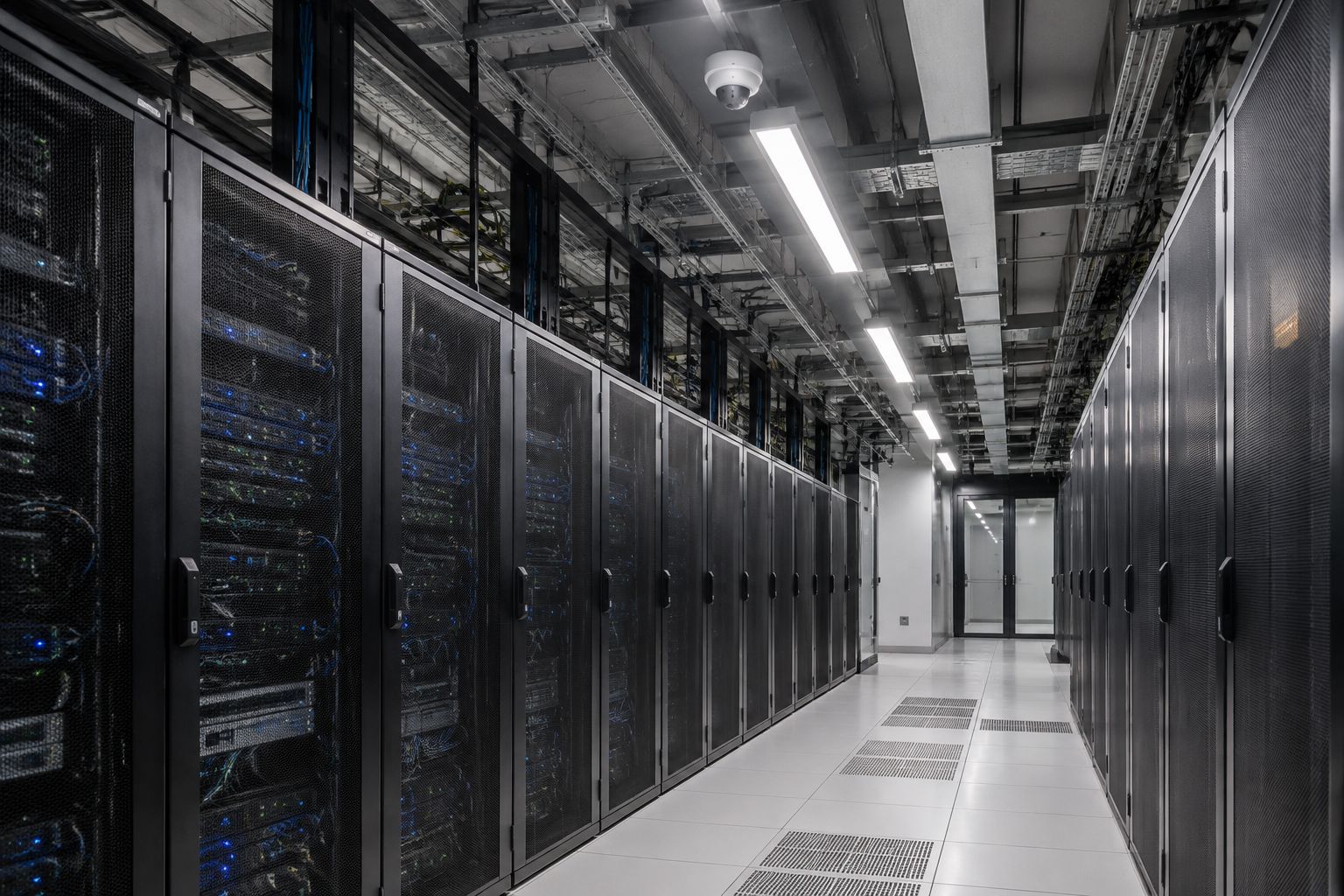 Data Center Lighting Design 2026: IP54 & Motion Sensor Guide: Luminaire Selection and Optics
Luminaire Selection and Optics
Selecting the right luminaire depends on aisle width, ceiling height, and the desired control strategy. For data centers, the choice typically narrows to continuous linear trunking systems or high-performance IP-rated batten luminaires. Linear trunking systems offer seamless, uniform light distribution down long aisles and can integrate power tracks for other services, simplifying installation. IP-rated battens, on the other hand, provide a robust, sealed solution ideal for areas with higher risks of dust or moisture. The optical system is paramount; luminaires must be chosen for their ability to direct light onto the vertical faces of the server racks, which is far more important than illuminating the floor. This is achieved through specialized asymmetric or narrow-beam lenses.
| Feature / Luminaire Type | Linear Trunking System | IP-Rated Batten/Vapor-Proof | Basic LED Panel/Troffer | Verdict for Data Centers |
|---|---|---|---|---|
| Optical Control | Excellent; wide range of lens options (narrow, asymmetric). | Good; typically offers symmetric or wide beams. | Poor; designed for general horizontal light. | Linear Trunking is superior for precisely directing light onto vertical rack faces, maximizing efficiency and task visibility. |
| Installation | Very fast for long, continuous runs. Reduces labor cost. | Moderate; each unit is installed individually. | Moderate; requires T-grid ceiling. | Linear Trunking is fastest and most scalable for typical data center aisle layouts, reducing total project time. |
| IP Rating | Varies; can be IP20-IP54 depending on model. | Excellent; commonly available in IP65/IP66. | Typically IP20 or IP40 (from below). | IP-Rated Battens offer the highest protection, but IP54-rated trunking is often sufficient and more practical. |
| System Integration | Superior; can integrate DALI-2, sensors, and emergency. | Good; can be specified with DALI or sensors. | Basic; limited to simple on/off or 0-10V. | Linear Trunking provides the most integrated solution for power, data, and lighting controls in a single profile. |
Why Is an IP54 Rating Critical for Data Center Luminaires?
An IP54 rating provides essential protection against the specific environmental risks found within a data center. The '5' indicates protection against dust ingress sufficient to prevent interference with the luminaire's operation, a vital feature in an environment with high-velocity airflow that circulates particles. The '4' signifies protection against water splashes from any direction. This guards against potential failures from overhead pre-action sprinkler system testing, accidental activation, or condensation drips from CRAC (Computer Room Air Conditioning) units. Using IP54-rated luminaires mitigates the risk of short circuits and premature failure, safeguarding both the lighting investment and the sensitive IT equipment below.
How Do Motion Sensors Optimize Lighting in Low-traffic Corridors?
Motion sensors provide dramatic energy savings by ensuring light is active only when a space is occupied. Data center white spaces and maintenance corridors often have long periods of inactivity, making them perfect candidates for occupancy-based lighting control. By integrating Passive Infrared (PIR) sensors into a DALI-2 network, lighting can be programmed to a low standby level (e.g., 10%) or completely off. When a technician enters an aisle, the light instantly ramps up to 100% for safe passage and clear visibility. This 'trim-and-respond' strategy can reduce lighting energy consumption by over 80% in low-traffic zones while enhancing security by visually indicating movement.
What Is the Best Beam Angle for Lighting Server Rack Faces?
An asymmetric or a narrow symmetric beam angle (typically 30° to 60°) is best for effectively lighting vertical server racks. A standard wide-beam luminaire wastes a significant portion of its output by illuminating the floor, which is not the primary task area. A narrow symmetric beam, centered in the aisle, directs two fans of light onto the opposing rack faces. An even more specialized asymmetric beam, placed closer to one side, can wash a single row of racks with light from top to bottom. This focus on vertical illuminance ensures that technicians can easily read labels, inspect ports, and manage cabling without needing supplementary task lights, improving both efficiency and safety.
Controls, Energy, and Commissioning (DALI-2 / Casambi / Sensors)
Advanced control systems like DALI-2 are essential for maximizing energy efficiency and providing operational data from the lighting system. DALI-2 (Digital Addressable Lighting Interface) allows for each luminaire or small group of luminaires to be individually addressed, controlled, and monitored. This enables granular control strategies, such as presence detection in individual aisles, and provides feedback on energy consumption and lamp/driver status, simplifying maintenance. The integration of DALI-2 multi-sensors, which combine motion (PIR) and sometimes daylight sensing, creates a fully autonomous system that adapts to the building's use in real-time.
For retrofit projects where running new control cabling is prohibitive, wireless mesh systems like Casambi (Bluetooth Low Energy) offer a powerful alternative. They provide much of the same functionality—zoning, scene setting, sensor integration—without the need for dedicated control wires.
Commissioning is the final, critical step. A qualified technician must program the system to define zones, set dimming levels, configure sensor hold times and sensitivity, and ensure the lighting operates exactly as intended in the design. This process turns a collection of high-performance luminaires into a truly intelligent lighting system.
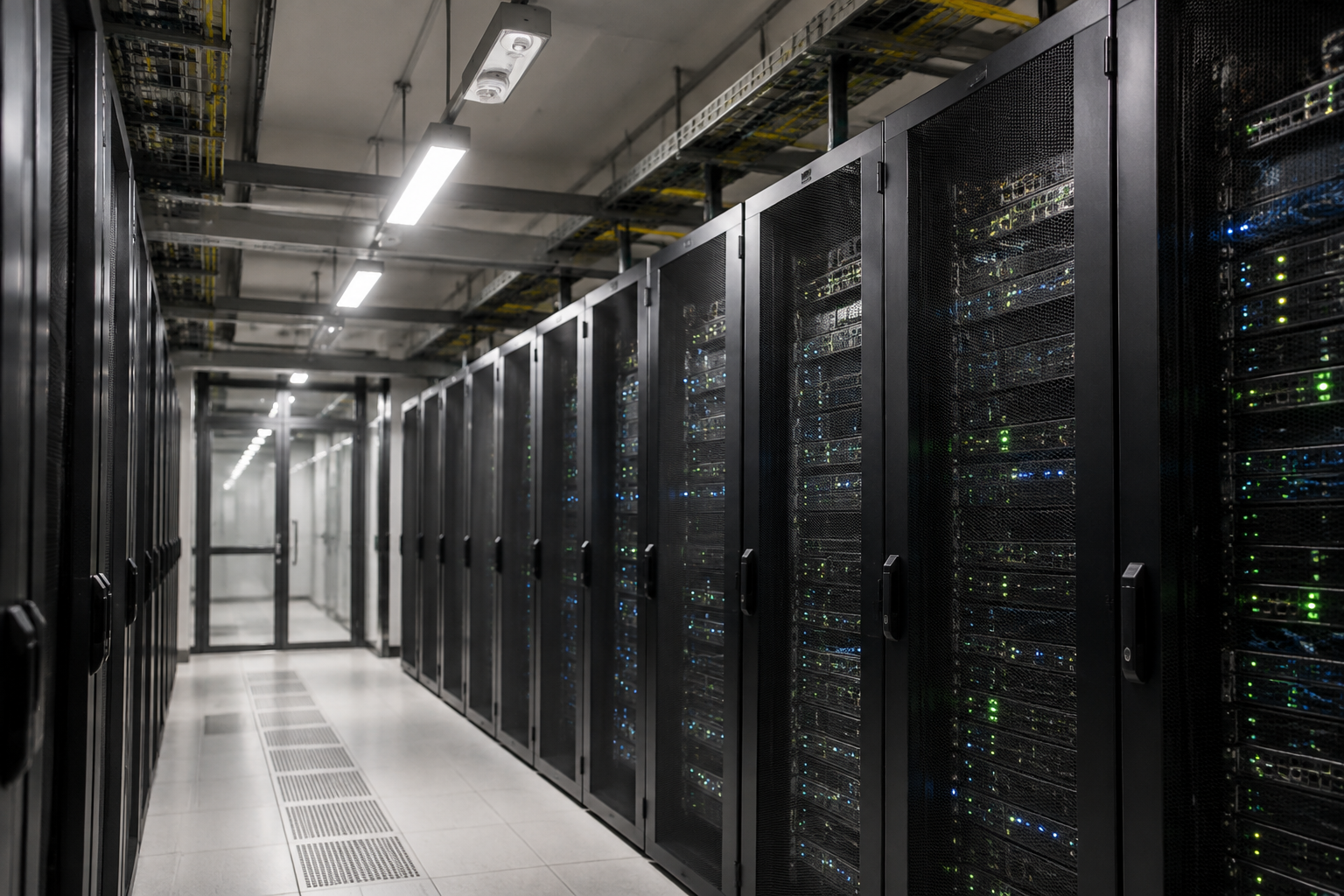 Data Center Lighting Design 2026: IP54 & Motion Sensor Guide: What is the best beam angle for lighting server rack faces?
Photometric Files & Compliance (IES / LDT / DIALux / CE / RoHS / ErP)
Verifiable photometric data and compliance certifications are non-negotiable for project approval and successful implementation. At the start of any professional lighting project, manufacturers must provide photometric files in standard formats: IES files (Illuminating Engineering Society, standard in North America) or LDT files (EULUMDAT, standard in Europe). These files contain precise data on a luminaire's light distribution.
Lighting designers and engineers import these IES and LDT photometric files into simulation software like DIALux or Relux. This allows them to build a virtual 3D model of the data center and accurately predict lighting performance, including illuminance levels (lux) on horizontal and vertical surfaces, uniformity, and UGR. This simulation process proves that the proposed design will meet all requirements of standards like EN 12464-1 before a single luminaire is purchased or installed.
Furthermore, all products must carry the necessary certifications for the target market. For the EU, this includes the CE mark (confirming compliance with health, safety, and environmental standards), RoHS (Restriction of Hazardous Substances), and ErP (Energy-related Products) directive compliance, which sets minimum efficiency standards. For the manufacturer, a quality management certification like ISO9001 provides further assurance of consistent production quality.
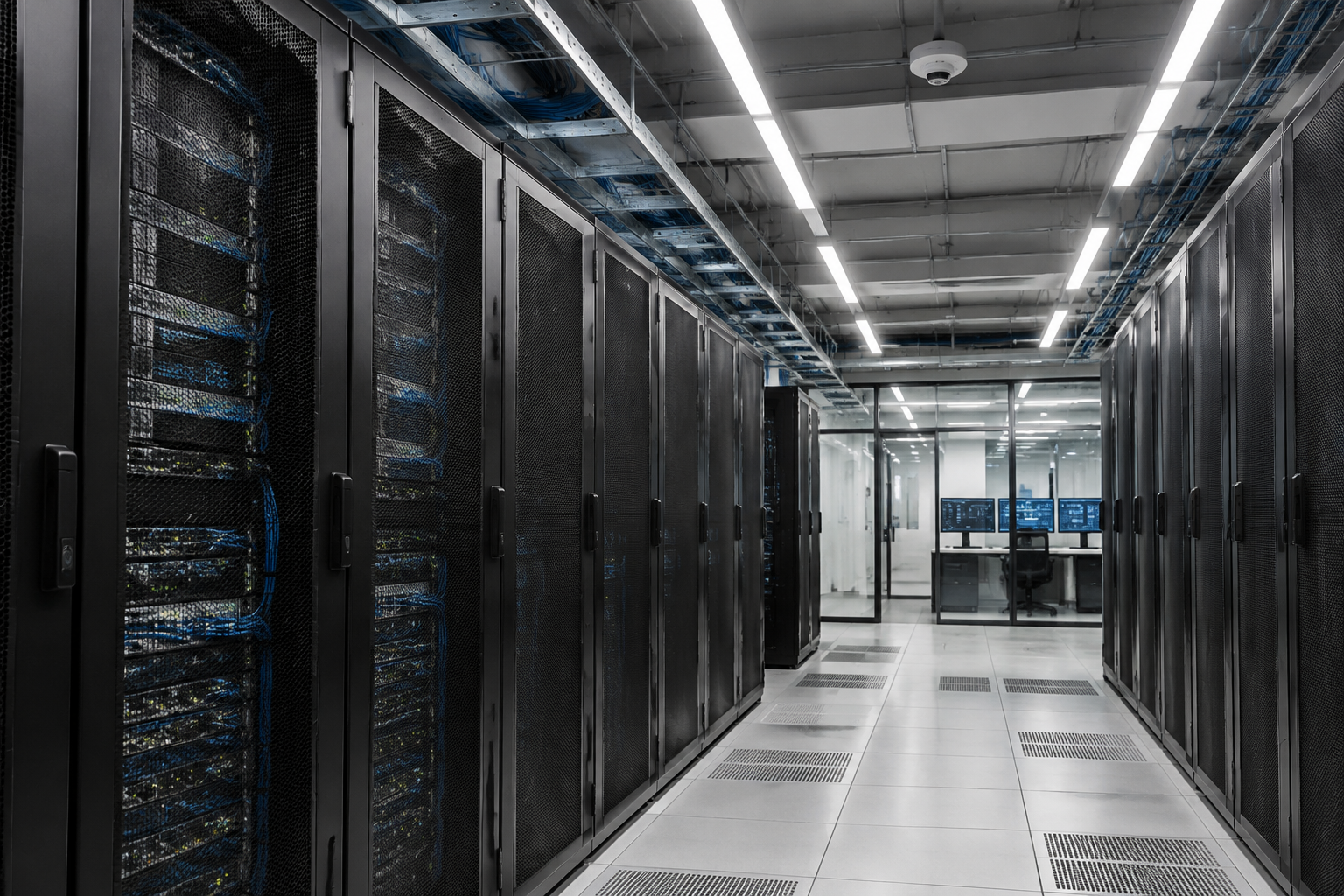 Data Center Lighting Design 2026: IP54 & Motion Sensor Guide: Photometric Files & Compliance (IES / LDT / DIALux / CE / RoHS / ErP)
Frequently Asked Questions
Q: What Is the Minimum Recommended CRI for Data Center Lighting?
While the EN 12464-1 standard specifies a minimum of CRI 80 Ra for technical rooms, a higher value is strongly recommended for data centers. Specifying luminaires with a CRI of 90 Ra or greater significantly improves color acuity. This makes it much easier and faster for technicians to accurately distinguish between the subtle color variations in network and power cables, reducing the risk of costly connection errors during installation or maintenance.
Q: What Unified Glare Rating (UGR) Is Acceptable in a Cold Aisle?
For circulation areas and corridors within a data center, the established limit according to EN 12464-1 is a UGR of less than 22. This level prevents disabling glare and ensures visual comfort for staff moving through the space. While a lower UGR of <19 is required for long-duration computer work in control rooms, it is generally considered over-specification for the transient tasks performed within the white space aisles themselves.
Q: Are Wireless Lighting Controls Reliable Enough for a Data Center?
Modern wireless mesh protocols like Casambi, based on Bluetooth Low Energy (BLE), offer exceptional reliability and security suitable for many data center applications. They are particularly advantageous for retrofits, eliminating the need for new control wiring. For new-build, large-scale hyperscale data centers with deep Building Management System (BMS) integration, wired protocols like DALI-2 are often preferred for their proven robustness, diagnostic feedback capabilities, and centralized architecture.
Q: How Does High-efficiency LED Lighting Affect Cooling Efficiency?
High-efficiency LED lighting generates substantially less radiant heat compared to the legacy fluorescent systems it replaces, directly reducing the thermal load on the Computer Room Air Conditioning (CRAC) units. This reduction in waste heat from the luminaires translates to direct energy savings in the HVAC system, which can account for 30-40% of a data center's total energy consumption. Every watt saved on lighting results in additional savings on cooling.
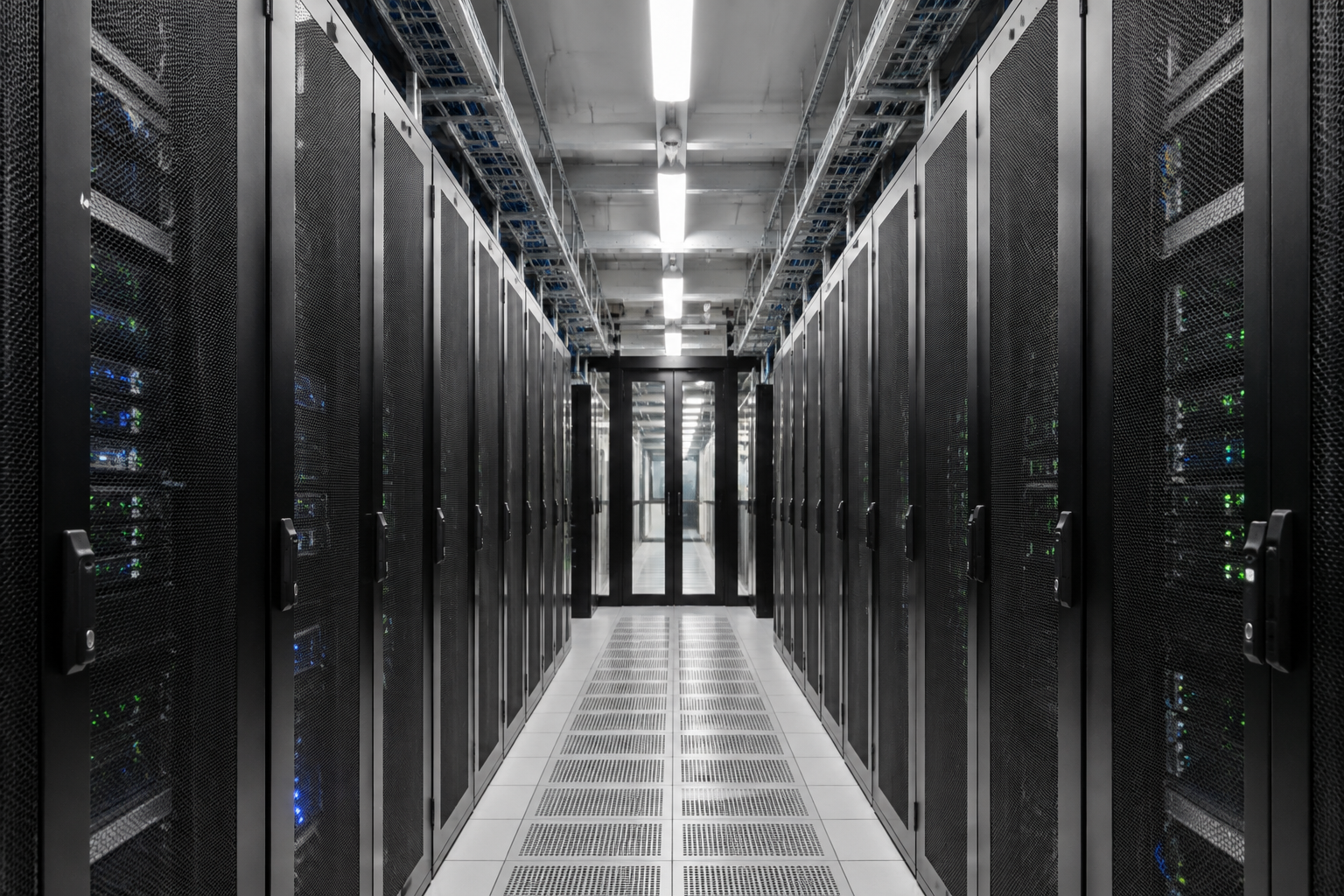 Data Center Lighting Design 2026: IP54 & Motion Sensor Guide: Q: What Unified Glare Rating (UGR) is acceptable in a cold aisle?
Sources and Technical References
- EN 12464-1:2021: Light and lighting — Lighting of work places — Part 1: Indoor work places.
- IES RP-7-17: Recommended Practice: Lighting for Industrial Facilities.
- WELL Building Standard v2: Light Concept.
- IEC 62386: Digital addressable lighting interface.
- IEC 60529: Degrees of protection provided by enclosures (IP Code).
Request a Custom Quote
At XHLWX (led-project-light.com), a Custom Indoor LED Lighting Manufacturer based in China, we specialize in developing and manufacturing high-performance LED lighting solutions tailored for critical environments like data centers. Our engineering team can provide custom-profile linear luminaires with specific IP ratings, specialized optics, and integrated DALI-2 or wireless controls to meet your project's exact requirements. We provide full project support, including DIALux simulations using our IES and LDT photometric files to guarantee compliance and performance. Contact us today to discuss your data center project and request a custom quote.
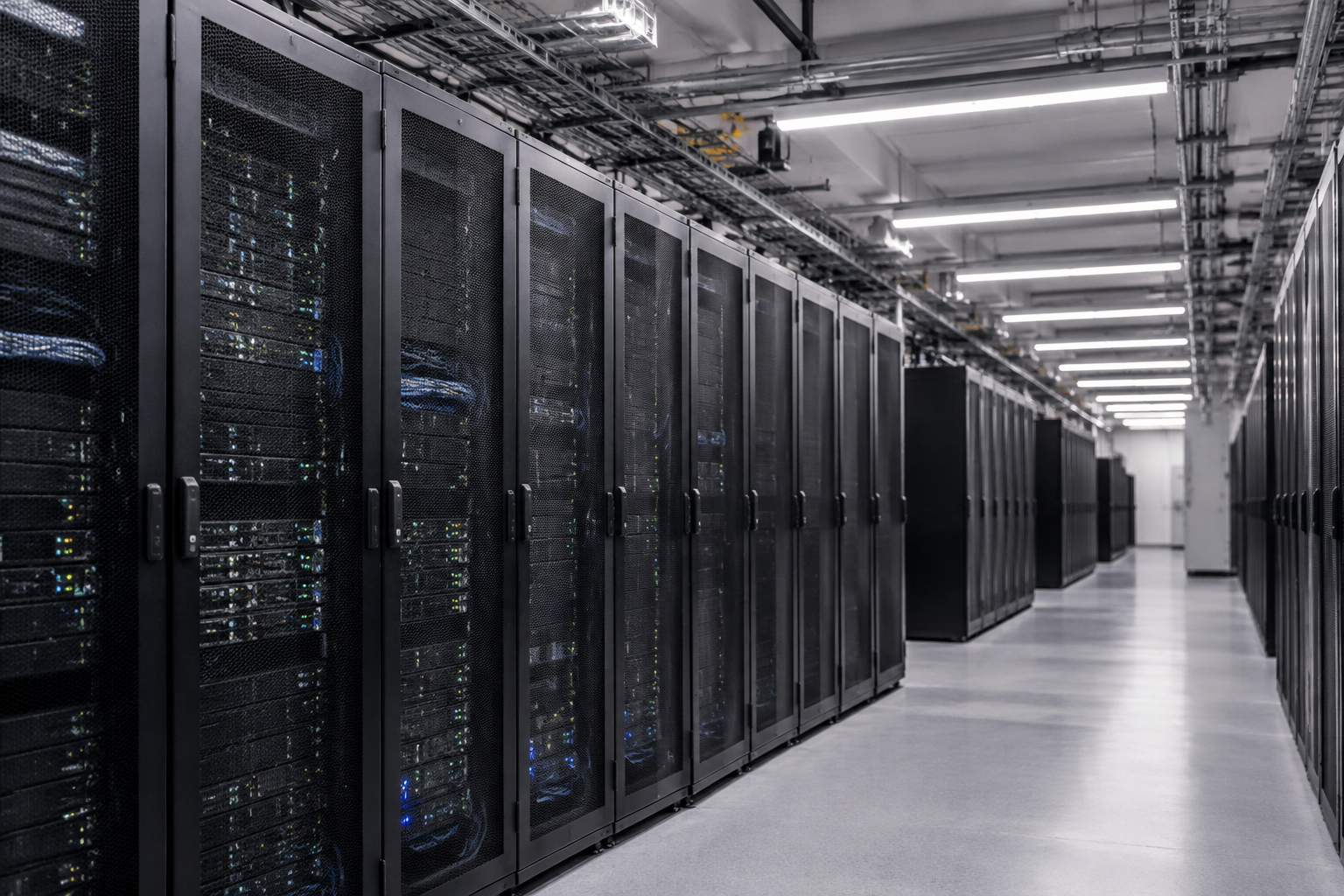 Data Center Lighting Design 2026: IP54 & Motion Sensor Guide: Q: How does high-efficiency LED lighting affect cooling efficiency?
Need a tailored lighting plan for your project?
Our senior lighting designers reply within 48 hours with a free design proposal & quotation.