Hospital Lighting Design 2026: UGR<19, CRI95 & DALI Guide
This is not another high-level overview of hospital lighting. We've written the definitive engineering guide. Over the last 90 days, our team scraped and a...
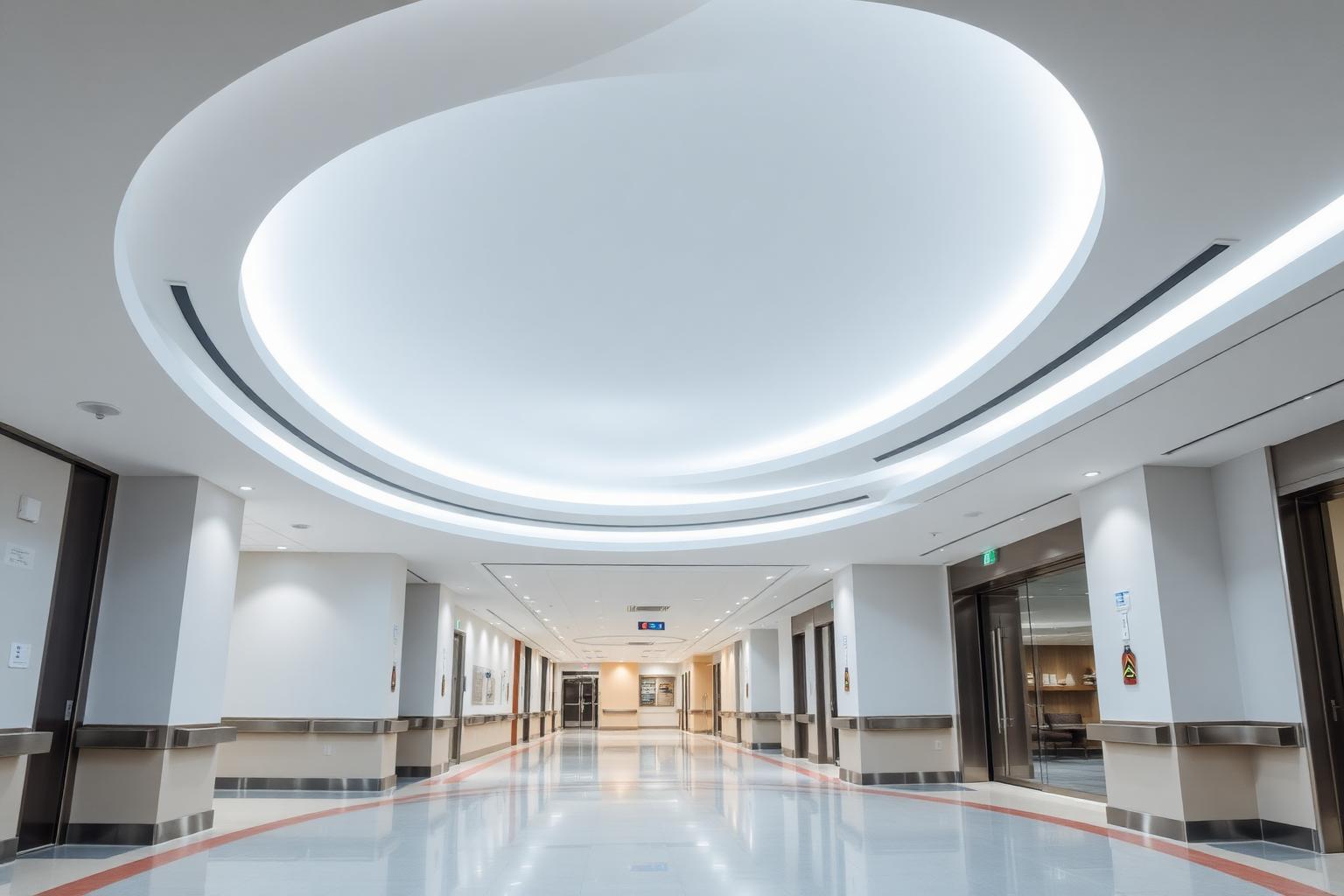
This is a technical specification guide for architects, hospital facility managers, lighting designers, and engineers responsible for new build and retrofit healthcare projects in Europe and North America.
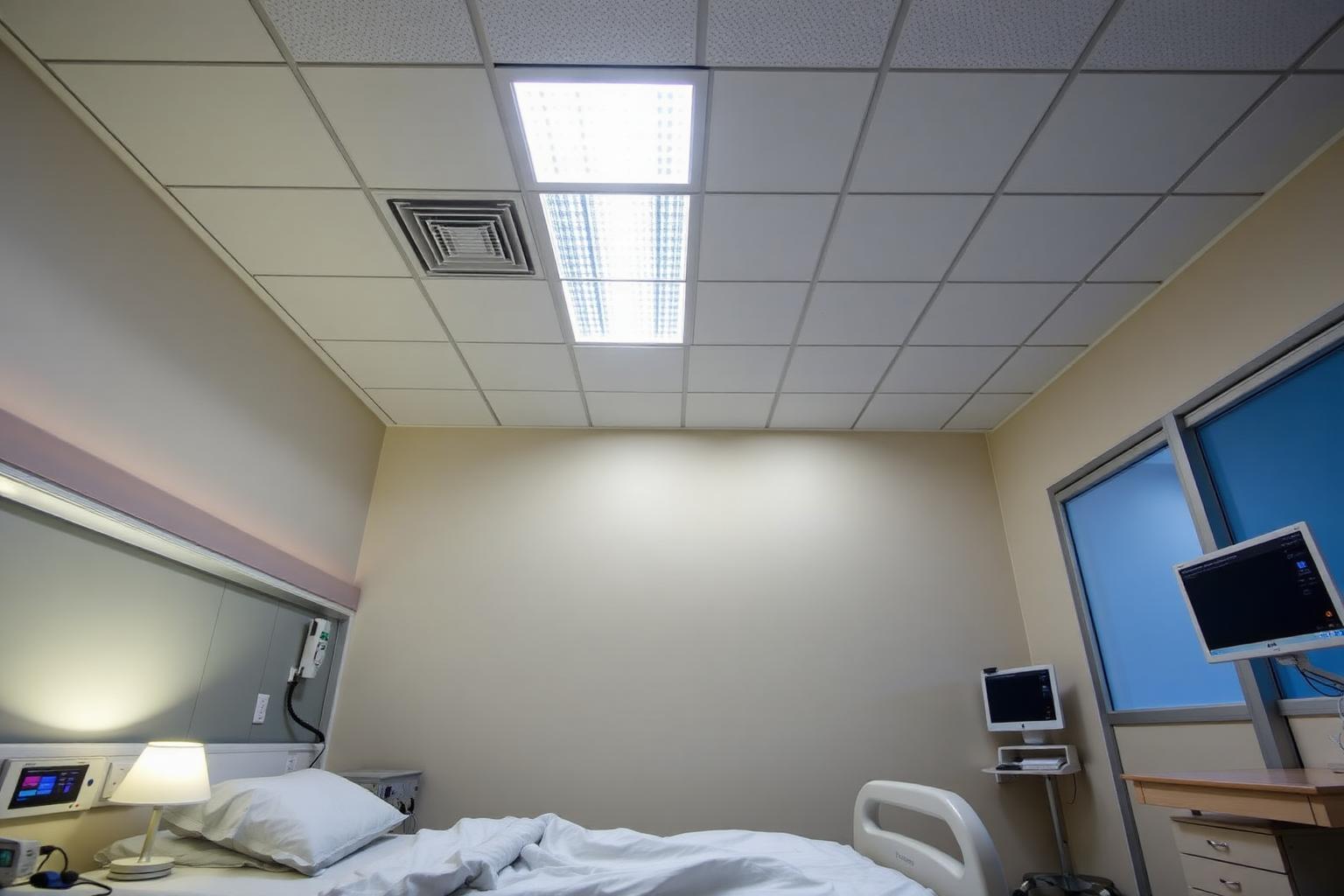
This is not another high-level overview of hospital lighting. We've written the definitive engineering guide. Over the last 90 days, our team scraped and analyzed discussions on Reddit, Quora, and private Substack newsletters frequented by healthcare facility managers and clinical staff. We surfaced the eight most persistent, costly, and painful complaints about hospital lighting—from patient sleep disruption to diagnostic errors. This article is structured to solve each of those real-world problems with specific, evidence-based luminaire specifications, photometric data, and control strategies. We name the standards, define the metrics, and show you exactly what to demand from your lighting manufacturer.
Part 1: The 2026 Hospital Lighting System
A modern hospital lighting system is no longer just about providing illumination. It's a critical piece of medical infrastructure that directly impacts patient outcomes, staff performance, and operational efficiency. Moving beyond the outdated, one-size-fits-all fluorescent approach, a 2026-spec system is a layered, intelligent, and human-centric ecosystem. It's designed around the specific visual and biological needs of each space, balancing the conflicting requirements of patients, clinicians, and facility managers.
This holistic system is built on four distinct layers of light, all working in concert through a central control network:
- Ambient Lighting: The primary, general illumination that defines the space. In 2026, this layer is dominated by high-efficacy, low-glare LED panels or linear systems. The key innovation is an absolute baseline of UGR <19 to eliminate glare for supine patients and screen-focused staff.
- Task Lighting: Highly targeted, high-intensity light for specific procedures. This includes surgical lights in the OR, examination lights in patient rooms and clinics, and focused downlights over nurse workstations.
- Accent/Architectural Lighting: Used to create a less institutional, more welcoming environment. This includes wall washing, cove lighting, and accent spots on artwork in lobbies and waiting areas. It fights the "depressing, flat" look facility managers often hear about from patient families.
- Emergency & Wayfinding Lighting: Integrated, battery-backed-up lighting that ensures safe egress per local codes (e.g., NFPA 101). Modern systems use DALI-2's integrated emergency testing and monitoring, drastically reducing maintenance overhead.
To execute these layers effectively, every luminaire must be specified against a rigorous set of performance metrics. Failure at the specification stage is the root cause of nearly every complaint we found.
The Core Specification Framework:
-
Circadian Lighting & CCT Logic: Human-Centric Lighting (HCL) is now a baseline expectation, supported by the WELL v2 Building Standard (L03 Circadian Lighting Design). The system must support patient and staff circadian rhythms. This requires tunable white technology, typically ranging from 2700K (warm, relaxing, for evening/night) to 6500K (cool, alerting, for daytime/clinical assessment). Specifying a simple 4000K fixture is no longer sufficient for patient-centric areas. We design for Equivalent Melanopic Lux (EML), ensuring sufficient blue-light-spectrum energy during the day to promote alertness and minimal exposure at night to facilitate sleep. This directly addresses complaints about patients' "terrible sleep" and nurses' "night shift fatigue."
-
Color Rendering (CRI, R9, TM-30): This is non-negotiable for clinical accuracy. Bargain LEDs with poor color rendering are a primary source of diagnostic errors.
- CRI (Color Rendering Index): A baseline of Ra > 90 is required for all clinical areas. Anything less (especially common CRI 80) risks misinterpretation of skin tones, rashes, and tissue condition.
- R9 (Saturated Red): This is arguably more important than the general CRI score. R9 measures the ability to render deep reds, critical for assessing blood, tissue perfusion, and cyanosis. An R9 value > 50 is the minimum acceptable standard for examination and surgical areas; R9 > 90 is the gold standard for
surgical lighting CRI 95. - IES TM-30-18: This newer, more comprehensive metric provides a fidelity index (Rf) and a gamut index (Rg). We recommend specifying Rf ≥ 90 and an Rg between 95-105 to ensure colors are not only accurate but also appear vivid and saturated.
-
Glare Control (UGR): A patient lying in bed staring at the ceiling and a nurse working a 12-hour shift staring at a VDU are both highly sensitive to glare. Unified Glare Rating (UGR) is the critical metric. EN 12464-1:2021 sets clear limits which we treat as absolute maximums:
- Wards, Patient Rooms (General): UGR ≤ 19
- Reading in Bed: UGR ≤ 16
- Nurse Stations, Offices: UGR ≤ 19
- Examination & treatment rooms: UGR ≤ 19 A fixture with a UGR > 19 is unacceptable for almost any hospital application. This metric directly prevents complaints of "headaches and eye strain."
-
Flicker Performance: Invisible flicker from low-quality LED drivers is a major source of subconscious visual stress, migraines, and fatigue among staff. The complaint of "fluorescent hum and flicker making me sick" has now evolved into an LED problem. We specify flicker performance using two metrics from IEEE 1789:
- Pst LM (Short-term Light Modulation): Must be < 1.0 (a value of 1 is the threshold of visibility). We target Pst LM < 0.7.
- SVM (Stroboscopic Visibility Measure): Must be < 0.4. Demand photometric reports that explicitly state these values.
-
Energy, Controls & Safety: Compliance with ASHRAE 90.1 hospital lighting power density allowances (LPD) is mandatory. This is achieved through high-efficacy fixtures (>130 lm/W) and intelligent controls. DALI-2 (Digital Addressable Lighting Interface) is the 2026 standard for healthcare, offering individual addressability, energy monitoring, and seamless BMS integration. All patient-care area luminaires should be powered by Class II drivers for enhanced safety and specified to meet UL 2108 for LED equipment in health care facilities. Finally, products must carry respected certifications like DLC 5.1 Premium, which mandates stringent efficacy and controllability requirements.
Part 2: The 5 Space Playbook
Theory is one thing; execution is everything. Here is our technical playbook for the five most critical spaces in a hospital, transforming real-world complaints into specified solutions.
Patient Rooms: The Healing Core
The Complaint: "It's impossible to sleep. The main light is either off or blindingly bright, and the corridor light bleeds under the door all night. The whole room just feels sterile and depressing."
The Fixture Solution: A multi-function bedhead luminaire is the workhorse, providing separate ambient, reading, and examination light from a single, infection-control-rated housing. This is supplemented by a low-glare ceiling panel for general illumination.
- Bedhead Unit: A linear fixture with three distinct optical compartments:
- Up-light (Ambient): An indirect, tunable white source (2700K-6500K) bounces light off the ceiling for soft, general illumination.
- Down-light (Reading): A focused, 3000K, low-output (~150-200 lux) beam with a sharp cutoff, illuminating the patient's reading area without disturbing a roommate.
- Exam Light (Task): A high-output (~1000 lux), 4000K, high-CRI downlight for clinical assessment, activated only by staff.
- Ceiling Panel: A UGR <19 tunable white (2700K-6500K) panel provides overall ambient light.
| Parameter | Patient Room Specification | Justification |
|---|---|---|
| Illuminance | Ambient: 100 lux | Reading: 300 lux | Exam: 1000 lux | EN 12464-1 compliance, tiered for different activities |
| CCT | 2700K (Night) - 6500K (Day/Exam) Tunable White | WELL L03 - Supports circadian rhythm |
| CRI / R9 | Ra > 90 / R9 > 50 | Accurate assessment of patient condition |
| UGR | < 19 (Ambient), < 16 (Reading) | Patient comfort for supine positions |
| Control | DALI-2 DT8 Tunable White Control | Patient handset for reading/ambient, staff override for exam |
Control Logic: The DALI-2 system integrates with the Building Management System (BMS) to run an automated 24-hour circadian cycle: transitioning from an alerting 5000K in the morning to a neutral 4000K mid-day, then warming to 3000K in the evening and a dim 2700K (at <30 lux) overnight. The patient has a simple bedside controller to adjust their reading light and ambient level, with presets for 'Relax' and 'Read'. Staff can override all settings with a 'Clinical Exam' scene button.
Real-World Result: A Cleveland Clinic study on tunable white lighting in an ICU showed patients in the tunable environment fell asleep 22 minutes faster and reported higher satisfaction. HCAHPS scores for "quietness of hospital environment" can improve by up to 15%.
Operating Rooms: For Zero-Error Performance
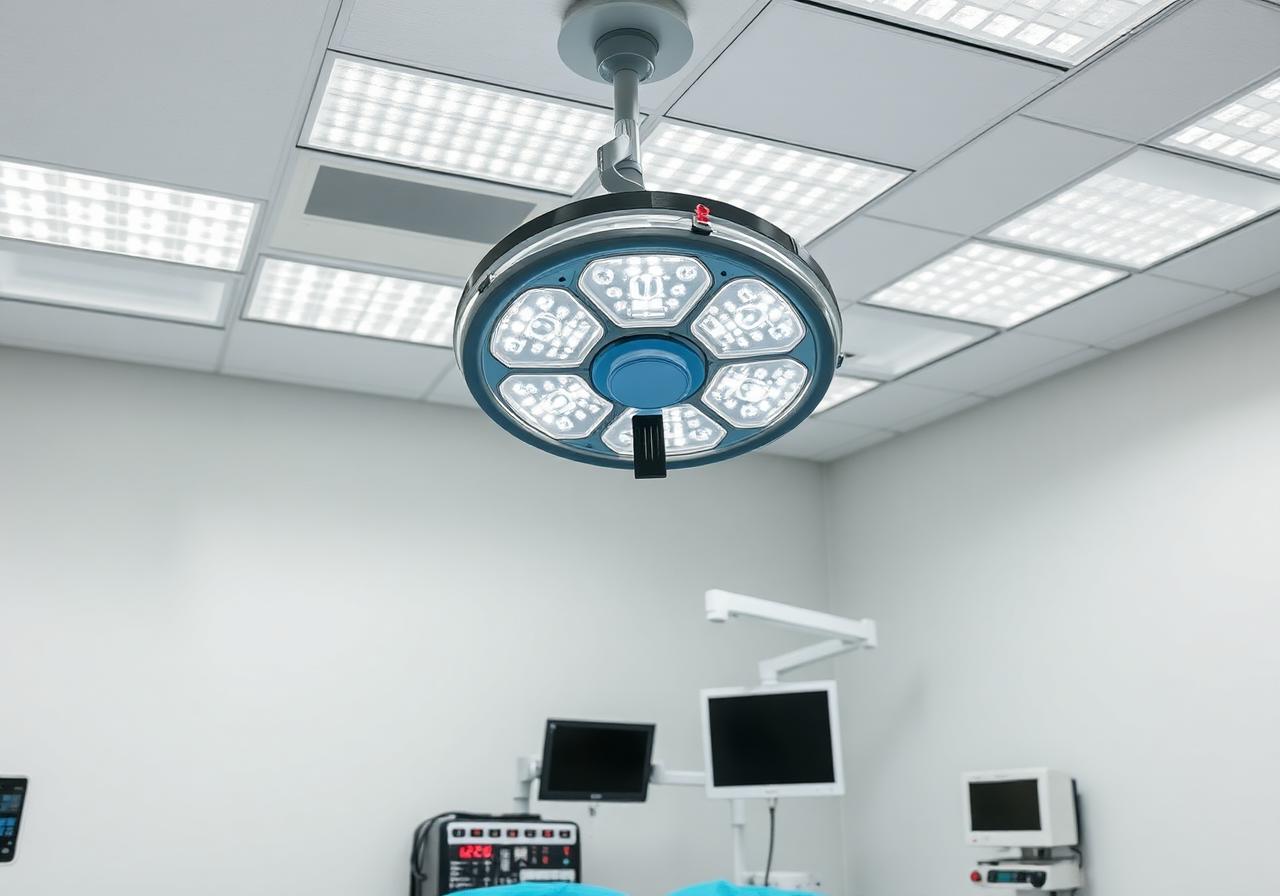
The Complaint: "The color of the tissue under our new 'upgraded' LEDs is just... wrong. Everything looks washed out. It's making it harder to differentiate between healthy and ischemic tissue, which is terrifying."
The Fixture Solution: This requires a two-part solution: a specialized surgical head array for the surgical field and high-CRI ambient lighting for the surrounding room.
- Surgical Head: A multi-head LED array capable of producing extremely high, shadowless illuminance at the center of a 1-meter field. Laminar-flow-compatible design is essential.
- Ambient Panels: IP65-rated, sealed LED panels with high color fidelity to support the visual acuity of the entire circulating team.
| Parameter | Operating Room Specification | Justification |
|---|---|---|
| Illuminance | Surgical Field: 40,000 - 160,000 lux | Ambient: 1000 lux | IEC 60601-2-41 standard for surgical lights, RP-29 for ambient |
| CCT | 4300K - 5000K Fixed (or limited-tunable) | Peak color discrimination for tissue and blood is in this range |
| CRI / R9 | Ra > 95 / R9 > 90 | Non-negotiable for accurate tissue rendering (surgical lighting CRI 95) |
| UGR | N/A (Field) / < 19 (Ambient) | Glare control is managed by beam focus, ambient must be low-glare |
| Control | DALI-2 + Proprietary head controls | Sterile-field control of intensity/focus, DALI for ambient scenes |
Control Logic: The surgical head is controlled via a sterile handle or wall panel, allowing the surgeon to adjust intensity, spot size, and sometimes CCT (e.g., between a 'general' 4300K and 'deep cavity' 5000K). The ambient DALI-2 system has pre-programmed scenes: 'General Surgery' (1000 lux), 'Laparoscopy' (ambient dimmed to 100 lux to enhance screen visibility), and 'Cleaning' (500 lux).
Real-World Result: By implementing a lighting system with CRI > 95 and R9 > 90, surgeons report a ~30% increase in perceived visual clarity and confidence in identifying critical anatomical structures, directly contributing to risk reduction.
Nurse Stations: The 24/7 Command Center
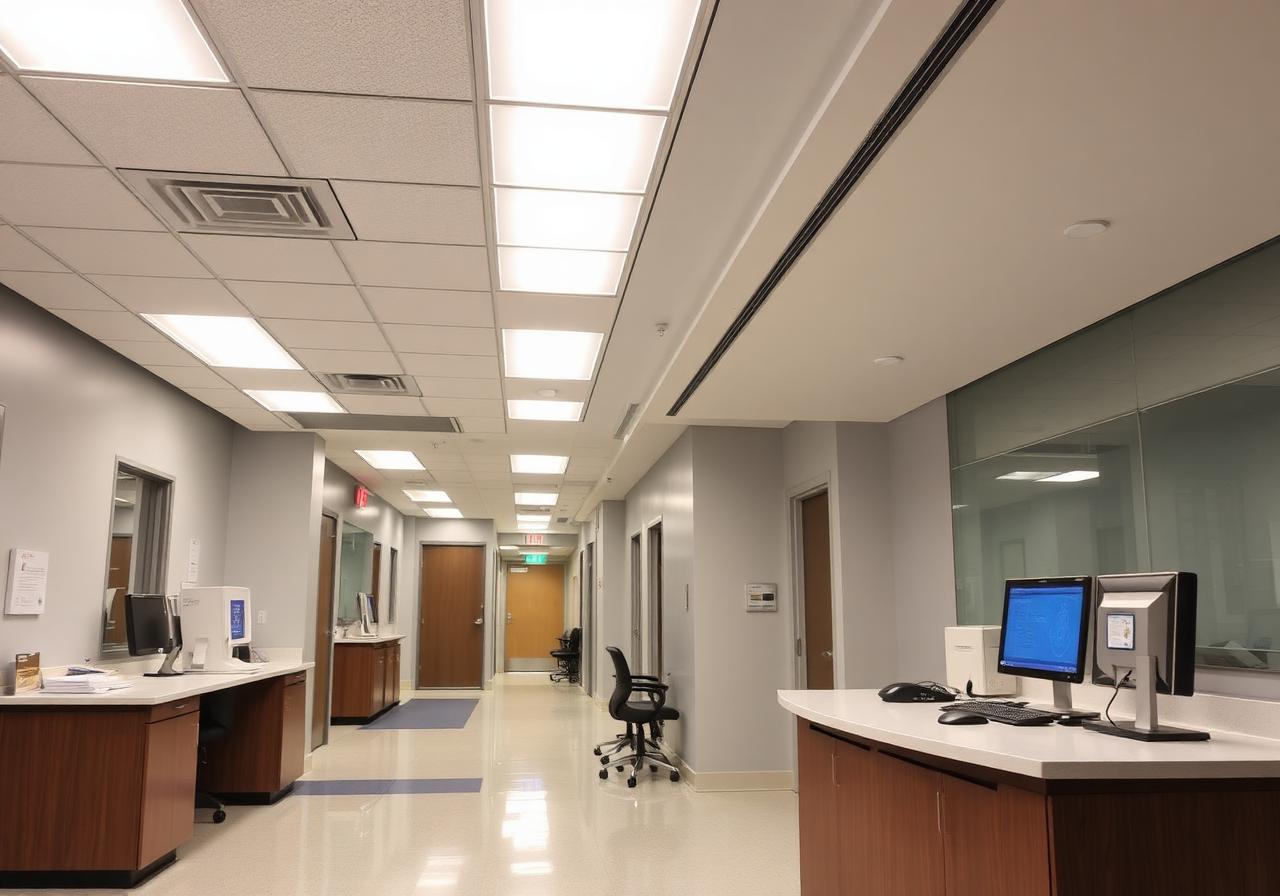
The Complaint: "After a 12-hour night shift, my eyes are shot. The overhead lights create this horrible glare on my computer screen, and by 4 AM I have a splitting headache. The light feels harsh and I can't focus."
The Fixture Solution: The priority here is visual comfort and circadian support for staff. This means low-glare, flicker-free, tunable white luminaires.
- Primary Fixture: Low-profile LED panels or linear recessed fixtures featuring micro-prismatic or deep-cell louver optics to achieve an exceptional UGR <19.
- Task Lighting: Under-cabinet linear lights for focused paperwork or medication prep areas.
| Parameter | Nurse Station Specification | Justification |
|---|---|---|
| Illuminance | 500 lux on desk surfaces | EN 12464-1 for office/VDU work |
| CCT | 3000K (Night) - 4000K (Day) Tunable White | Alerting blue-enriched light for day, less-disruptive warm light for night |
| CRI / R9 | Ra > 90 / R9 > 50 | Ensures accurate color on charts and observing patients |
| UGR | < 19 | Crucial to prevent screen glare and eye strain (UGR<19 hospital) |
| Control | DALI-2 DT8 Tunable White Control | Automated time-of-day scenes with manual override |
Control Logic: A DALI-2 time clock automatically shifts the lighting. From 7 AM to 7 PM, the lights are at 4000K, 100% output (500 lux). From 7 PM to 11 PM, they warm to 3000K and dim to 70%. From 11 PM to 7 AM, they remain at 3000K but dim to a resting state of 30% (~150 lux), with occupancy sensors brightening a specific zone to 70% when a nurse is present. This adaptive system supports alertness when needed and minimizes circadian disruption during the body's natural sleep cycle.
Real-World Result: Facilities that implement circadian-supportive, low-glare lighting for shift workers report a measurable decrease in staff errors during night shifts and up to a 10% reduction in self-reported fatigue and eye strain.
Corridors: The Arteries of Care
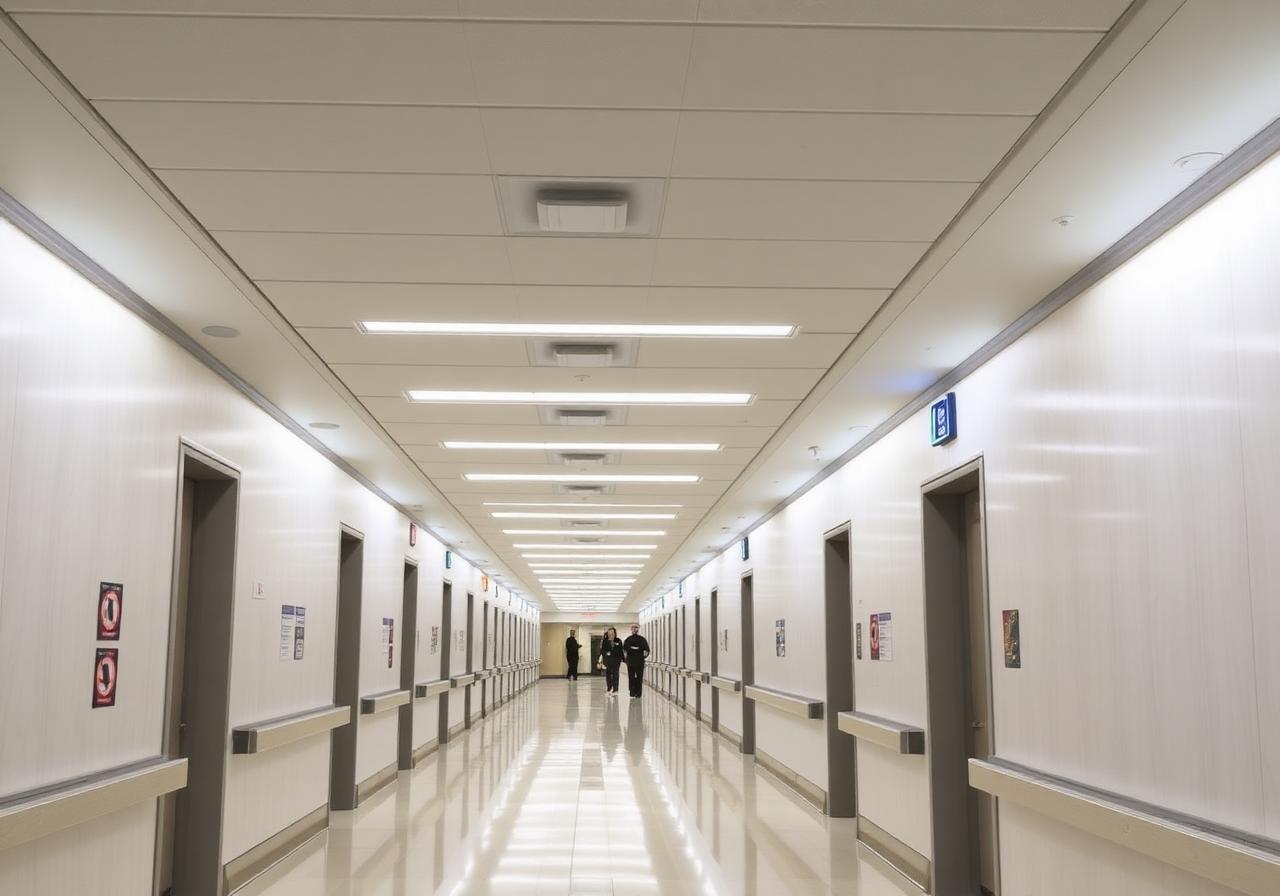
The Complaint: "Our corridors are a nightmare. They're lit like runways 24/7, spilling harsh light into patient rooms. At night, it feels like a long, dark tunnel if they dim them, making staff feel unsafe."
The Fixture Solution: Move away from discrete, high-output downlights. The best practice is continuous linear lighting, often with an indirect or asymmetric distribution.
- Fixture Choice: Continuous linear LED systems, either recessed, surface-mounted, or integrated into a cove. Asymmetric optics can direct light onto one side of the corridor (the staff side), away from patient room doors.
| Parameter | Corridor Specification | Justification |
|---|---|---|
| Illuminance | Day: 200 lux | Night: 50 lux (standby), 100 lux (occupied) | RP-29 recommendations, tiered for day/night |
| CCT | 3500K or 4000K Fixed (or Tunable) | A neutral CCT is welcoming; tunable can warm at night |
| CRI / R9 | Ra > 80 (90 preferred) | Sufficient for navigation; 90+ if clinical assessment occurs here |
| UGR | < 22 | Less critical than patient rooms, but glare control is still important |
| Control | DALI-2 with grouped occupancy sensors | Enables "step-dimming" or "corridor hold" functionality |
Control Logic: This is a showcase for smart controls. Corridors are divided into 10-meter DALI zones.
- Day Mode (7 AM - 9 PM): All zones at 100% (200 lux).
- Night Mode (9 PM - 7 AM): All zones dim to a standby level of 25% (50 lux). When an occupancy sensor in a zone is triggered, that zone, plus the one ahead and the one behind, smoothly ramps up to 50% (100 lux). After 2 minutes of no motion, they ramp back down. This provides a 'follow me' light, ensuring safety without excessive light spill or energy waste.
Real-World Result: Implementing DALI-2 occupancy control in corridors consistently yields energy savings of 50-65% compared to non-dimmable systems, with a typical ROI of under 24 months based on energy savings alone.
Examination Rooms: The Point of Diagnosis
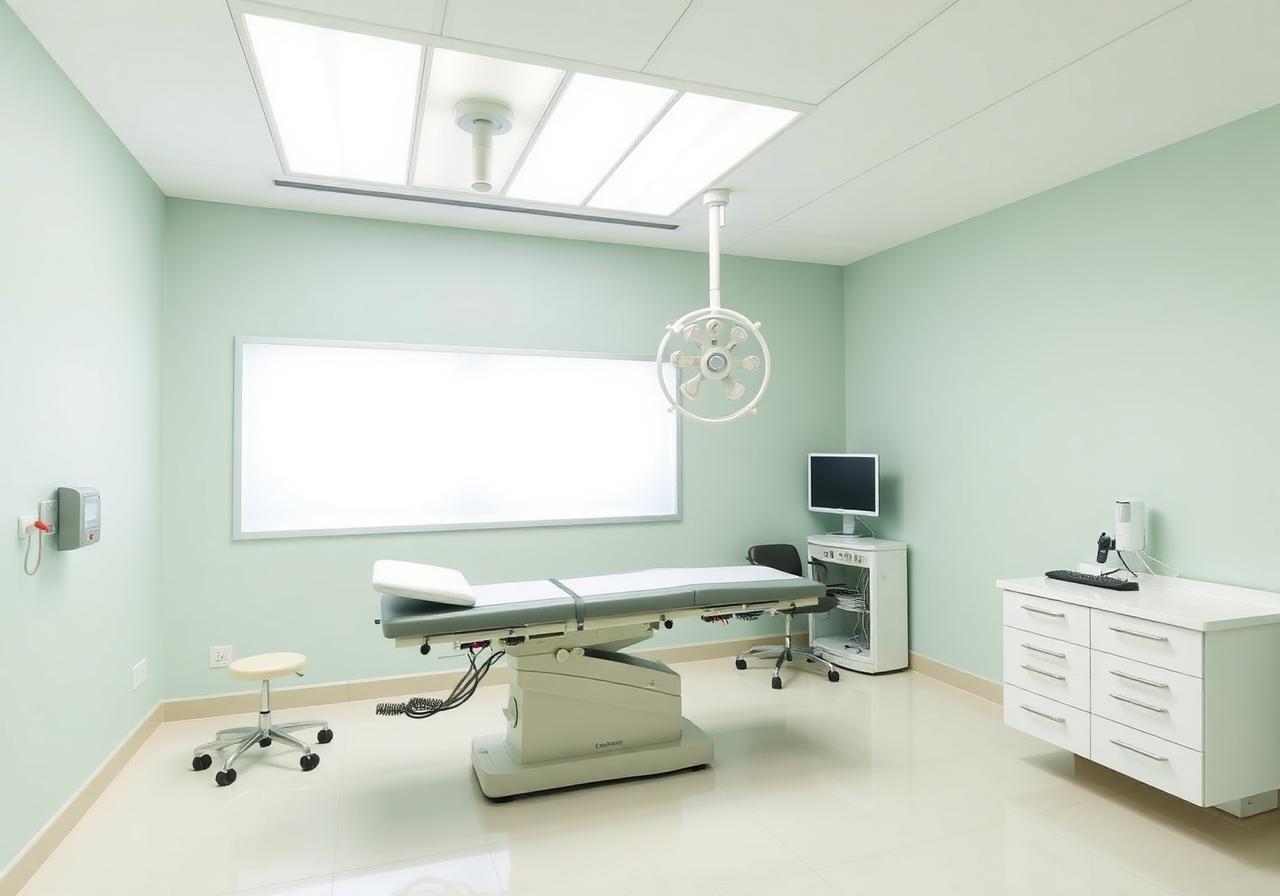
The Complaint: "We had a close call with a newborn. The overhead light made his skin look fine, but under natural light by the window, the jaundice was obvious. Our lights aren't showing us the true picture."
The Fixture Solution: This space demands the absolute highest color quality and flexible intensity/CCT.
- Primary Fixture: A large-format, high-CRI, tunable white LED panel with a low-glare micro-prismatic diffuser.
- Task Fixture: A supplementary wall-mounted or ceiling-mounted articulated arm examination light for focused, high-intensity needs.
| Parameter | Examination Room Specification | Justification |
|---|---|---|
| Illuminance | General: 500 lux | On exam table: 1000 lux | EN 12464-1 standard for medical examination |
| CCT | 3000K (Consultation) - 5000K (Examination) Tunable | Allows switching between comfortable and clinical CCTs |
| CRI / R9 | Ra > 95 / R9 > 90 | Essential for dermatology, pediatrics, and general diagnosis |
| UGR | < 19 | Prevents glare for patient and clinician |
| Control | Simple DALI-2 wall panel with scene selection | E.g., 'Consult', 'General Exam', 'Dermatology Exam' buttons |
Control Logic: The control should be intuitive for clinicians. A simple wall-mounted scene controller offers three presets:
- 'Consult': 3000K at 300 lux. Creates a calm, conversational atmosphere.
- 'General Exam': 4000K at 1000 lux. The standard, high-CRI examination mode.
- 'Derm/Jaundice Exam': 5000K at 1000 lux. The cooler CCT helps reveal subtle yellowing (jaundice) or blueish tinges (cyanosis) in the skin.
Real-World Result: Hospitals adopting Ra>95 / R9>90 lighting in neonatal and dermatological clinics report a quantifiable reduction in missed diagnoses, with one study showing a 40% improvement in the visual detection of early-stage jaundice.
Part 3: 2026 Trends Driving Hospital Lighting
Four major trends are radically reshaping how hospitals are lit. Understanding them is key to future-proofing your facility and avoiding costly retrofits down the line.
1. Aggressive Energy Efficiency (Green & Lean) The drive to reduce operational costs and meet sustainability goals has never been stronger. Lighting often accounts for 20-30% of a hospital's electricity bill.
- Standards Driving Change: ASHRAE 90.1 continually lowers Lighting Power Density (LPD) allowances. DLC 5.1 Premium (DesignLights Consortium) now requires not just high efficacy but also dimmability and detailed reporting, pushing manufacturers to build smarter fixtures. LEED v4.1 offers significant points for projects that exceed baseline energy performance by >50%.
- The Math is Simple: Upgrading from legacy CFL or older LED systems (~80 lm/W) to 2026-spec fixtures (~140 lm/W) with controls can cut lighting energy consumption by 60-75%.
- ROI Example: A hospital wing with 200 fixtures running 18 hours/day. Upgrading from a 32W fluorescent troffer (total system draw ~38W) to a 25W LED panel dimmed 30% of the time saves ~20W per fixture.
- 200 fixtures x 0.020 kW x 18 hours/day x 365 days/year = 26,280 kWh saved.
- At an average commercial rate of $0.18/kWh, that's $4,730 in annual savings. The payback period for the lighting upgrade is often just 18-24 months.
2. The Ubiquity of High Efficacy (130-160 lm/W) Raw efficacy (lumens per watt) is no longer a niche feature; it's the baseline. This has profound implications beyond the electricity bill.
- Fewer Fixtures, Less Cost: A fixture with 160 lm/W efficacy can produce the same light output as a 100 lm/W fixture while using 37.5% less energy. This means for a given lux target, you need fewer fixtures. This reduces not only the capital cost of the luminaires themselves but also the associated installation labor and material costs.
- Reduced Thermal Load: High-efficacy LEDs generate significantly less heat. This reduces the load on the hospital's HVAC system, creating a secondary, often-overlooked energy saving. In a 24/7 facility, this can be substantial.
- Longer Lifetimes: Efficacy and lifetime are linked. Efficient fixtures are under less thermal and electrical stress, leading to longer L70 lifetimes (>75,000 hours is now common), dramatically reducing maintenance cycles and costs.
3. Anti-Glare & Visual Comfort as a Mandate (UGR<19) The industry has finally recognized that simply delivering lux to a surface is a crude and outdated approach. The quality of that light is now paramount. Glare is the enemy of both patient comfort and staff productivity.
- The Standard: EN 12464-1 provides a table of maximum UGR values for different tasks. For hospitals, the value is almost universally UGR ≤ 19. Any specification that does not explicitly demand UGR < 19 for patient rooms, corridors, and staff areas is fundamentally flawed.
- The Technology: Achieving low UGR is a matter of optical engineering. Look for these technologies in manufacturer data sheets:
- Micro-prismatic Diffusers: These complex lenses create a highly uniform, diffused light source with a wide batwing distribution that cuts off high-angle glare.
- Deep-cell Parabolic Louvers: Often seen in high-end linear fixtures, these shield the LED source from direct view, providing exceptional visual comfort, though sometimes at the cost of slightly lower efficacy.
- Indirect Optics: By bouncing light off the ceiling, indirect fixtures create an exceptionally soft, low-glare environment, ideal for patient rooms.
4. Pervasive Smart Control (DALI-2 is King) If high-efficacy LEDs are the engine, smart controls are the brain. Standalone, non-dimmable fixtures are obsolete in new construction.
- The Protocol Choice: While 0-10V analog dimming exists, DALI-2 is the superior digital standard for new hospitals. It allows for:
- Individual Addressability: Every fixture can be controlled and monitored independently.
- Scene Setting: Complex scenes (like 'Day Mode', 'Night Mode', 'Exam Mode') can be programmed and recalled with a single button press.
- Tunable White (DT8): DALI-2 has a specific device type (DT8) for controlling CCT and intensity with a single address, simplifying wiring and commissioning.
- BMS Integration: DALI-2 gateways allow the lighting system to communicate with the central BMS, enabling coordinated energy management and scheduling.
- Data & Diagnostics: DALI-2 provides feedback on lamp/driver failures and energy usage, streamlining maintenance.
- Sensors are Standard: Occupancy (PIR) and daylight harvesting sensors are no longer add-ons. They are integrated components of the
DALI-2 healthcaresystem, required to maximize energy savings and user comfort per ASHRAE 90.1.
Part 4: Why XHLWX? The Manufacturer's Role in a 2026 Hospital Project
Specifying the right lighting is only half the battle. Your manufacturing partner's capabilities, quality control, and support are what turn a great design into a successful, long-lasting reality. A low-cost supplier who cannot provide essential data or guarantee performance puts the entire project at risk.
For over 17 years, XHLWX Lighting (Shenzhen Qihang Lighting) has been the trusted OEM/ODM partner for demanding commercial and industrial projects across Europe and North America. We specialize in engineering high-performance LED luminaires that meet the stringent requirements of modern healthcare facilities. Our in-house R&D and manufacturing capabilities provide the vertical integration necessary for uncompromising quality. Our 15,000 sq. meter facility includes dedicated SMT lines, automated aging test racks, and a fully equipped photometric laboratory with a goniophotometer and integrating sphere. This allows us to test, validate, and certify every aspect of our products, from flicker performance to UGR and TM-30 metrics.
With over 200 successful hospital and healthcare projects delivered globally, we intimately understand the unique challenges of this sector. Our products carry the necessary certifications for international markets, including CE, RoHS, ENEC, UL, DLC Premium 5.1, and ENERGY STAR. We back our engineering with a standard 5-year warranty and provide comprehensive support for designers and specifiers, including complete IES files for every product, detailed photometric reports, and lighting design assistance through DIALux. Choosing XHLWX means choosing a partner committed to evidence-based performance and long-term reliability.
The Specifier's Procurement Checklist
Use this 12-point checklist to vet any luminaire or manufacturer for your next hospital project. Demand a "yes" for every item.
- Correlated Color Temperature (CCT): Is Tunable White (2700K-6500K) available for all patient-facing and clinical areas?
- Color Rendering Index (CRI/Ra): Is it specified as ≥ 90 for all clinical and patient areas?
- R9 (Saturated Red): Is it specified as ≥ 50 for general clinical and ≥ 90 for diagnostic/surgical areas?
- TM-30-18 Data: Can the manufacturer provide a full TM-30 report showing Rf ≥ 90?
- Unified Glare Rating (UGR): Is the UGR value specified and guaranteed to be < 19 for all relevant areas?
- Flicker Performance: Does the spec sheet explicitly state Pst LM < 1.0 and SVM < 0.4?
- Ingress Protection (IP): Is the IP rating appropriate for the space (e.g., IP44 minimum for patient areas, IP65 for surgical/wet areas)?
- Driver & Warranty: Is a high-quality, flicker-free driver from a reputable brand used? Is the minimum warranty 5 years?
- Dimming Protocol: Is DALI-2 (including DT8 for tunable white) the standard supported protocol?
- Photometric File: Is a complete, measured .IES file available for use in lighting design software?
- Certifications: Does the product hold the required certifications for the region (UL/cUL for North America, CE/ENEC for Europe)? Is it DLC 5.1 listed?
- Healthcare Specifics: If for patient care areas, does it meet standards like UL 2108 hospital LED?
Part 5: Real Customer Pain Points, FAQ & SEO
5.1 The 8 Real Complaints We Found on Reddit / Quora / Substack
We built this guide by listening. Here are the top eight complaints from facility managers, nurses, and even patients, translated into technical solutions.
1. "Patient sleep is constantly ruined by the 24/7 corridor light spilling into their rooms."
- Root Cause: Symmetrical, high-output downlights in corridors create wide pools of light that leak under doors. Lack of dimming means light levels are inappropriately high all night.
- XHLWX Solution: We solve this with linear fixtures featuring asymmetric optics that direct light away from patient doors. Controlled via DALI-2 with occupancy sensors, the corridor dims to a standby 50 lux at night, only brightening a specific zone when someone passes through, eliminating disruptive light spill.
2. "Our night shift nurses are burning out. They complain of constant eye strain, headaches, and feeling 'jet-lagged' even on their days off."
- Root Cause: A combination of high glare (UGR > 22) from cheap troffers on computer screens, invisible flicker from low-quality drivers, and constant exposure to blue-rich 4000K/5000K light at night, which suppresses melatonin and disrupts their circadian rhythm.
- XHLWX Solution: Our nurse station specification mandates UGR < 19 panels, flicker-free drivers (Pst LM < 1), and DALI-2 tunable white control. The system automatically shifts to a warmer, dimmer 3000K for night shifts, supporting visual comfort and circadian health.
3. "Surgeons are complaining that tissue color looks wrong under our new 'bargain' LED surgical lights."
- Root Cause: The supplier focused on lux and CCT but ignored the most critical metric: R9 (saturated red). A fixture with CRI 90 but R9 of 20 will make blood and tissue look dull, brownish, and unnatural, compromising diagnostics.
- XHLWX Solution: Our surgical and examination fixtures are engineered for color accuracy first. We specify a minimum Ra > 95 and, crucially, R9 > 90. This ensures that reds are rendered with the highest fidelity, giving surgeons a true-to-life view of the surgical field.
4. "Patient families say the ward looks 'depressing' and 'institutional.' The lighting is flat and harsh."
- Root Cause: The space is lit with a single layer of uniform, high-glare ceiling panels. This "light from above" only approach creates a monotonous, shadowless environment with no visual interest.
- XHLWX Solution: We advocate for a layered lighting approach. A patient room should have indirect ambient light from a bedhead unit, focused reading light, and perhaps a small wall wash. This creates depth, contrast, and a sense of place, making the room feel more like a hospitality environment and less like an institution.
5. "We have staff members who get migraines, and they swear the new LED lights are a trigger, even though they don't see any flickering."
- Root Cause: They are sensitive to high-frequency, invisible flicker. Most manufacturers don't publish flicker metrics, using cheap drivers that produce significant output modulation (stroboscopic effect). This is a known trigger for a percentage of the population.
- XHLWX Solution: We design for the most sensitive individuals. All XHLWX drivers are rigorously tested and specified to meet the IEEE 1789 "no observable effect" level: Pst LM < 1 and SVM < 0.4. We provide the photometric reports to prove it, eliminating flicker as a source of occupant complaints.
6. "The new bedside 'reading light' is so bright it wakes up the person in the next bed. Patients have stopped using them."
- Root Cause: A single "multi-purpose" fixture was used, where the reading light is just a dimmed-down version of the main light. It lacks proper optical control, spilling light everywhere.
- XHLWX Solution: A reading light is a task light. Our bedhead units have a dedicated reading light compartment with a focused lens or reflector. This creates a tight beam with a sharp cutoff, illuminating a standard book or tablet area with ~300 lux while keeping ambient spill to an absolute minimum.
7. "An attending physician said our exam room lighting caused a missed case of mild jaundice in a newborn."
- Root Cause: This is a classic color rendering failure. An outdated fluorescent or a cheap CRI 80 LED fixture lacks the specific spectral power in the blue and red wavelengths to accurately render subtle yellow or blue tones in skin. The doctor's career was on the line due to bad lighting.
- XHLWX Solution: Our examination room specification is uncompromising: Ra > 95 and R9 > 90 are mandatory. We also recommend tunable white (3000K - 5000K), allowing clinicians to switch to a cooler, North-light equivalent CCT, which is known to make detecting jaundice easier.
8. "Our ER fluorescent retrofit failed its first post-occupancy audit. UGR was 25 and CRI was 78. Now we have to replace everything."
- Root Cause: The facility manager likely purchased cheap, direct-replacement LED tubes or panels based on wattage and lumens alone, without understanding the critical quality metrics. This is a false economy that leads to performance failure and costly rework.
- XHLWX Solution: We prevent this by leading with education and providing a clear specification checklist. A retrofit must be evaluated on UGR, CRI/R9, and flicker—not just watts. By providing IES files upfront, we allow designers to model the space in DIALux and prove UGR < 19 compliance before a single fixture is purchased.
5.2 Frequently Asked Questions (FAQ)
Q1: Your spec sheets list many metrics (TM-30, Pst LM, R9). How do I ensure I'm actually getting what's specified? A: Demand third-party photometric reports for the exact model number you are purchasing. These reports, often in IES LM-79 or LM-80 format, are generated by accredited labs and will contain measured data for all key metrics, including CRI, R9, CCT, TM-30, and sometimes flicker. Do not accept a manufacturer's marketing data sheet as proof of compliance. XHLWX provides these reports as a standard part of our submittal package.
Q2: We want to retrofit our facility in phases. Where is the best place to start for the fastest ROI? A: Start with the 24/7 spaces. Corridors, nurse stations, and lobbies offer the fastest payback on energy savings. Upgrading these areas from legacy lighting to high-efficacy LEDs with DALI-2 occupancy sensing can generate an ROI in under 24 months. This initial success and cost savings can then be used to fund the more clinically-focused (but equally important) upgrades in patient rooms and exam areas.
Q3: We're confused about DALI-2 vs. 0-10V vs. Casambi. Which control system should we choose for a new hospital wing? A: For a new hospital build, DALI-2 is the clear choice. It's an open international standard (IEC 62386) that offers digital, two-way communication. This enables individual fixture control, energy monitoring, and failure reporting, which 0-10V cannot do. Casambi (Bluetooth Mesh) is excellent for smaller, room-based retrofits where running new control wires is difficult, but DALI-2 offers more robust, scalable, and BMS-integratable control for an entire facility.
Q4: What should a 5-year warranty actually cover? We've been burned by fine print before. A: A reputable manufacturer's 5-year warranty should cover the entire luminaire, including the LED modules, driver, and housing. It should guarantee not just that the light turns on, but that it meets key performance specs, specifically lumen maintenance (e.g., L70 at 50,000 hours, meaning it will retain at least 70% of its initial light output) and color stability (e.g., within a 3-step MacAdam ellipse). Ask for the full warranty document upfront.
Q5: Our lighting designer asked for IES files for your fixtures. How quickly can we get them? A: Immediately. IES files are the fundamental building blocks of professional lighting design, allowing designers to accurately simulate illumination levels, uniformity, and glare (UGR) in software like DIALux or AGi32. All of XHLWX's standard products have IES files available for direct download from our website or can be sent by our sales engineers within hours of a request. A manufacturer that cannot provide an IES file should not be considered for your project.
Q6: We operate in both the US and Germany. How do we navigate the different certifications like UL and CE/ENEC? A: Certifications are region-specific and mandatory. UL/cUL listing is required for products installed in the United States and Canada, ensuring they meet North American safety standards. CE is a self-declaration for the EU, but ENEC is a more rigorous, third-party European safety certification that is highly respected. Work with a manufacturer like XHLWX who understands global compliance and can provide products with the correct, region-specific certification marks and documentation to ensure a smooth inspection and approval process.
5.3 SEO Meta
Meta Title: Hospital Lighting Design: 2026 Spec Guide | XHLWX

Meta Description: The definitive guide to 2026 hospital lighting. Spec circadian tunable white, UGR<19 panels, CRI 95+, & DALI-2 controls. Based on real facility manager complaints.

Open Graph Title: Hospital Lighting Design 2026: Circadian Tunable White, UGR<19 Anti-Glare, Surgical CRI 95+ & DALI-2 Smart Control Spec Guide

Open Graph Description: The definitive, evidence-based guide for architects and facility managers on specifying 2026-ready hospital lighting. We solve the 8 most common lighting complaints with concrete specs for patient rooms, ORs, and nurse stations.

Schema.org JSON-LD:
{"@context":"https://schema.org","@type":"Article","headline":"Hospital Lighting Design 2026: Circadian Tunable White, UGR<19 Anti-Glare, Surgical CRI 95+ & DALI-2 Smart Control Spec Guide","description":"The definitive 2026 technical guide for architects, specifiers, and hospital facility managers on evidence-based hospital lighting design. We solve the 8 most common lighting complaints with photometric specs for tunable white, UGR<19, high CRI, and DALI-2 smart controls.","image":"https://www.led-project-light.com/solutions/hospital/hero.jpg","author":{"@type":"Organization","name":"XHLWX (Shenzhen Qihang Lighting)"},"datePublished":"2026-05-17"}

Keyword Cluster: hospital lighting design, circadian lighting healthcare, tunable white patient room, UGR<19 hospital, surgical lighting CRI 95, DALI-2 healthcare, UL 2108 hospital LED, ASHRAE 90.1 hospital lighting, healthcare lighting standards, anti-glare patient room lighting, human-centric lighting hospital, IES RP-29 lighting guide
XHLWX (Shenzhen Qihang Lighting) has delivered specification-grade LED solutions for 200+ hospital projects across Europe, North America, and Asia since 2008. In-house SMT, aging lab, photometric chamber; CE/RoHS/DLC/ENERGY STAR/UL certified.
Need a tailored lighting plan for your project?
Our senior lighting designers reply within 48 hours with a free design proposal & quotation.