
Metro Concourse Lighting Design 2026: EN 12464 & Emergency Guide
Quick answer
Explore a complete guide to metro station concourse lighting. Learn how to meet EN 12464-1 standards, select the right luminaires, and ensure emergency egress
Introduction — the Design Problem in This Space
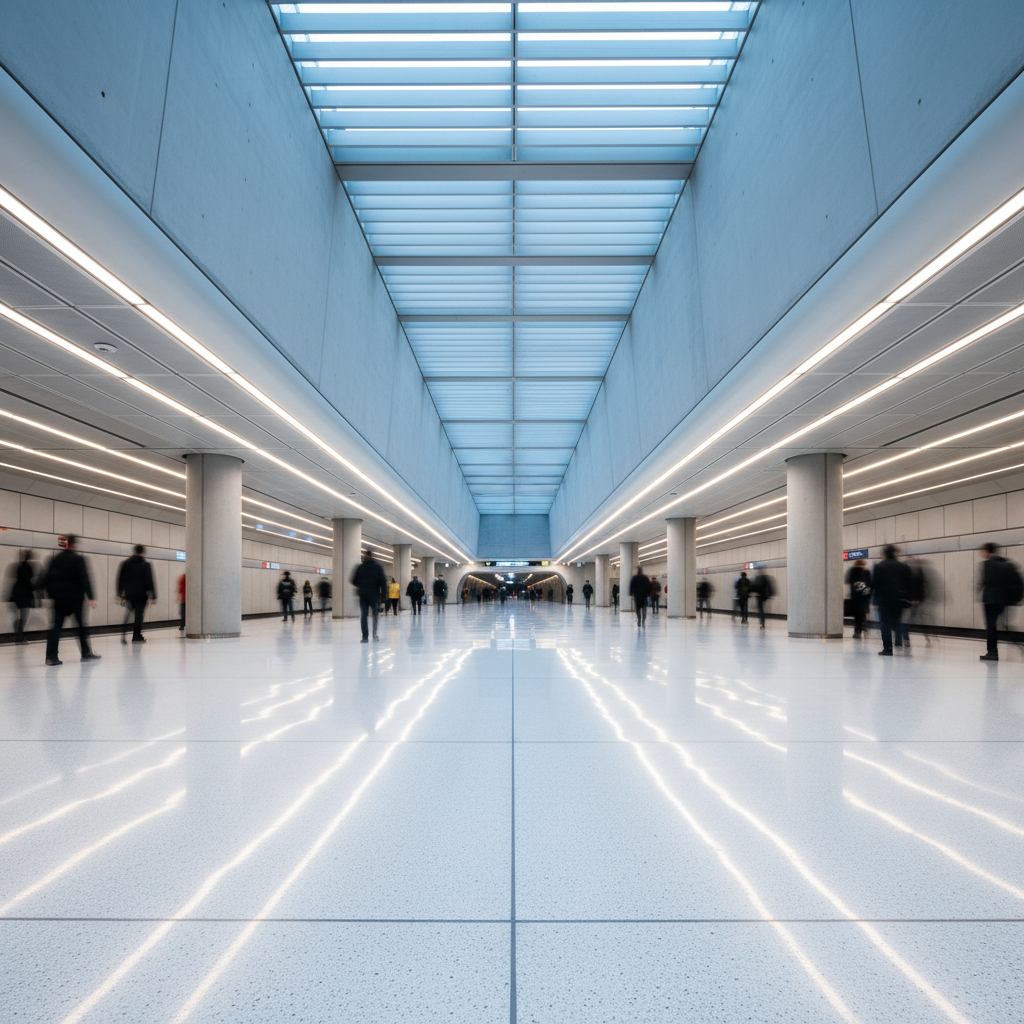
At XHLWX (led-project-light.com), a Custom Indoor LED Lighting Manufacturer based in China, we recognize that lighting metro station concourses, ticket halls, and escalators is a complex, multi-layered challenge. These 24/7 transitional spaces must safely manage high volumes of pedestrian traffic while reinforcing a sense of security, aiding wayfinding, and meeting stringent energy and maintenance objectives. The lighting design must seamlessly blend robust general illumination, precise task lighting for ticket areas, clear emergency egress guidance, and often, an architectural vision that defines the station's identity. This requires a holistic approach that balances performance, durability, and control.
Lighting Criteria and Standards for This Application
Meeting key international standards is the non-negotiable foundation of a successful metro station lighting design. For projects in the European Union, EN 12464-1:2021 is the principal document governing indoor workplace lighting, which extends to public areas like transit hubs. It specifies minimum illuminance levels (lux), glare control (UGR), and colour rendering (CRI). For the US market, IES RP-7 provides similar guidance for public transit. Furthermore, human-centric standards like the WELL v2 Light concept are increasingly influential, emphasizing light quality's impact on passenger well-being. Emergency lighting must adhere to EN 1838, ensuring safe evacuation. Key parameters for a metro concourse include maintaining an average illuminance of 200 lux on the floor, with higher levels of 300 lux in ticket halls for visual tasks. Glare must be strictly controlled to a UGR of <22 to ensure comfort for all passengers, including those with visual impairments.
| Parameter | Recommended Specification | Standard | Notes |
|---|---|---|---|
| Illuminance / Uniformity | Concourse: 200 lux, U₀ ≥ 0.4 | EN 12464-1 | Higher levels (300-500 lux) for ticket counters and information desks. |
| CCT / CRI / TM-30 | 4000K / Ra > 80 / Rf > 80, Rg > 95 | EN 12464-1 / IES TM-30 | A neutral colour temperature aids alertness and ensures accurate colour perception of signage. |
| Glare Control (UGR) | < 22 | EN 12464-1 | Critical for visual comfort in large, reflective spaces. Achieved with high-performance optics. |
| Control Protocol | DALI-2 (Wired) / Casambi (Wireless) | IEC 62386 | Enables individual addressing, energy monitoring, and automated emergency testing. |
| Housing & Durability | IP65 / IK08 | EN 60529 / EN 62262 | Protects against dust, cleaning jets, and moderate impacts or vandalism. |
| LED & Driver Brand | Osram / Samsung LED; Tridonic / Mean Well Driver | Manufacturer Spec | Ensures high efficacy (>140 lm/W), reliability, and long L80B10 lifetime (>70,000 hrs). |
| Certification & Compliance | CE / RoHS / ErP / ISO9001 | EU Directives / ISO | Mandatory for EU market access and confirms quality management systems. |
Luminaire Selection and Optics
Selecting luminaires with appropriate form factors and optics is crucial for meeting both performance and architectural goals. Metro stations demand robust, high-efficiency fixtures that can withstand the demanding environment while integrating cleanly into the architectural fabric. Linear LED systems, whether recessed, surface-mounted, or pendant-hung, are a popular choice for their ability to create continuous lines of light that guide passengers and provide excellent uniformity. For areas with very high ceilings or where accent lighting is needed, high-output IP-rated downlights are a viable option. The choice of optics is equally important; micro-prismatic or opal diffusers are needed to achieve the low UGR targets, while asymmetric lenses can be used for effective wall-washing to enhance vertical illuminance and perceived spaciousness.
| Luminaire Type | Best Application | Pros | Cons | Verdict |
|---|---|---|---|---|
| Recessed Linear (IP65/IK08) | Main Concourse, Platforms | Seamless architectural integration, excellent uniformity, easy to clean, protected from vandalism. | Requires accessible ceiling void; more complex installation than surface-mount. | Recommended for new builds and major refurbishments with suspended ceilings for a clean, modern aesthetic. |
| Surface Linear (IP65/IK08) | Concrete Ceilings, Back-of-House | Simple to install and maintain, extremely robust, suitable for any ceiling type. | Can appear utilitarian if not chosen carefully; more visually prominent. | Excellent for retrofits, areas with solid ceilings, and where practicality is the top priority. |
| High-Output IP65 Downlights | Ticket Halls, High Atriums (>6m) | Provides high punch of light for task areas, creates visual hierarchy. | Can create pools of light and shadow if spacing is incorrect; potential for higher glare. | Use strategically for task areas and to add visual interest, supplementing linear systems. |
| Integrated LED Handrail | Escalators, Stairs, Ramps | Exceptional safety lighting, glare-free, directs light to the treads, modern aesthetic. | Higher initial cost; requires coordination with handrail manufacturer. | Ideal solution for circulation routes, combining EN 1838 compliance with sophisticated design. |
How Do You Balance Durability with Aesthetics in a High-traffic Environment?
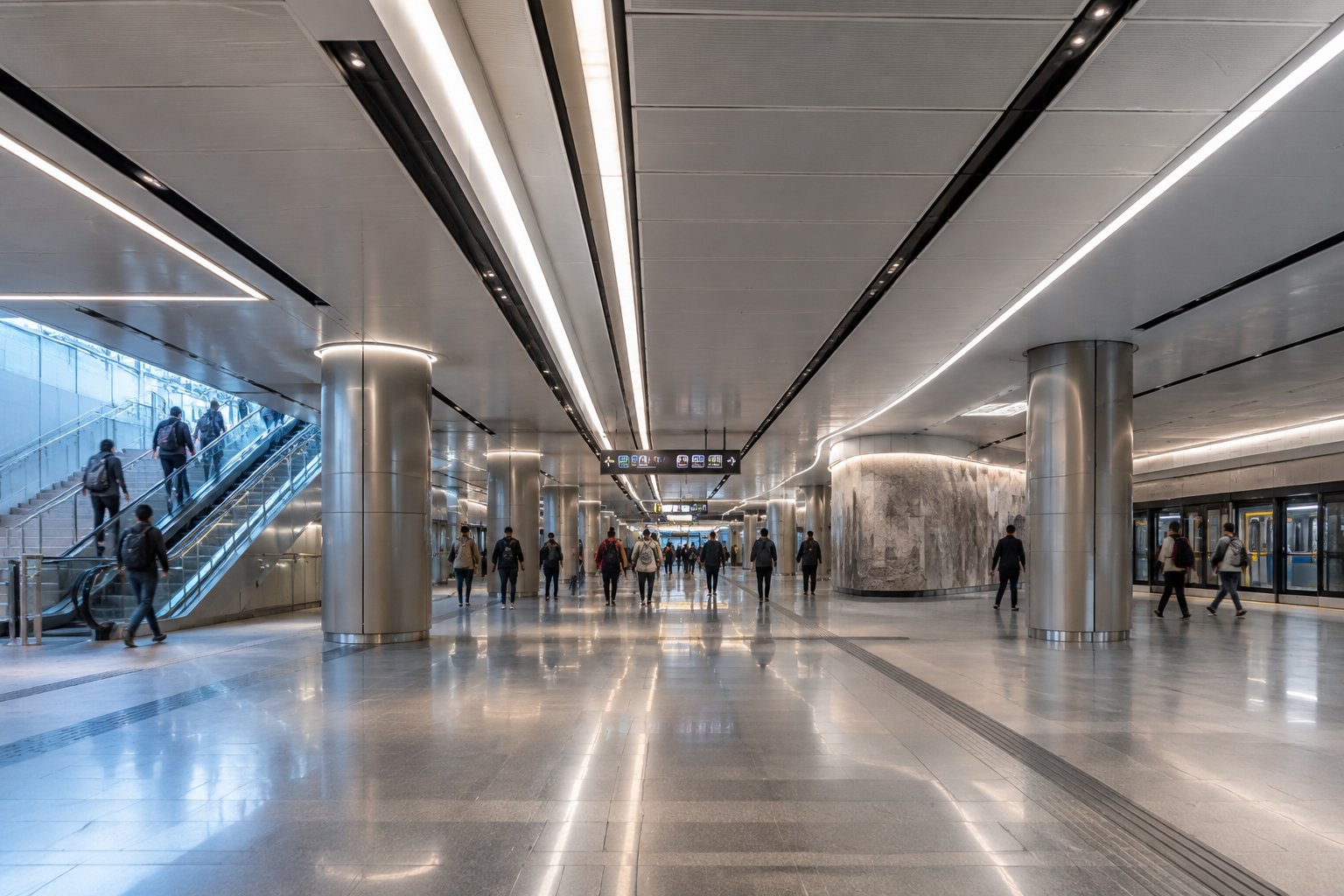
Achieving both durability and aesthetics requires careful material specification and integrated design approaches. We specify luminaires constructed from 6063 extruded aluminum with a durable powder-coat finish, ensuring resistance to corrosion and abrasion. An IK08 rating signifies that the luminaire can withstand significant impacts, a necessity in busy public spaces. Aesthetically, recessed linear fixtures create a clean, uncluttered ceiling plane. For surface-mounted solutions, slim profiles and custom RAL colour finishes allow the luminaires to blend with or accent the architectural design, proving that robust engineering and elegant design can coexist.
What Is the Role of Vertical Illuminance (Ev) in Transit Spaces?
Vertical illuminance is critical for facial recognition, reading signage, and enhancing the perception of safety. While standards traditionally focus on horizontal illuminance (on the floor), lighting vertical surfaces like walls and columns is paramount in a metro station. Good vertical illuminance makes a space feel brighter and more open, helps passengers read complex directional signs from a distance, and improves the effectiveness of security cameras. As per DIN EN 12464-1, sufficient cylindrical illuminance is key. This is achieved by using luminaires with wall-washing or asymmetric optics to direct light onto vertical planes, a key consideration in our simulation process.
How Should Emergency Lighting Be Integrated into the Main System?
Integrating emergency lighting ensures a cohesive aesthetic and simplified testing via a central control system. Rather than using separate, often unattractive, emergency-only fixtures, the best practice is to integrate emergency functionality into the primary lighting system. This is done in two main ways: either by equipping a percentage of the standard DALI luminaires with integral 3-hour battery packs and charger modules, or by powering designated standard luminaires from a Central Power Supply (CPS) or Central Battery System (CBS). Using a DALI-2 system allows for automated, centralized testing and monitoring of every emergency light, as mandated by IEC 62386-202, drastically reducing maintenance costs and ensuring compliance.
 Metro Concourse Lighting Design 2026: EN 12464 & Emergency Guide: How do you balance durability with aesthetics in a high-traffic environment?
Controls, Energy and Commissioning (DALI-2 / Casambi / Sensors)
Advanced control systems like DALI-2 are essential for maximizing energy savings and operational intelligence in a 24/7 facility. A wired DALI-2 network provides granular control, allowing for scheduled dimming based on passenger flow data—for example, reducing light levels to 30% during late-night hours while maintaining full brightness during peak times. Daylight sensors near glazed entrances and at the top of escalators can dim artificial lighting in response to available natural light, generating significant energy savings. Presence sensors (PIR) can be deployed in lower-traffic areas to bring lights to full brightness only when occupied. For refurbishments where running new control cabling is prohibitive, wireless mesh systems like Casambi offer a robust and flexible alternative for zonal control. Commissioning is the vital final step, where a qualified engineer programs the system to execute these strategies, ensuring the design intent is fully realized and savings are maximized.
Photometric Files & Compliance (IES / LDT / DIALux / CE / RoHS / ErP)
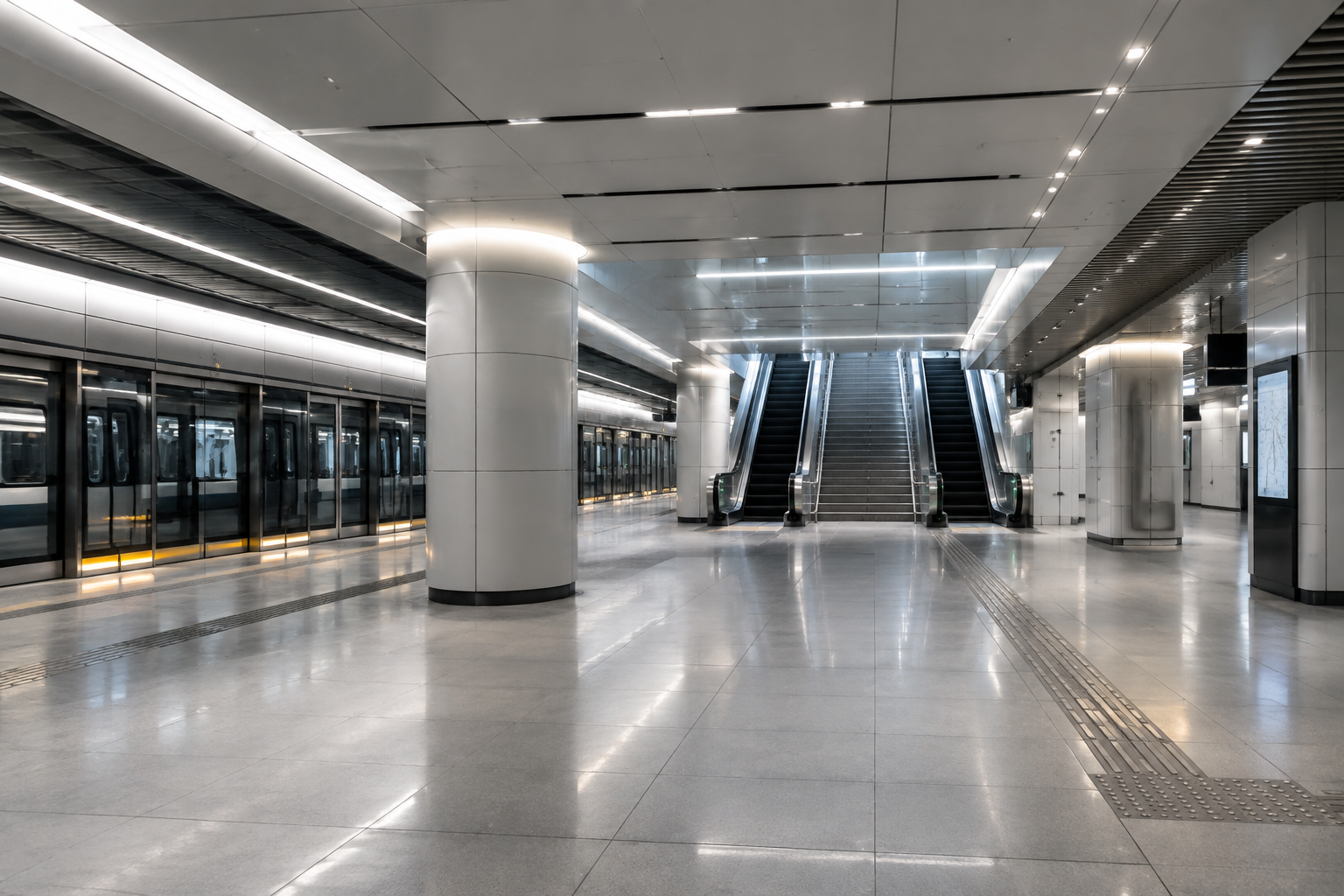
Verified photometric data and compliance documentation are mandatory for proving a design meets specified standards. At XHLWX (led-project-light.com), a Custom Indoor LED Lighting Manufacturer based in China, we provide comprehensive photometric data for our entire product range. These IES and LDT photometric files are laboratory-measured electronic files that describe exactly how a luminaire distributes light. Lighting designers import these files into simulation software like DIALux or Relux. This allows them to build a 3D model of the metro station and accurately predict on-site performance, generating point-by-point calculations for illuminance, uniformity, and UGR. The final DIALux report serves as proof of compliance with EN 12464-1. For market access, all our products for the EU are fully certified, bearing the CE mark and demonstrating compliance with RoHS (Restriction of Hazardous Substances) and ErP (Energy-related Products) directives.
 Metro Concourse Lighting Design 2026: EN 12464 & Emergency Guide: Photometric files & compliance (IES / LDT / DIALux / CE / RoHS / ErP)
Frequently Asked Questions
Q: What Is a Typical UGR Target for a Metro Station Concourse?
For a metro concourse, the recommended Unified Glare Rating (UGR) is less than 22, as specified by the EN 12464-1 standard. This ensures visual comfort for passengers navigating the large, open space. Achieving this requires luminaires with well-designed optics, such as prismatic diffusers or micro-louvres, and careful placement during the DIALux simulation phase to avoid direct glare from the passengers' line of sight.
Q: Can LED Lighting Systems Withstand the Vibrations in a Metro Station?
Yes, high-quality LED luminaires are solid-state and inherently more resistant to vibration than legacy fluorescent tubes. At XHLWX, our transit-grade fixtures are designed to be extremely robust, often tested against standards like EN 61373 for shock and vibration. We use secure mounting mechanisms, high-quality drivers, and durable aluminum housings to ensure a long service life of over 70,000 hours despite the constant vibrations from passing trains.
Q: How Much Energy Can Be Saved by Using DALI-2 Controls?
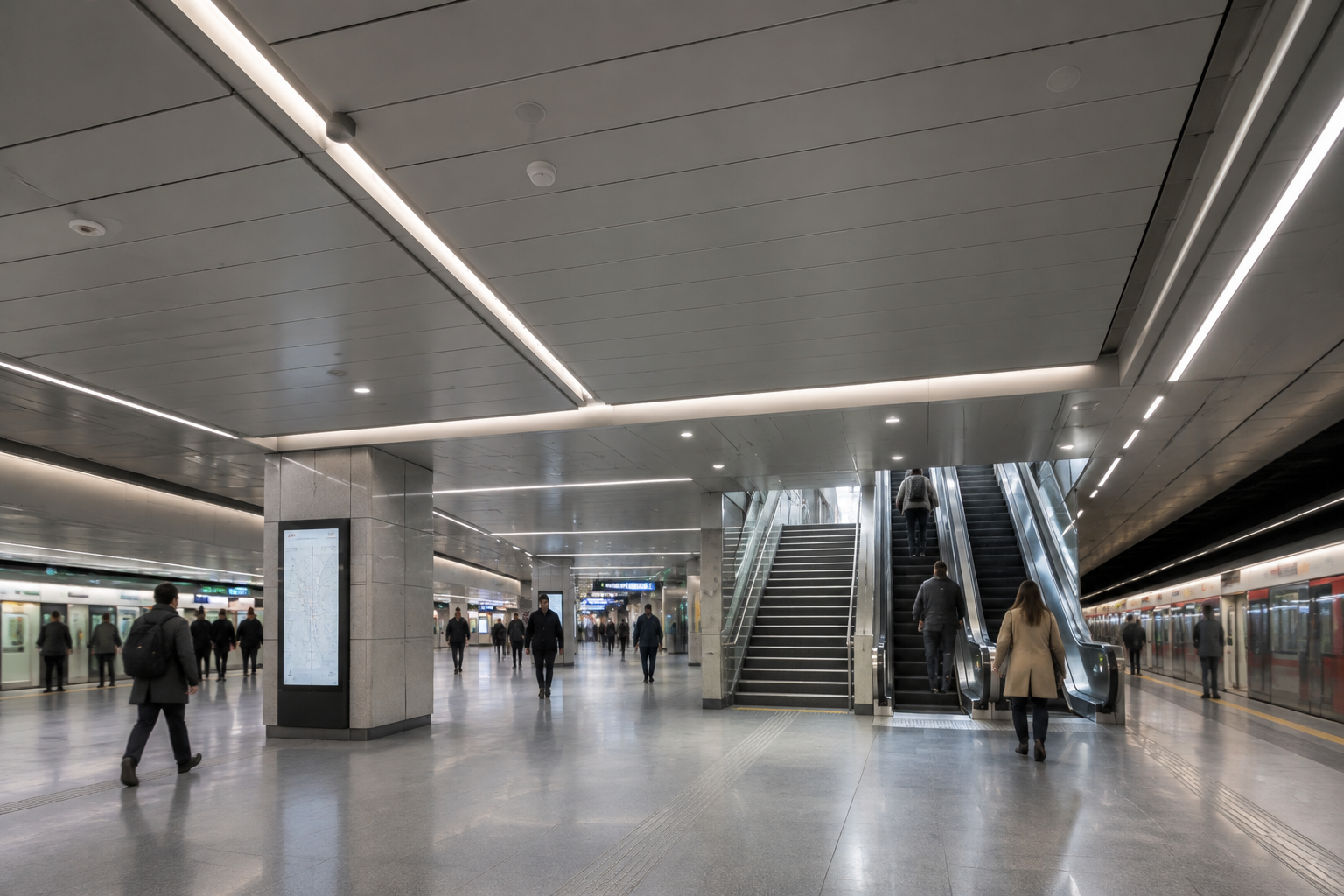
Implementing a DALI-2 control system in a metro station can yield significant energy savings, often in the range of 30-50% compared to a basic on/off system. These savings are achieved through strategies like daylight harvesting near entrances, presence detection in low-traffic zones during off-peak hours, and scheduled dimming. The system also reduces maintenance costs via luminaire-level monitoring, which reports failures automatically.
Q: What IP Rating Is Required for Luminaires in a Metro Concourse?
A recommended minimum Ingress Protection (IP) rating for general concourse areas is IP54, offering protection against dust ingress and water splashes. However, for areas subject to regular cleaning with pressure jets or with higher exposure to moisture and brake dust, an IP65 rating is essential. This ensures the luminaire is fully dust-tight and can withstand low-pressure water jets from any direction, guaranteeing long-term reliability and safety.
Sources and Technical References
- EN 12464-1:2021: Light and lighting — Lighting of work places — Part 1: Indoor work places.
- DIN EN 12464-1: The German national edition of the EN 12464-1 standard.
- EN 1838:2013: Lighting applications — Emergency lighting.
- IES RP-7-17: Recommended Practice: Lighting for Public Transit.
- WELL Building Standard v2: Light Concept.
- IEC 62386: Digital Addressable Lighting Interface.
- EN 60529: Degrees of protection provided by enclosures (IP Code).
- EN 62262: Degrees of protection provided by enclosures for electrical equipment against external mechanical impacts (IK Code).
 Metro Concourse Lighting Design 2026: EN 12464 & Emergency Guide: Q: How much energy can be saved by using DALI-2 controls?
Request a Custom Quote
At XHLWX (led-project-light.com), a Custom Indoor LED Lighting Manufacturer based in China, we specialize in developing and manufacturing specification-grade luminaires for demanding infrastructure projects like metro stations and airports. Our engineering team works with lighting designers and contractors to create tailored solutions that meet stringent performance, safety, and architectural requirements for markets across the EU, USA, and the Middle East. Contact our solutions team to discuss your metro station project. We provide full support, from custom luminaire design and prototyping to providing the certified IES and LDT photometric files needed for your DIALux compliance reports.
Need a tailored lighting plan for your project?
Our senior lighting designers reply within 48 hours with a free design proposal & quotation.