
Nightclub Lighting Design 2026: DMX & RGBW Control Guide
Quick answer
A technical guide to modern nightclub lighting design for 2026. Explore DMX control, RGBW LED luminaire selection, and meeting standards for dance floors, VIP
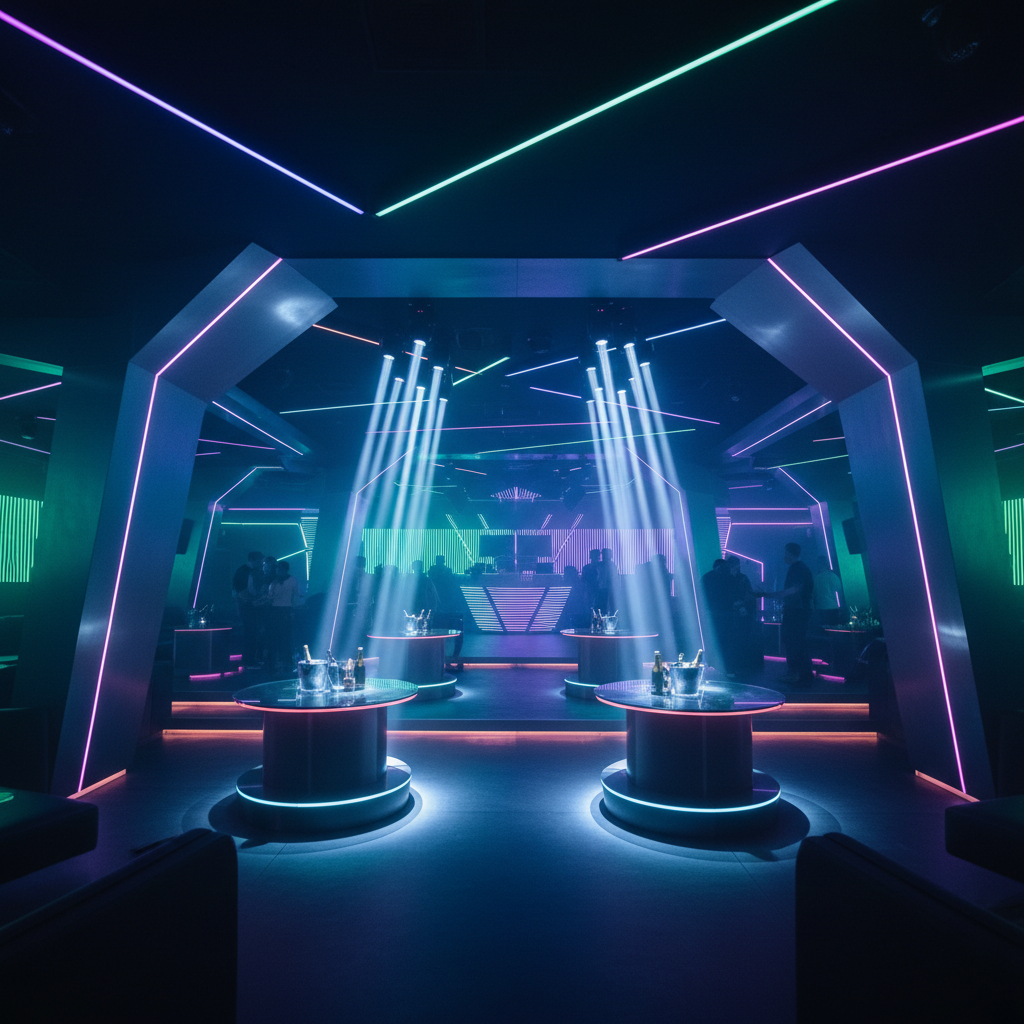
Introduction — the Design Problem in Nightclubs
com), a Custom Indoor LED Lighting Manufacturer based in China, we see that designing a successful nightclub environment is a complex exercise in sensory engineering. Modern venues must deliver more than just sound and space; they need to create distinct, immersive atmospheres that evolve throughout the night.
The core design problem lies in creating a layered, dynamic, and controllable lighting scheme that can pivot from an intimate lounge vibe to a high-energy dance floor experience, all while ensuring guest comfort, safety, and visual appeal. This requires a sophisticated integration of both architectural and entertainment lighting, controlled by robust protocols like DMX and DALI-2, to build a memorable and brand-defining guest experience.
Lighting Criteria and Standards for Nightclub Applications
Effective nightclub lighting design balances artistic expression with technical precision. While creative lighting is paramount, functional areas like bars, stairways, and restrooms must adhere to safety and usability standards.
For instance, in bar work areas, achieving specific lux levels and controlling glare is crucial for staff efficiency and safety, referencing principles from standards like EN 12464-1 for interior workplaces. The key is to blend these functional requirements with the dynamic, color-rich lighting that defines the club's identity.
Parameters like color rendering (CRI), unified glare rating (UGR), and precise beam control are just as important in a high-end lounge as they are in an office, but they serve a different master: atmosphere. Below are recommended specifications for custom LED luminaires in a modern nightclub project.
| Parameter | Recommended Specification | Standard / Protocol | Notes |
|---|---|---|---|
| Optics & Color | RGBW, 4-channel; or Tunable White 2200K-5700K; CRI >90 Ra; TM-30 Rf>90, Rg>100 | N/A | High CRI is crucial for rendering skin tones and drink colors accurately in VIP and bar areas. RGBW provides saturated colors for dynamic effects. |
| Beam & Glare | 10°, 24°, 38° interchangeable optics; Asymmetric wall wash; UGR < 19 (Bar/Lounge) | EN 12464-1 (Guideline) | Low UGR is a design target for seated areas to ensure visual comfort. A range of beam angles allows for precise accenting and general illumination. |
| Control | DMX512-A / RDM; DALI-2 Device Type 8 (DT8) for color control | DMX / IEC 62386 | DMX is essential for fast, dynamic effects on the dance floor. DALI-2 is excellent for addressable architectural lighting in lounges and bars. |
| Housing & Safety | IP20 (General Indoor), IP44 (Damp locations e.g. near bars); IK06 | IEC 60529 / EN 62262 | Higher IP ratings may be required depending on local building codes, especially for luminaires within reach of patrons or near wet bars. |
| LED & Driver | Osram / Bridgelux LED Chip; Tridonic / Mean Well Driver | Manufacturer Specific | Using high-quality components ensures color consistency, reliability, and long-term performance critical for commercial venues. |
| Certification | CE, RoHS, ErP (for EU Market); ISO9001:2015 | EU Directives / ISO | Ensures products meet European safety, environmental, and quality management standards for market access and client assurance. |
Luminaire Selection and Optics
Selecting the right luminaires is critical to zoning a nightclub and creating layers of light. A successful design uses a diverse toolkit of fixtures, each chosen for its specific optical properties and suitability for a given area.
The high-energy dance floor demands different hardware than an intimate VIP booth or a functional bar. The goal is to create a cohesive journey for the guest, using light to define space, guide movement, and craft the desired mood.
This involves a strategic mix of wide-angle color washes, narrow-beam accents, and integrated linear lighting that becomes part of the architecture itself.
How Do You Layer Lighting in a Nightclub?
Layering light involves combining four distinct types of illumination to build a rich visual scene. The base is the ambient layer, often from RGBW wall washers or cove lighting, which sets the overall color and mood of the space.
Next, the accent layer uses narrow-beam spotlights to draw attention to architectural features, artwork, or high-value products like premium bottles behind the bar. The task layer is functional, providing clean, high-CRI light for specific activities, like a bartender mixing drinks.
Finally, the kinetic layer is the dynamic, show-stopping element—moving heads, strobes, and pixel-mapped LED arrays that sync with music and energize the dance floor.
What Is the Role of RGBW vs. Tunable White?
RGBW and Tunable White LEDs serve distinct, complementary purposes in a sophisticated club design. RGBW (Red, Green, Blue, White) luminaires are masters of spectacle, producing deeply saturated colors and fast-changing effects essential for the dance floor and high-energy moments.
However, their composite white light often has poor color rendering. This is where Tunable White luminaires excel.
, 2200K to 5700K), they produce high-quality, high-CRI white light that can be tuned to create atmospheres from cozy and intimate to crisp and modern, making them ideal for VIP lounges, restaurants, and bar seating where flattering light is key.
Why Is DMX Essential for Modern Club Lighting?
DMX (Digital Multiplex) is the global standard for controlling dynamic entertainment lighting. Its importance in a nightclub cannot be overstated; it provides the speed, reliability, and granular control needed for complex, synchronized lighting shows.
A single DMX universe offers 512 individual channels, allowing a lighting designer to precisely control the intensity, color, position, and other parameters of hundreds of fixtures in real-time. This capability is what enables the lighting to pulse with the beat, create sweeping movements across the dance floor, and execute pre-programmed scenes with flawless timing, transforming the lighting system from simple illumination into a responsive, living part of the entertainment.
| Luminaire Application: Accent Lighting in VIP Booths | Fixed Narrow Beam Downlight (e.g., XHL-DL-A08) | Adjustable Track Spotlight (e.g., XHL-TR-M05) | Integrated Linear Profile (e.g., XHL-LP-C20) | Verdict |
|---|---|---|---|---|
| Flexibility | Low. Fixed position provides a consistent effect but cannot be easily changed after installation. | High. Can be repositioned and re-aimed anywhere along the track as furniture or layout changes. | Medium. Fixed within the architecture (cove, wall) but can provide dynamic effects like grazing or washing. | Track spotlights offer the most post-installation flexibility for changing layouts. |
| Visual Impact | Subtle and clean. Creates pools of light on tables. Minimalist aesthetic. | More prominent. The fixture itself is part of the visual language, adding a technical or industrial feel. | Architectural. The light appears to emanate from the structure itself, creating a seamless, high-end look. | Integrated profiles deliver the most sophisticated and 'designed' aesthetic. |
| Control | Typically switched, 0-10V, or DALI. Good for simple dimming. | DALI or DMX options available for individual control and scene integration. | DMX-controlled pixel versions allow for flowing color and dynamic effects, fully integrating with the main show. | DMX linear profiles offer the highest level of dynamic control and integration. |
| Atmosphere | Creates intimacy with focused light, but can feel static. | Excellent for highlighting specific features like art or textures. Very direct and precise. | Creates a soft, enveloping glow. Can wash a wall with color or tunable white light to set a deep mood. | For creating a luxurious and immersive mood, integrated linear profiles are superior. |
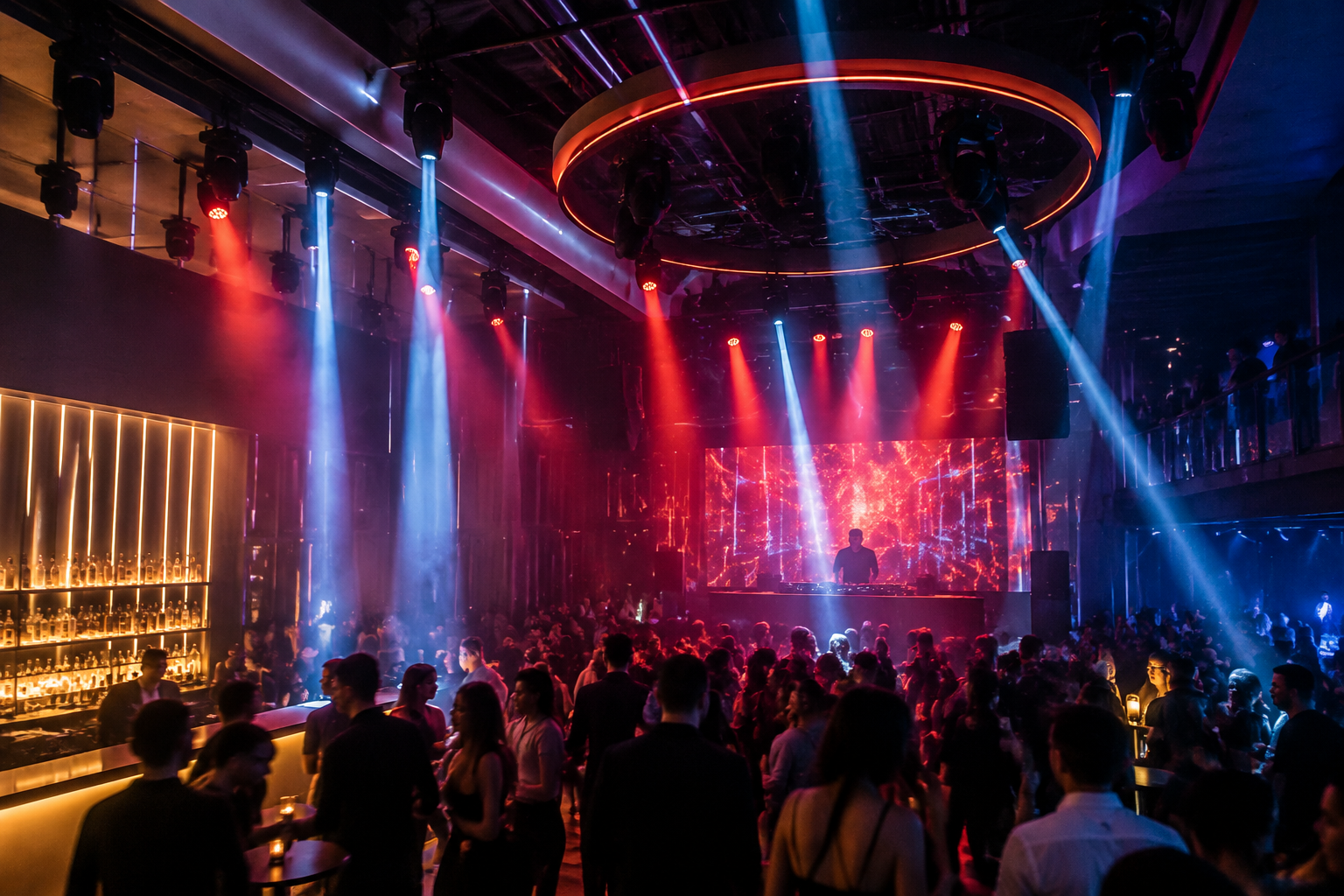 Nightclub Lighting Design 2026: DMX & RGBW Control Guide: How do you layer lighting in a nightclub?
Controls, Energy, and Commissioning
A unified control strategy is the brain of a modern nightclub's lighting system. The most robust solution is a hybrid approach, using a gateway to bridge DMX and DALI-2 networks.
This allows DMX to handle the high-speed, kinetic lighting on the dance floor while DALI-2 manages the architectural lighting throughout the rest of the venue—VIP booths, bars, hallways, and restrooms—with individual addressability and scheduling. Wireless protocols like Casambi (Bluetooth Low Energy mesh) can also be a powerful tool for controlling smaller, self-contained zones or for retrofitting areas where running new control wiring is impractical.
To optimize energy consumption, occupancy sensors in back-of-house areas, restrooms, and storage turn lights off automatically when rooms are vacant. The final commissioning phase is crucial; it involves programming scenes, setting up control interfaces for DJs and managers, and ensuring all systems communicate flawlessly to deliver the intended design experience.
Photometric Files & Compliance
Professional design and predictable outcomes depend on accurate digital simulation before a single fixture is installed. At XHLWX, we support architects and lighting designers by providing comprehensive photometric data for our custom luminaires.
These IES and LDT photometric files are essential for modeling lighting performance in software like DIALux. Using our files, a designer can accurately simulate illuminance levels, light distribution, and color effects, verifying that the design will meet its aesthetic goals and any functional requirements, such as the lux level targets derived from the IES Lighting Handbook or glare limits recommended by DIN EN 12464-1 in bar areas.
This simulation process mitigates risk and ensures the final installation perfectly matches the client's vision. Furthermore, all our products are manufactured to meet regional compliance standards, including CE, RoHS, and ErP for our European Union clients, guaranteeing safety and market legality.
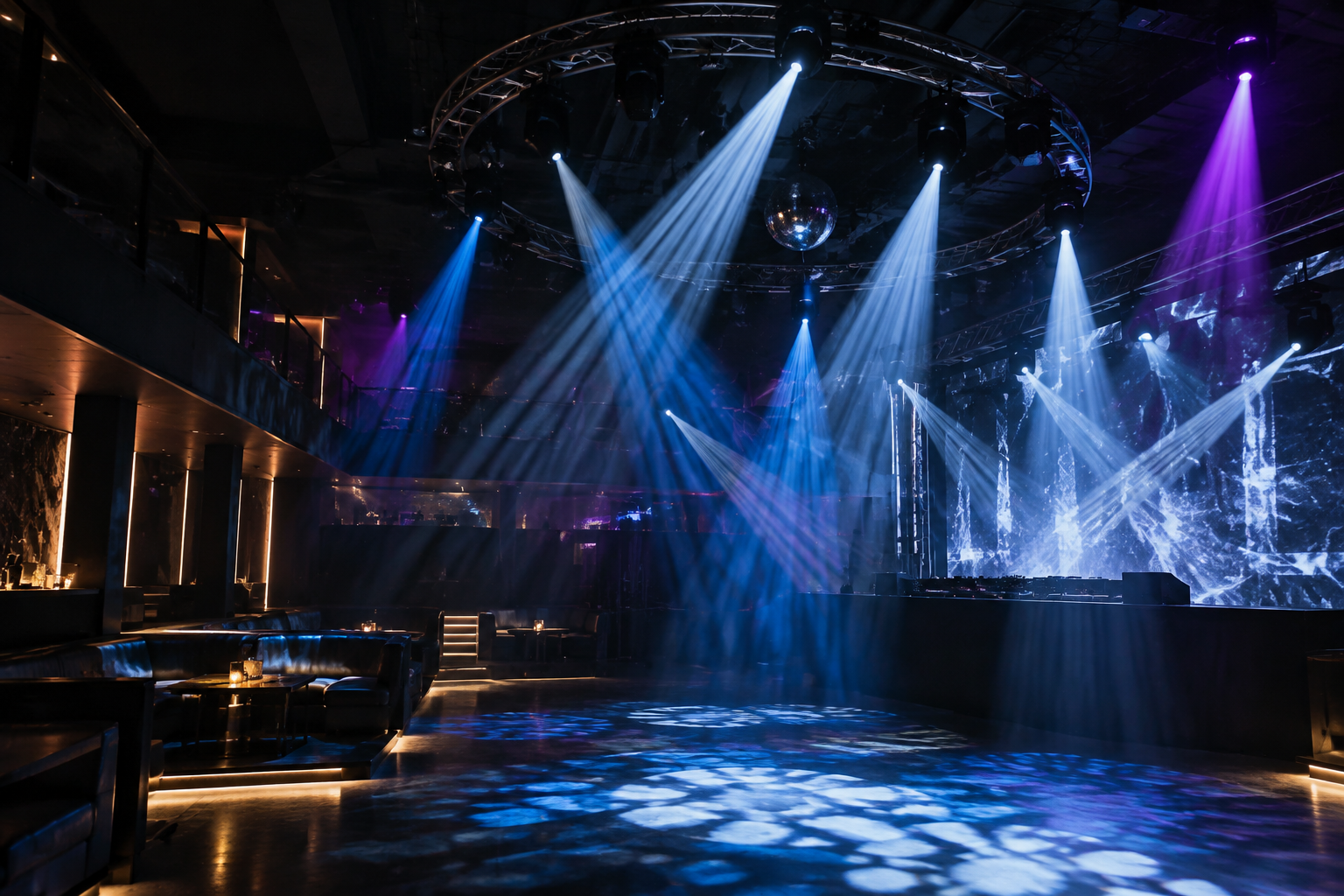 Nightclub Lighting Design 2026: DMX & RGBW Control Guide: Photometric Files & Compliance
Frequently Asked Questions
Q: What Is a Good Starting Budget for Professional Nightclub Lighting?
A professional lighting system is a significant investment. A rough design target for a comprehensive, custom architectural and entertainment lighting package often falls between €300 and €1,000+ per square meter (€28 - €93+ per sq ft). This varies widely based on fixture complexity, control system sophistication, and the density of lighting elements required to achieve the desired effects and luxury level.
Q: How Many DMX Universes Are Needed for a Typical Nightclub?
This depends entirely on the number and type of fixtures. A single DMX universe controls 512 channels. A moving head can use 20-30 channels, while a simple RGBW PAR might use 4-8. A medium-sized club with a mix of moving lights, strobes, and pixel-mapped LED strips could easily require 4 to 8 DMX universes to ensure sufficient control bandwidth.
Q: What Is the Difference Between UGR and CRI in a Bar Setting?
They measure two different aspects of light quality. UGR (Unified Glare Rating) measures visual comfort; a design target of UGR < 19 is considered comfortable and is important for both patrons and staff. CRI (Color Rendering Index) measures how accurately light reveals colors; a CRI > 90 is recommended for bars to ensure skin tones look natural and the colors of cocktails are vibrant and appealing.
Q: Can I Mix Different Lighting Control Protocols Like DMX and DALI?
Yes, mixing protocols is standard practice in high-end venues. This is achieved using a gateway device that translates commands between the systems. This allows you to use DMX for its high-speed control of entertainment lights on the dance floor, while leveraging DALI for its robust, addressable control of architectural lights throughout the venue, creating a powerful and efficient hybrid system.
Sources and Technical References
- EN 12464-1:2021: Light and lighting — Lighting of work places — Part 1: Indoor work places.
- IES Lighting Handbook, 10th Edition: The Illuminating Engineering Society.
- ANSI E1.11 - 2008 (R2018): USITT DMX512-A - Asynchronous Serial Digital Data Transmission Standard for Controlling Lighting Equipment and Accessories.
- IEC 62386: Digital Addressable Lighting Interface (DALI).
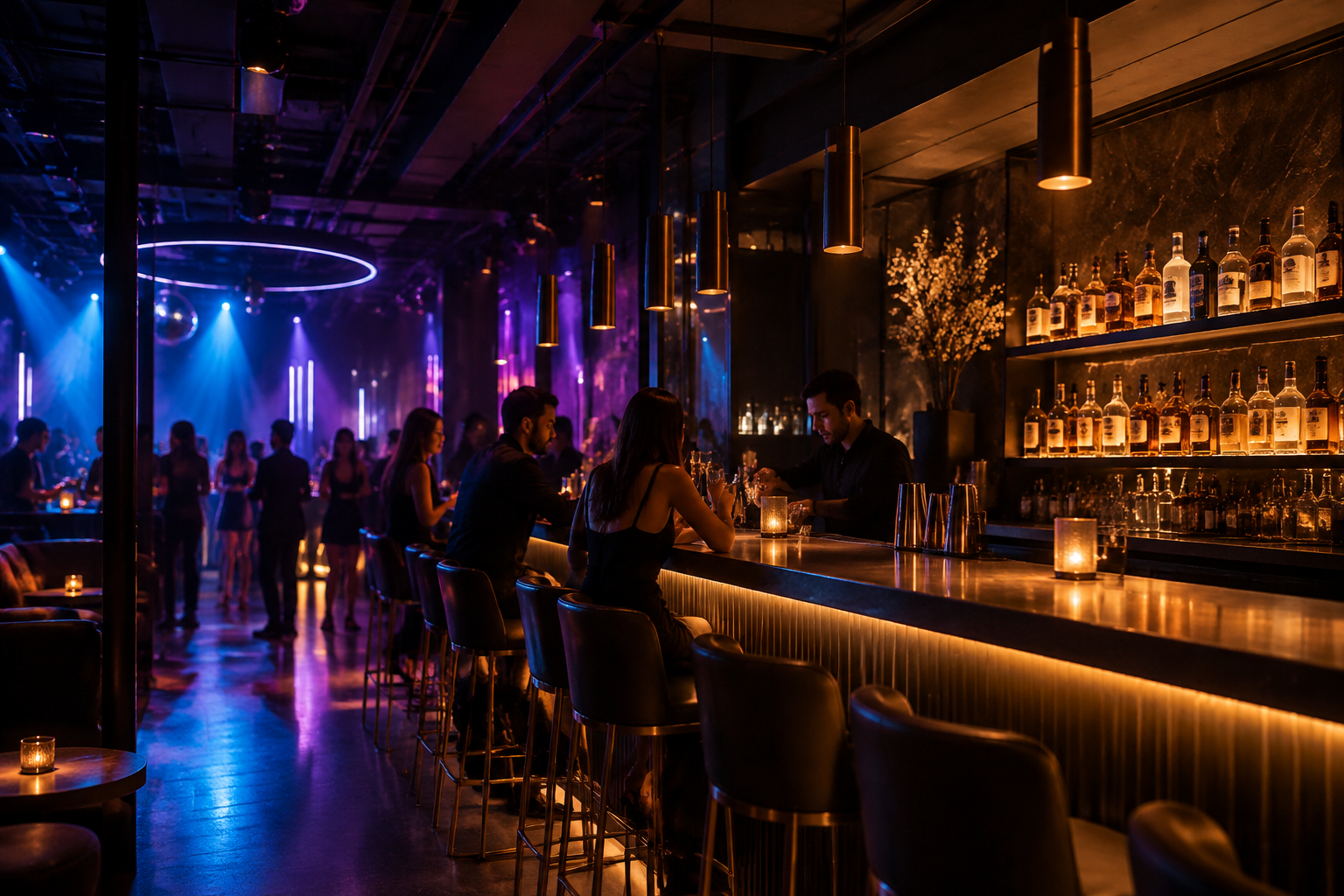 Nightclub Lighting Design 2026: DMX & RGBW Control Guide: Q: What is the difference between UGR and CRI in a bar setting?
Request a Custom Quote
com), a Custom Indoor LED Lighting Manufacturer based in China, we specialize in collaborating with designers and contractors to create bespoke LED lighting solutions for demanding environments like nightclubs, lounges, and bars. From custom-length RGBW linear profiles to high-CRI, narrow-beam spotlights with specialized optics, our engineering team is ready to translate your design intent into reality.
We provide full support, including photometric files, control system guidance, and products certified for EU, US, and Middle Eastern markets. Contact us today to discuss your project requirements and receive a detailed, no-obligation quote.
Need a tailored lighting plan for your project?
Our senior lighting designers reply within 48 hours with a free design proposal & quotation.