
Pharmacy Lighting Design 2026: CRI90, UGR<19 Shelf Guide
Quick answer
Explore the definitive 2026 guide to pharmacy lighting design. Learn how to achieve EN 12464-1 compliance with CRI90, UGR<19, and advanced LED shelf lighting
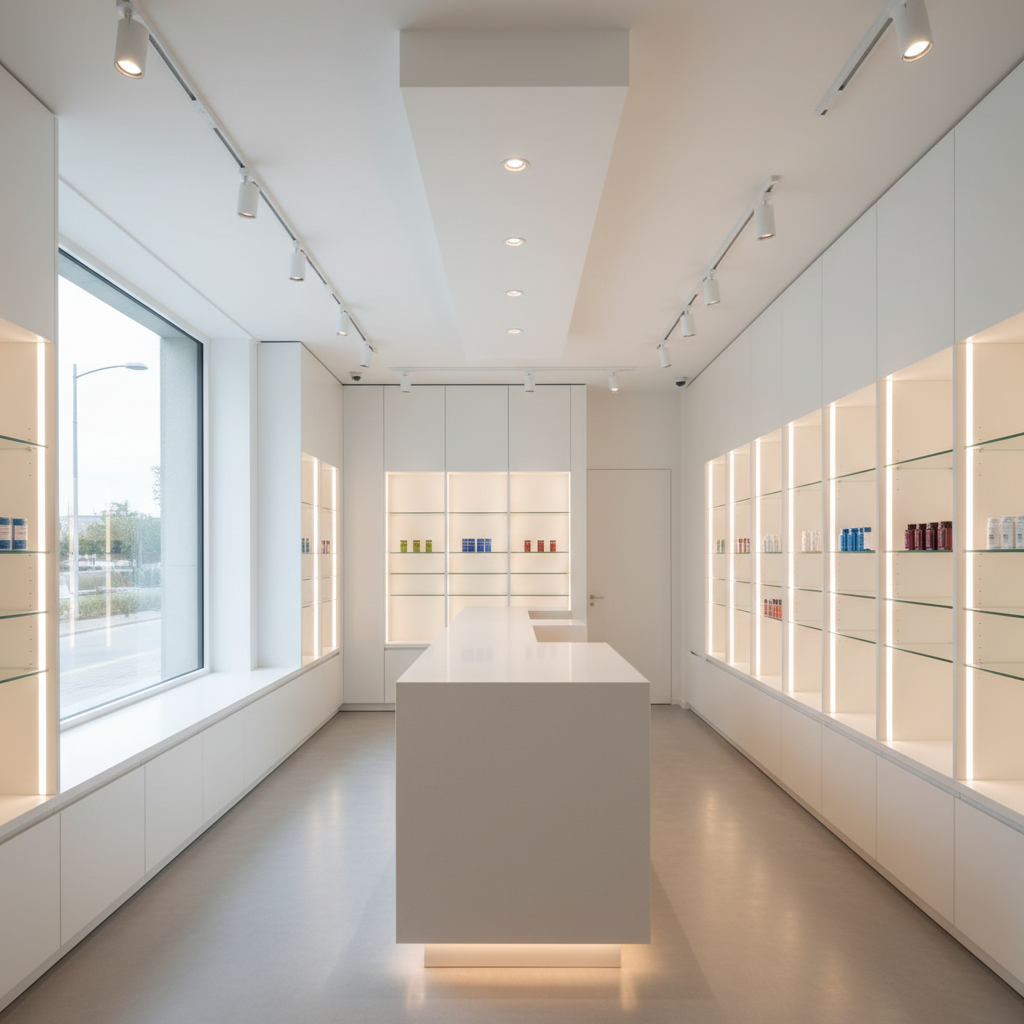
Introduction — the Design Problem in This Space
At XHLWX (led-project-light.com), a Custom Indoor LED Lighting Manufacturer based in China, we understand that a pharmacy is a unique hybrid environment, blending the clinical precision of a healthcare facility with the welcoming atmosphere of a retail space. The core design problem is balancing these two functions: providing high-performance task lighting for critical dispensing work while creating a comfortable and appealing shopping experience for customers. Effective lighting must ensure absolute clarity for reading prescriptions and identifying medications, render product packaging and skin tones accurately, and guide customers intuitively through the retail floor, all while adhering to stringent health, safety, and energy standards.
Lighting Criteria and Standards for This Application
Effective pharmacy lighting meets strict criteria for illuminance, glare, and color rendering defined by international standards. The primary European standard is EN 12464-1, which provides specific targets for different zones within a pharmacy, from the sales area to the dispensing counter. In the US, the IES Recommended Practice series (notably IES RP-2 for retail) offers guidance. Furthermore, standards like the WELL v2 Building Standard place additional emphasis on the qualitative aspects of light to enhance human health and well-being. A successful design synthesizes these requirements into a cohesive and compliant lighting scheme. Key parameters include maintained illuminance (lux), Unified Glare Rating (UGR), and high color fidelity (CRI and TM-30).
| Parameter | Recommended Specification | Standard / Rationale | Notes |
|---|---|---|---|
| Illuminance (Maintained) | 500 lx (Dispensary), 300 lx (Retail), 150 lx (Shelving) | EN 12464-1:2021 | Levels are for the task area/plane. Higher vertical illuminance is crucial for shelving. |
| Unified Glare Rating (UGR) | < 19 (Dispensary/Counter), < 22 (General Retail) | EN 12464-1:2021 | Lower UGR is critical for staff comfort and to prevent errors during prolonged task focus. |
| Color Rendering / Fidelity | CRI Ra > 90, R9 > 50; TM-30 Rf > 90, Rg ≈ 100 | WELL v2 / Best Practice | High CRI is essential for accurate medication identification and viewing skin tones. TM-30 gives a fuller picture. |
| Control System | DALI-2 (addressable), Casambi (wireless), or 0-10V dimming | IEC 62386 | DALI-2 is preferred for new builds for granular control, energy monitoring, and BMS integration. |
| Housing & Safety | IP40 / IK04 (recommended minimum for interiors) | General Safety | Higher IP rating may be needed for cleaning protocols. IK rating indicates impact resistance. |
| Core Components | Osram, Samsung, or Bridgelux LED Chips; Tridonic Driver | Manufacturer Quality | Using Tier 1 components ensures performance, longevity (L80B10 > 50,000 hrs), and warranty compliance. |
| Certifications | CE, RoHS, ErP (for EU); UL (for US) | Market Access / Legal Requirement | ISO9001 certification for the manufacturer ensures consistent quality management. |
Luminaire Selection and Optics
Choosing the right luminaire depends entirely on its location and function within the pharmacy. A one-size-fits-all approach fails to address the distinct needs of general circulation, task-specific counters, and vertical product displays. For general ambient lighting, recessed downlights with low-glare reflectors or linear systems with micro-prismatic diffusers provide comfortable, uniform illumination. Task areas demand more focused, high-output solutions. The most challenging and impactful area is often the retail shelving, where standard overhead lighting creates shadows and poor visibility on lower shelves. Here, specialized optics are required to deliver high vertical illuminance.
| Shelf Lighting Approach | Pros | Cons | Verdict |
|---|---|---|---|
| General Overhead Downlights | Simple to install; provides ambient light. | Creates shadowing on lower shelves; poor vertical illuminance; can cause reflected glare. | Inadequate as a sole solution for shelving. Best used for general circulation areas only. |
| Adjustable Accent Spotlights | Flexible aiming; creates highlights and drama; good for promotional displays. | Can be visually cluttered; risk of glare if aimed poorly; requires frequent re-aiming. | Good for specific, high-margin promotional end-caps but not for uniform lighting across all general shelving. |
| Asymmetric Wallwashers | Excellent vertical uniformity from a single ceiling line; cleanly integrated. | Requires precise placement relative to the shelving; less effective on deep gondolas. | An excellent, clean-looking solution for perimeter wall shelving to 'wash' the entire vertical surface with light. |
| Integrated Vertical LED Profiles | The most effective method; eliminates shadows completely; high visual impact. | Higher initial cost; requires integration into the joinery; power supply needs to be concealed. | Winner. Provides the best product visibility and modern aesthetic. Ideal for high-value health, beauty, and OTC sections. |
How Does Vertical Illuminance Impact Product Visibility on Shelves?
High vertical illuminance is crucial for making products on shelves appear bright, legible, and attractive. While lighting standards historically focused on horizontal illuminance (light falling on the floor), retail success hinges on vertical illuminance (light falling on the face of the products). General overhead lighting often results in excellent horizontal lux levels but poor vertical values, leaving lower shelves in shadow. To comply with modern retail practice and standards like IES RP-2, designers aim for an average vertical illuminance of at least 150-200 lux on the shelf face. This is best achieved with dedicated solutions like asymmetric wallwashers or LED profiles integrated directly into the shelving, which directs light where it's most needed.
What Is the Best Way to Light the Dispensing and Payment Counter?
Counter lighting must prioritize task performance and visual comfort for pharmacists and customers. This critical area requires a maintained illuminance of 500 lux on the work plane, as specified by EN 12464-1, to ensure prescriptions and labels can be read without error. Equally important is controlling glare; the Unified Glare Rating (UGR) must be kept below 19. This low-glare environment prevents eye strain for staff working long shifts. The ideal solution is often a suspended linear LED luminaire with a micro-prismatic or louvred optic, or a series of recessed low-glare downlights, positioned directly over the task area. High color rendering (CRI > 90) is mandatory here for safe and accurate identification of medications.
Should Pharmacy Lighting Be Warm or Cool?
A neutral white CCT, typically 4000K, provides the best balance of clinical clarity and customer comfort. Correlated Color Temperature (CCT) is a critical choice in pharmacy design. A CCT that is too warm (e.g., 3000K) can make the space feel less clean and may distort the appearance of certain product packaging. Conversely, a very cool CCT (>5000K) can feel overly clinical, sterile, and unwelcoming to customers. A 4000K source offers a clean, professional, and alert atmosphere that is ideal for both the clinical functions of the dispensary and the retail floor. This CCT also works well with high CRI LEDs to render colors accurately without an obvious warm or cool bias.
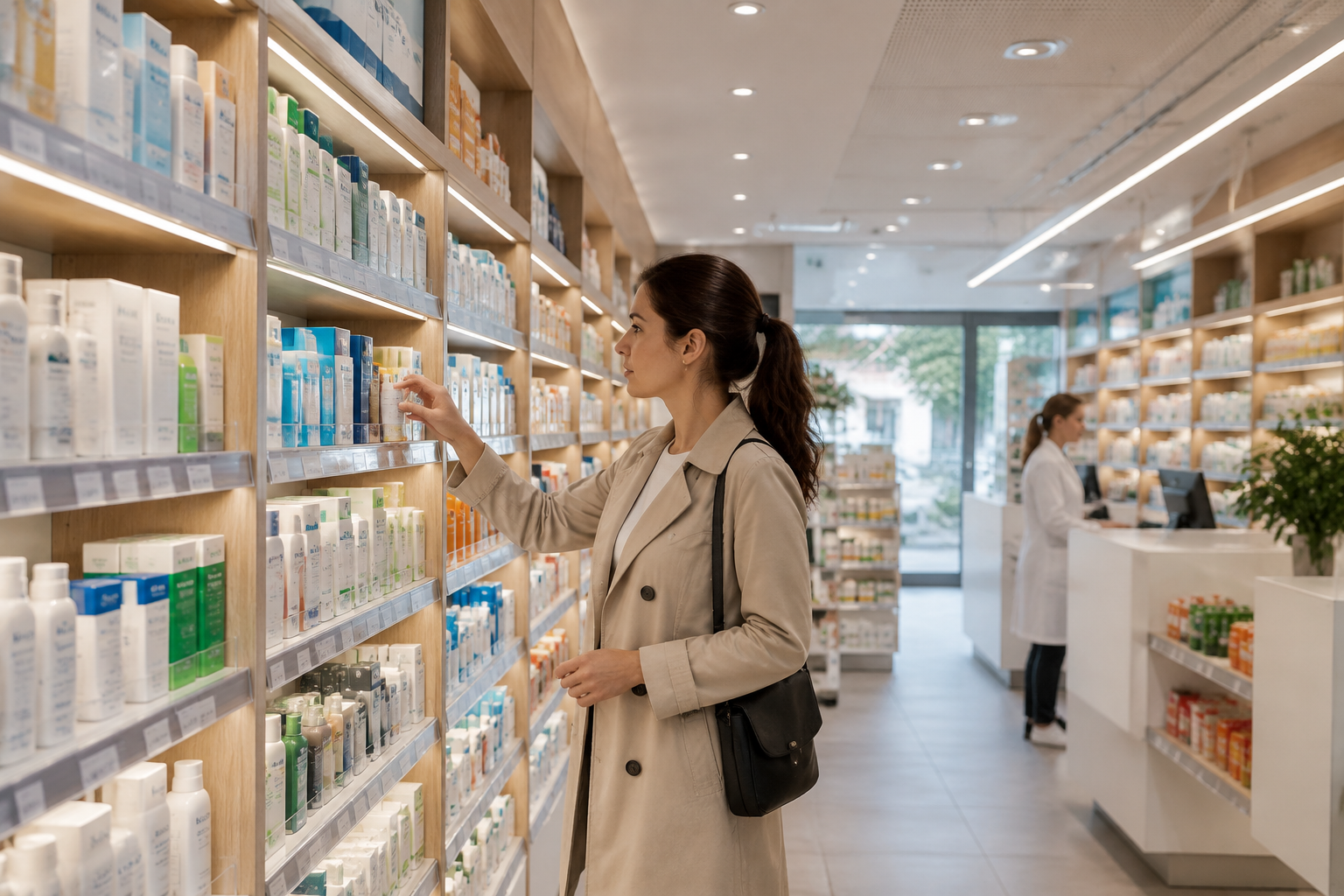 Pharmacy Lighting Design 2026: CRI90, UGR<19 Shelf Guide: How does vertical illuminance impact product visibility on shelves?
Controls, Energy and Commissioning (DALI-2 / Casambi / Sensors)
Intelligent lighting controls like DALI-2 can significantly reduce energy use, lower operational costs, and simplify maintenance. DALI-2 (Digital Addressable Lighting Interface) is the gold standard for new builds, offering individual control of every luminaire. This allows for precise scene-setting, daylight harvesting in areas near windows, and occupancy-based control in back-of-house areas like stockrooms and offices. For retrofits where running new control wiring is prohibitive, wireless systems like Casambi offer comparable flexibility via a Bluetooth mesh network. Regardless of the system, commissioning is a vital final step. A qualified technician must program the system to ensure that light levels, sensor settings, and automated schedules operate according to the design intent, maximizing both energy savings and user comfort.
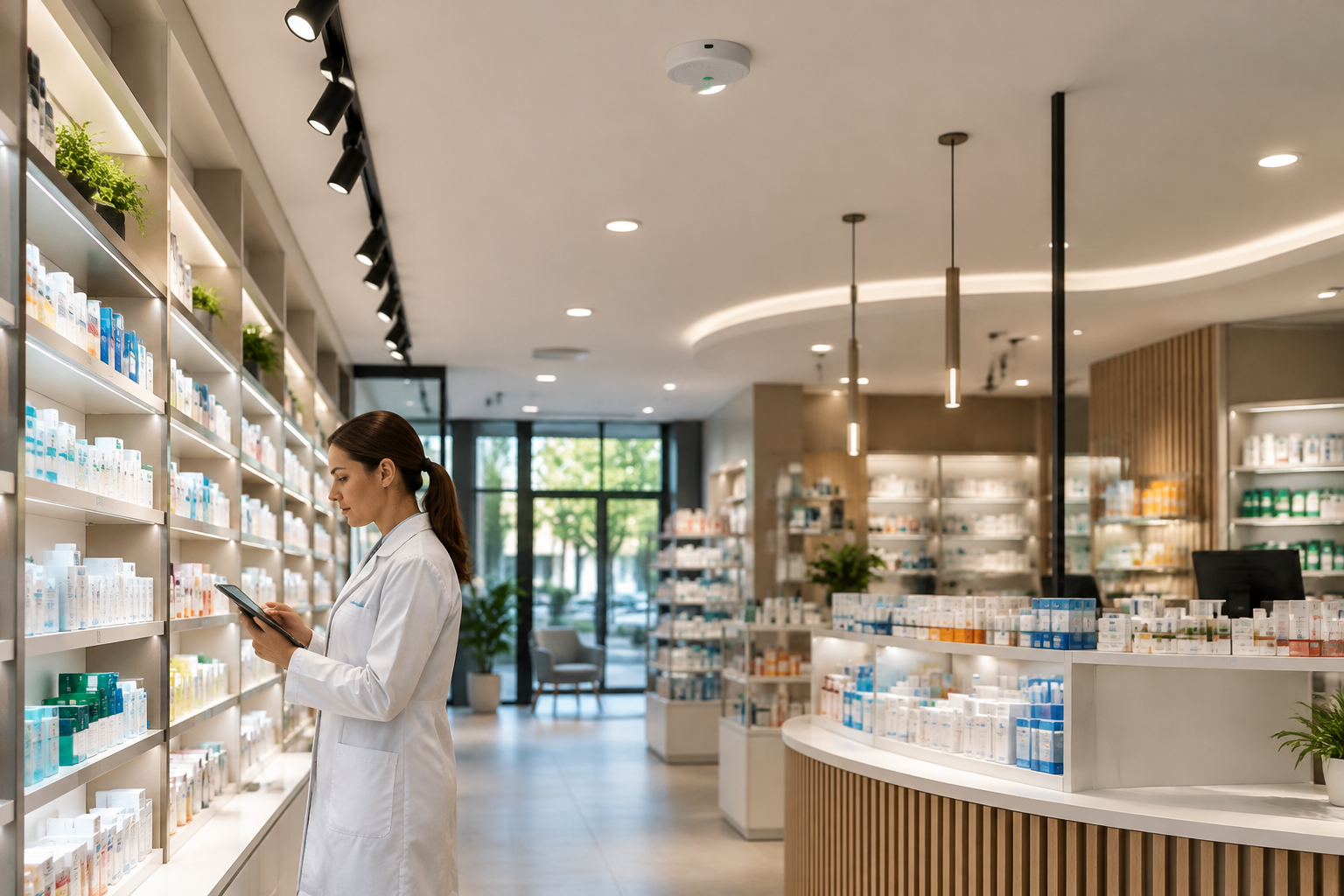 Pharmacy Lighting Design 2026: CRI90, UGR<19 Shelf Guide: Controls, energy and commissioning (DALI-2 / Casambi / sensors)
Photometric Files & Compliance (IES / LDT / DIALux / CE / RoHS / ErP)
Verified photometric files and compliance certificates are non-negotiable for professional lighting projects in regulated markets. At XHLWX, we provide full photometric data for all our luminaires in both IES and LDT photometric files. These files are the digital fingerprint of a luminaire's light distribution, allowing lighting designers to simulate performance in software like DIALux or AGi32. This simulation is essential to verify that a design will meet illuminance, uniformity, and UGR targets before a single fixture is purchased. For market access, especially in the EU, products must carry mandatory certifications. The CE mark confirms conformity with health, safety, and environmental standards; RoHS restricts the use of hazardous materials; and the ErP directive sets minimum standards for energy efficiency. These documents ensure the product is safe, legal, and performs as specified.
Frequently Asked Questions
Q: What Are the Recommended Lux Levels for a Pharmacy?
According to the European standard EN 12464-1, different zones have different requirements. The dispensing counter and other task-heavy areas require a maintained illuminance of 500 lux. For the general sales and retail floor, 300 lux is recommended. Back-of-house storage areas can be lower, around 150 lux, often controlled by occupancy sensors. These levels ensure both safety and a pleasant customer experience.
Q: Why Is a CRI of 90+ Important for Pharmacy Lighting?
A high Color Rendering Index (CRI), specifically Ra > 90 and R9 > 50, is critical for accuracy and safety. It ensures that the colors of medication, packaging, and warning labels are seen exactly as intended, reducing the risk of error. For customers, it means product packaging looks vibrant and appealing. It also allows for the accurate assessment of skin tones in areas where health advice or cosmetic products are offered.
Q: What Does UGR<19 Mean and Where Is It Needed?
UGR stands for Unified Glare Rating, a scale from 10 to 28 that measures the level of visual discomfort from luminaires. A lower number means less glare. A target of UGR<19 is mandatory for task areas like dispensing counters and computer workstations, as specified in EN 12464-1. This ensures that staff can perform detailed, critical tasks for extended periods without suffering from eye strain, headaches, or reduced concentration.
Q: How Can I Stop the Bottom Shelves from Being Too Dark?
The most effective solution is to use luminaires that deliver high vertical illuminance. Standard overhead downlights are not enough. The best approach is integrating low-profile vertical LED strips directly into the front uprights of the shelving units. Another excellent method, particularly for perimeter walls, is to use ceiling-recessed asymmetric wallwashers positioned to evenly illuminate the entire vertical surface, delivering over 200 lux from top to bottom.
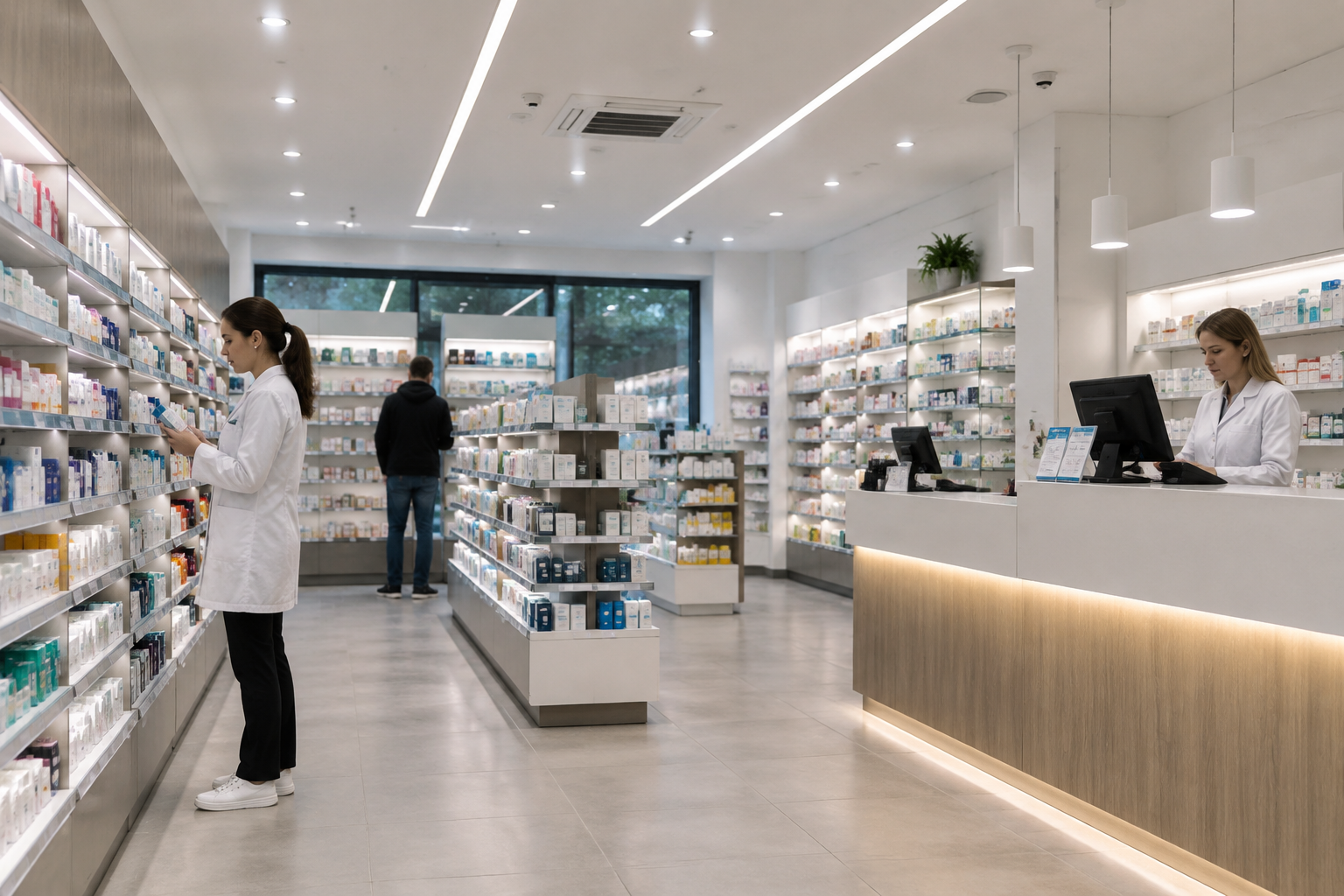 Pharmacy Lighting Design 2026: CRI90, UGR<19 Shelf Guide: Q: What are the recommended lux levels for a pharmacy?
Sources and Technical References
- EN 12464-1:2021: Light and lighting — Lighting of work places — Part 1: Indoor work places.
- IES RP-2-19: Recommended Practice for Lighting Retail Spaces.
- WELL Building Standard v2 (WELL v2), Light Concept.
- IEC 62386: Digital Addressable Lighting Interface (DALI).
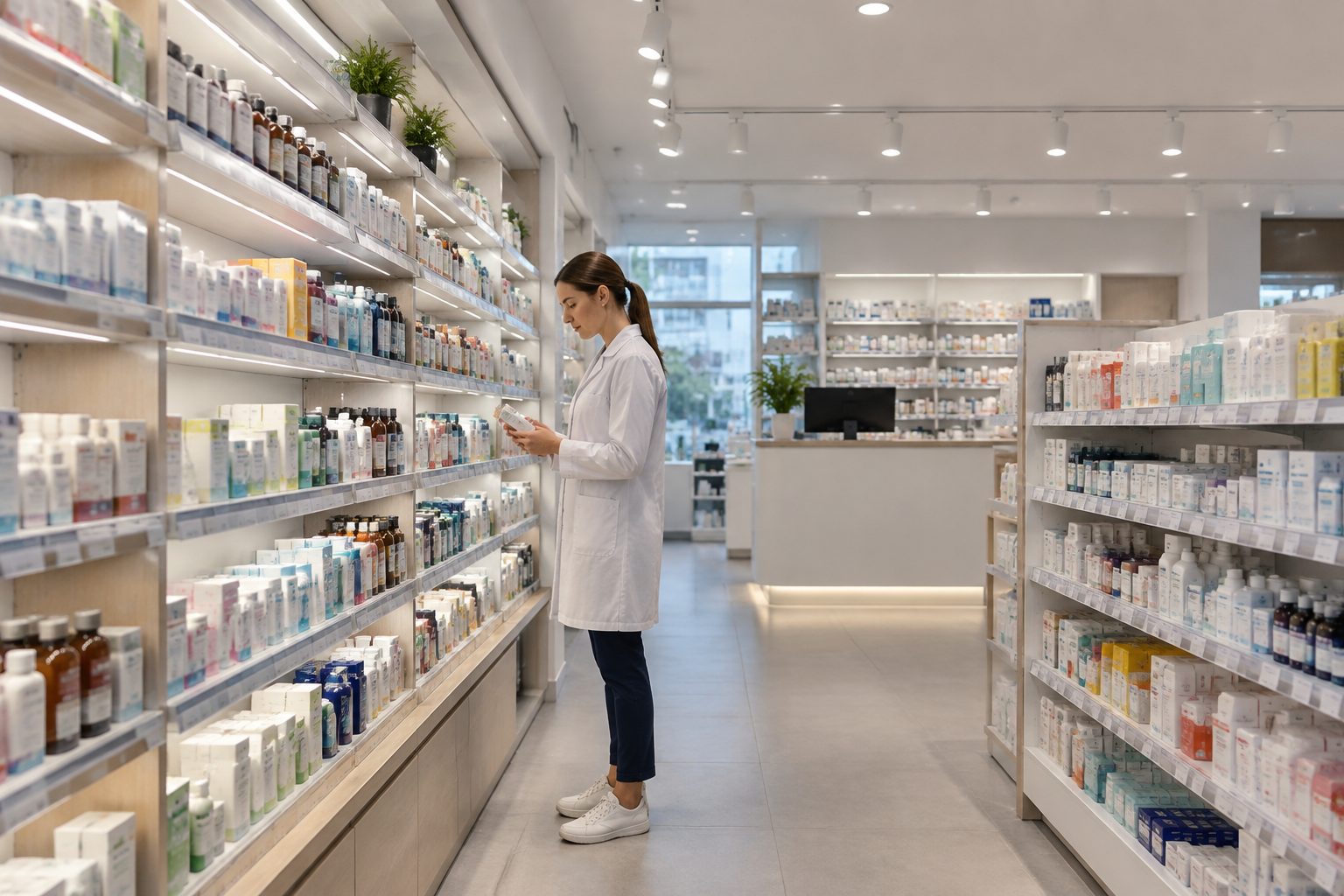 Pharmacy Lighting Design 2026: CRI90, UGR<19 Shelf Guide: Q: How can I stop the bottom shelves from being too dark?
Request a Custom Quote
At XHLWX (led-project-light.com), a Custom Indoor LED Lighting Manufacturer based in China, we specialize in developing and producing specification-grade luminaires for demanding retail and healthcare environments like pharmacies. We collaborate with architects, lighting designers, and retail chains across the EU, US, and Middle East to create tailored solutions that meet precise photometric, aesthetic, and budgetary requirements. From custom-length linear profiles with integrated Casambi control to low-glare downlights certified to specific market standards, our team is ready to support your next project. Contact us today to discuss your requirements and request a project-specific quotation.
Need a tailored lighting plan for your project?
Our senior lighting designers reply within 48 hours with a free design proposal & quotation.