
Police & Fire Station Lighting Design 2026: A 24/7 Emergency Guide
Quick answer
A complete guide to designing high-performance LED lighting for police and fire stations. Learn how to meet EN 12464-1 and WELL standards for 24/7 operations.
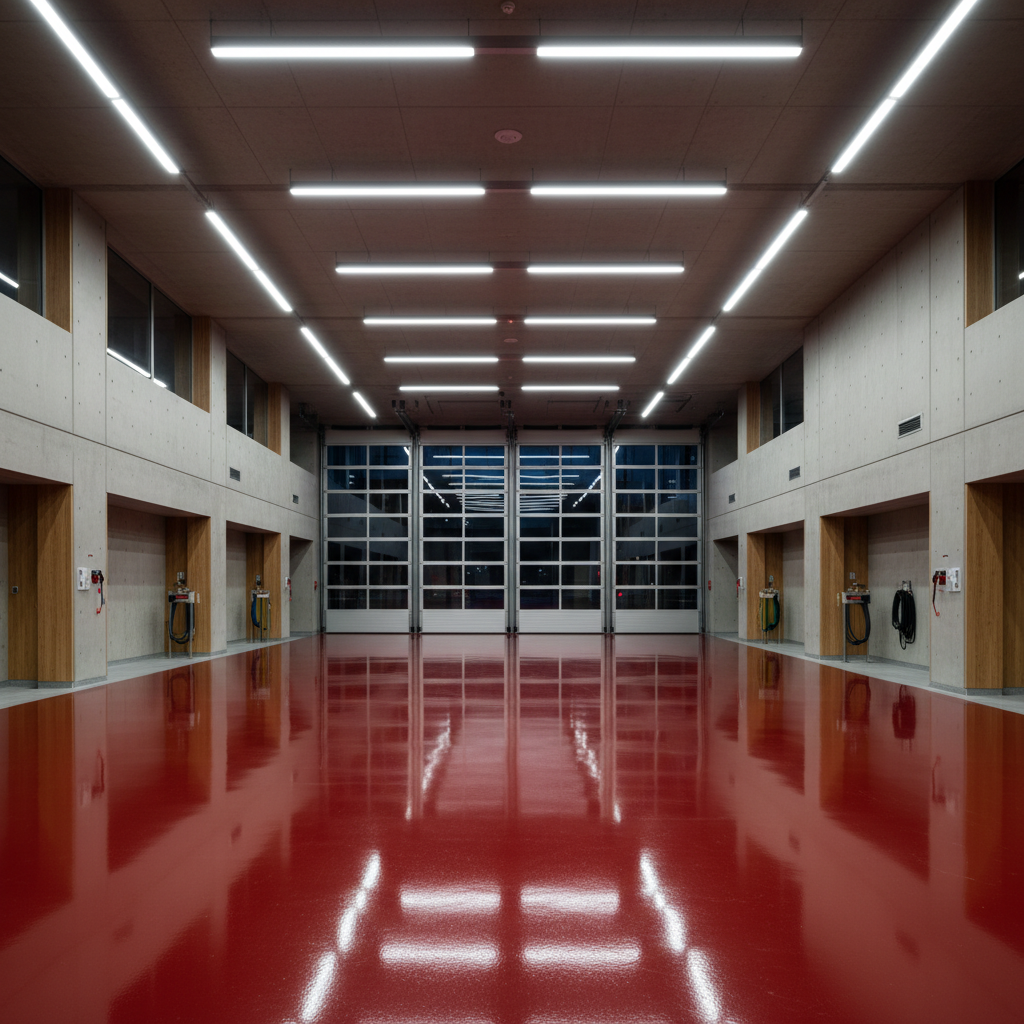
com), a Custom Indoor LED Lighting Manufacturer based in China, we understand that lighting for first responders is a mission-critical system. Police and fire stations are complex, 24/7 facilities with uniquely demanding environments.
From the high-ceiling appliance bays where vehicle checks are paramount, to the high-stress control rooms where every detail on-screen matters, to the dormitories where restorative sleep is vital, the lighting design must support safety, human performance, and well-being. A poorly lit facility can lead to errors, decrease morale, and compromise the health of essential personnel.
This guide outlines the key principles for designing a robust, efficient, and human-centric lighting solution for modern emergency service facilities.
Lighting Criteria and Standards for This Application
Effective emergency facility lighting must meet stringent international standards for safety and performance. The design process begins with a thorough understanding of the required illuminance levels, glare control, color quality, and durability for each specific space within the station. Adhering to standards like EN 12464-1 and considering recommendations from the WELL Building Standard ensures a solution that is both compliant and optimized for the occupants. These standards provide a clear framework for designers and facility managers to specify lighting that enhances visibility, reduces errors, and supports the demanding shift work schedules of first responders. The following table summarizes key design targets for a typical project.
| Parameter | Recommended Specification | Standard Basis | Notes |
|---|---|---|---|
| Maintained Illuminance (Ēm) | 500 lx (Control Room), 200 lx (Appliance Bay), 100 lx (Dorms) | EN 12464-1 / IES RP-7 | Task-dependent. Vertical illuminance is a key metric in appliance bays for vehicle inspection. |
| Unified Glare Rating (UGR) | <19 (Control/Dispatch), <22 (Offices), <25 (Appliance Bay) | EN 12464-1 | Lower UGR is critical for screen-intensive areas to prevent eye strain and fatigue. |
| Color Rendering / Fidelity | CRI Ra >80 (Ra >90 recommended); TM-30 Rf > 85, Rg ~100 | WELL v2 / IES TM-30 | High-quality color rendering is vital for accurate medical assessments and identifying wire/fluid colors. |
| Control Protocol | DALI-2 (Wired) or Casambi (Wireless Bluetooth Mesh) | IEC 62386 | Allows for scene setting, energy management, and circadian rhythm programming. |
| Housing Protection | IP65 / IK08 (Appliance Bay); IP20 / IK03 (Offices/Control Rooms) | EN 60529 / EN 62262 | IP65 rating is essential to protect against water jets from vehicle washing in bays. |
| Core Components | Bridgelux, Samsung or Osram LED Chips; Tridonic or Mean Well Drivers | Manufacturer Specification | Specifies use of high-reliability components for long service life and performance consistency. |
| Compliance & Quality | CE, RoHS, ErP, ISO 9001 | EU Directives / ISO | Ensures market access, environmental compliance, and adherence to quality management systems. |
Luminaire Selection and Optics
Selecting the right luminaire type and optic for each specific station zone is crucial for success. There is no one-size-fits-all solution; an appliance bay has vastly different needs from a dispatch center. The choice depends on mounting height, required light distribution, environmental hazards like water or impact, and the visual tasks being performed. A successful specification balances performance, durability, and cost to deliver a lighting system that is fit for purpose across the entire facility. The following table compares suitable luminaire archetypes for key areas.
| Space | Recommended Luminaire Type | Key Features | Verdict |
|---|---|---|---|
| Appliance/Engine Bay | IP65 Linear High Bay | High lumen output (20,000-40,000 lm), IK08 impact resistance, wide beam angle. | Ideal. Provides powerful, uniform illumination for large, high-ceiling areas, and is durable enough to withstand vehicle wash-downs and impacts. |
| Control/Dispatch Room | Low-UGR Recessed Panel (Tunable White) | UGR<19, CCT tunable (e.g., 2700K-6500K), DALI-2 control, microprismatic lens. | Optimal. Minimizes screen glare to reduce eye strain and allows circadian lighting strategies to boost alertness and support well-being. |
| Dormitories/Rest Areas | Recessed Downlight with Warm Dim | Low glare, high R9 value, CCT shifts from 3000K to 1800K when dimmed. | Recommended. Creates a comfortable, residential atmosphere that helps personnel disengage and rest, promoting better sleep quality between shifts. |
| Offices & Briefing Rooms | General Purpose Linear Profile/Panel | High efficacy (>130 lm/W), versatile mounting options, standard CRI >80. | Suitable. A cost-effective and flexible solution for administrative and meeting areas where visual demands are less critical than in operational zones. |
How Does Tunable White Lighting Support First Responder Well-being?
Tunable white lighting helps regulate circadian rhythms for shift workers, improving alertness and sleep quality. For personnel working rotating or night shifts, the natural 24-hour cycle of light and dark is disrupted. By tuning the correlated color temperature (CCT) of the lighting, facilities can support their staff's internal clocks. A higher CCT (e.g., 5000K-6000K, rich in blue-spectrum light) can be used during night shifts or critical incidents to increase alertness and concentration. Conversely, in break rooms and pre/post-shift periods, a warmer CCT (e.g., 2700K-3000K) can help promote relaxation and prepare the body for rest. This approach, strongly advocated by the WELL v2 standard, is a powerful tool for mitigating the health impacts of shift work.
What Are the Key Lighting Needs for Vehicle Maintenance & Appliance Bays?
Appliance bay lighting must prioritize high vertical illuminance, durability, and glare control for safety. While standards like EN 12464-1 specify a general horizontal illuminance of 150-200 lux, the vertical surfaces of fire engines and ambulances are where critical checks happen. The lighting design must ensure sufficient vertical foot-candles to allow personnel to clearly see gauges, equipment panels, and compartments. Luminaires must be robust, with an IP65 rating to withstand high-pressure washing and an IK08 rating to resist accidental impacts. Furthermore, using optics that spread light uniformly without creating harsh shadows or direct glare is essential for a safe working environment.
Why Is UGR <19 Essential in a 24/7 Control Room?
A Unified Glare Rating (UGR) below 19 is critical in control rooms to prevent disabling screen glare and eye strain. Dispatchers and operators spend entire shifts monitoring multiple VDT screens, where information is often dense and time-sensitive. Reflected glare from overhead lighting can obscure details, leading to reading errors and slower response times. More insidiously, it causes cumulative eye fatigue, headaches, and musculoskeletal issues as operators adopt poor posture to avoid reflections. European standard DIN EN 12464-1 mandates UGR <19 for intensive screen work for this reason. Achieving this requires luminaires with advanced optical control, such as microprismatic diffusers, which direct light downwards onto the task area rather than into the viewer's eyes.
Controls, Energy and Commissioning (DALI-2 / Casambi / Sensors)
Intelligent lighting controls like DALI-2 and wireless systems offer significant energy savings and operational flexibility. In a 24/7 facility, not all areas are occupied 24/7. Integrating presence detectors in offices, locker rooms, and storage areas can yield energy savings of 30-60% by automatically turning lights off when rooms are vacant. Daylight harvesting sensors near windows can dim artificial lighting when sufficient natural light is available. A networked control system like DALI-2 (Digital Addressable Lighting Interface) allows each luminaire to be individually addressed, enabling precise scene-setting for different tasks (e.g., 'briefing', 'maintenance', 'emergency response') at the touch of a button. For existing buildings, wireless mesh systems like Casambi offer a powerful and flexible retrofit solution without the need for new control wiring. Proper commissioning is the final, vital step to ensure all sensors, schedules, and scenes function as intended.
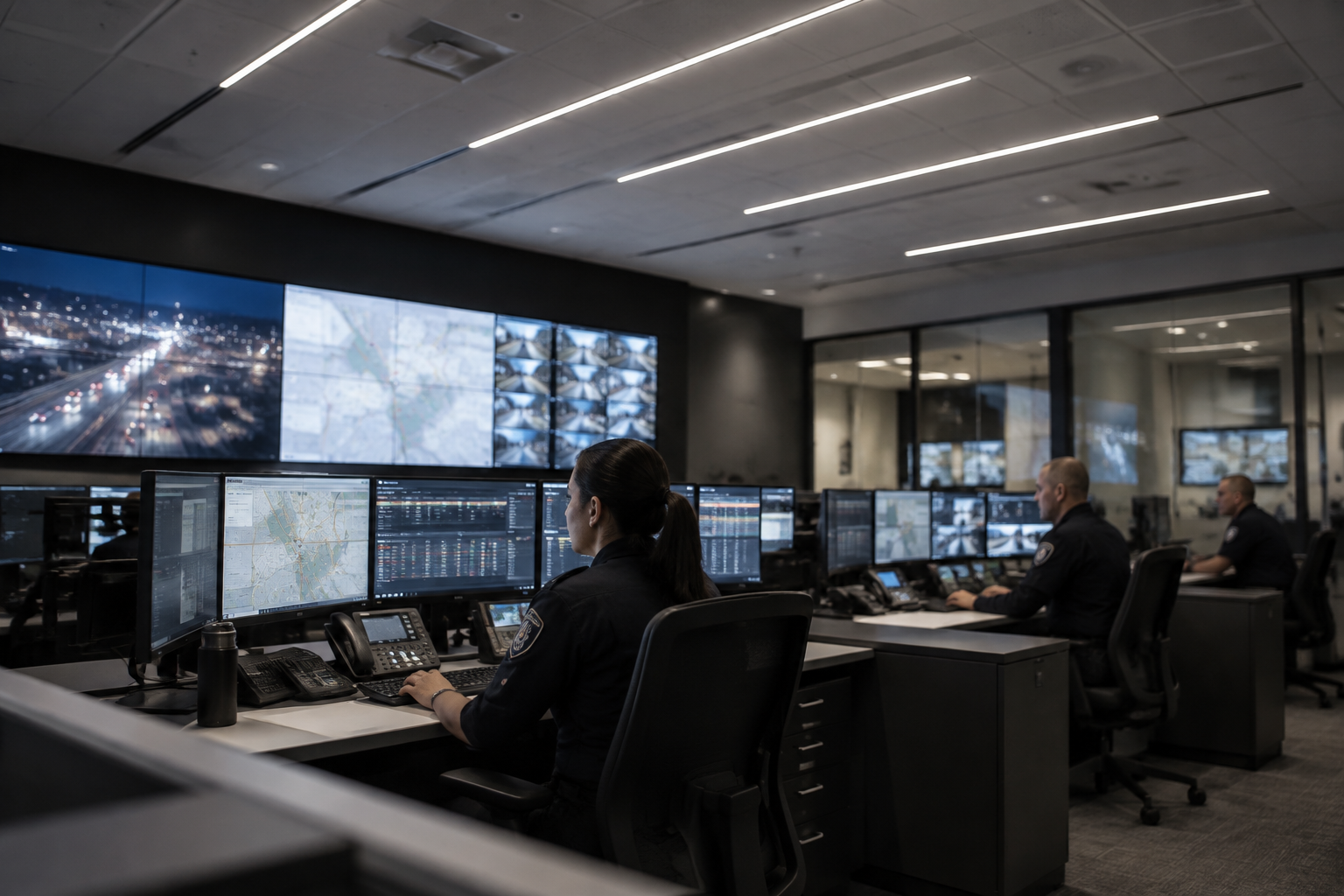 Police & Fire Station Lighting Design 2026: A 24/7 Emergency Guide: Why is UGR <19 essential in a 24/7 control room?
Photometric Files & Compliance (IES / LDT / DIALux / CE / RoHS / ErP)
Comprehensive photometric data and certifications are non-negotiable for ensuring project design compliance and performance. To guarantee a lighting design will meet the strict requirements of standards like EN 12464-1, professional lighting designers rely on simulation software. At XHLWX, we provide complete IES and LDT photometric files for our entire range of luminaires. These data files are digital models of a luminaire's light output, allowing designers to accurately predict illuminance levels, uniformity, and UGR values in software like DIALux or Relux before a single fixture is installed. This simulation process removes guesswork, ensures compliance, and prevents costly corrections after installation. All our products for the EU/US/ME markets are fully certified, meeting CE, RoHS, and ErP requirements, and our manufacturing processes are certified under ISO 9001 for consistent quality.
Frequently Asked Questions
Q: What Is the Ideal CCT for a Police Control Room?
The ideal solution is a tunable white system (2700K-6500K) controlled via DALI-2. This allows operators to adjust the light from a cool, alerting 5000K during peak incidents to a warmer 3000K for routine tasks, supporting circadian health as recommended by WELL v2. This flexibility is key for 24/7 operational effectiveness.
Q: How Much Light Is Needed in a Fire Engine Bay?
According to EN 12464-1, the general appliance bay area requires a maintained illuminance of 150 lux. However, for vehicle maintenance and inspection zones, this should be increased to 300 lux. Crucially, high vertical illuminance on the sides of the vehicles is a primary design target for ensuring safety and task visibility.
Q: Are IP65 Rated Lights Really Necessary in an Appliance Bay?
Yes, an IP65 rating is highly recommended. Fire stations frequently wash down engines and the bay floor with high-pressure water jets. An IP65-rated luminaire is protected against these jets from any direction, preventing water ingress that would cause failure and electrical hazards. This durability is essential for operational reliability.
Q: Can LED Lighting Interfere with Radio Communications?
Poorly designed LED drivers can generate electromagnetic interference (EMI) that disrupts radio frequencies. At XHLWX, we use high-quality, certified drivers from brands like Tridonic that comply with CISPR 15 / EN 55015 standards for EMI suppression. This ensures our lighting systems will not interfere with critical communications equipment used by emergency services.
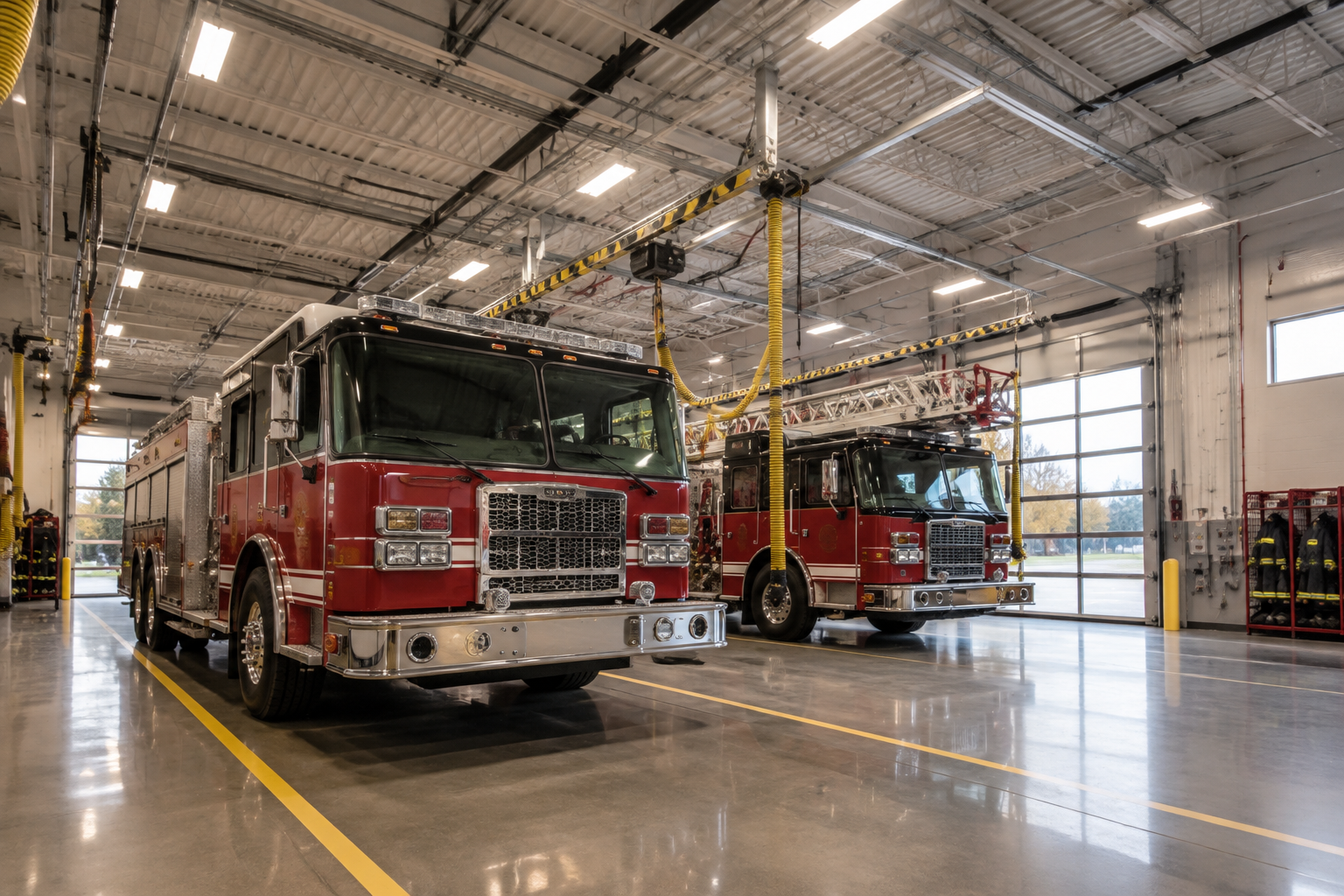 Police & Fire Station Lighting Design 2026: A 24/7 Emergency Guide: Q: How much light is needed in a fire engine bay?
Sources and Technical References
- EN 12464-1:2021: Light and lighting — Lighting of work places — Part 1: Indoor work places.
- IES RP-7-17: Recommended Practice: Lighting for Police, Court, and Correctional Facilities.
- WELL Building Standard v2: Light Concept (L03, L04).
- International WELL Building Institute (IWBI)
- DALI Alliance (DiiA): IEC 62386
- CISPR 15 / EN 55015: Limits and methods of measurement of radio disturbance characteristics of electrical lighting and similar equipment.
Request a Custom Quote
Designing a lighting system for an emergency services facility requires specialist knowledge and products built to perform under pressure. At XHLWX (led-project-light.com), a Custom Indoor LED Lighting Manufacturer based in China, we specialize in creating tailored LED solutions for complex and critical environments. Contact our solutions team today to discuss your project requirements and request a custom photometric design and quotation.
Need a tailored lighting plan for your project?
Our senior lighting designers reply within 48 hours with a free design proposal & quotation.