
Production Workshop Lighting Retrofit: ROI & Engineering Guide
Quick answer
A technical guide for plant managers on retrofitting production workshop lighting from legacy T8 & metal halide to LED, focusing on ROI, DALI-2, and safety.
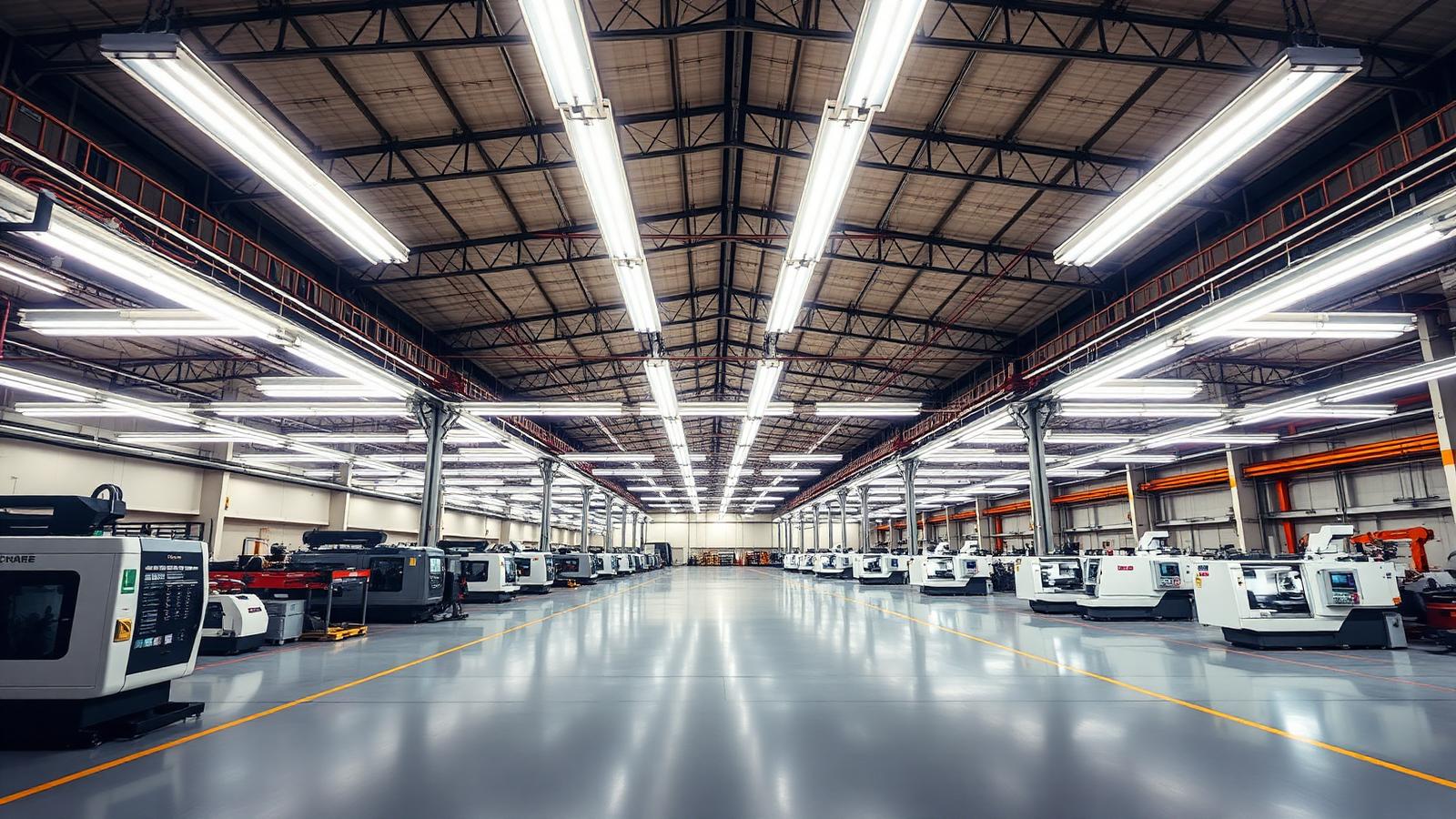
Why Your Aging Workshop Lighting Is Costing More Than You Think
Across the EU, US, and Middle East, countless production halls, assembly plants, and workshops are still illuminated by legacy technology: T8/T12 fluorescent tubes, 400W metal-halide (MH) high bays, and first-generation LED fixtures with poor efficiency and color rendering. While functional, this aging infrastructure represents a significant and continuous drain on operational budgets through high energy consumption, frequent maintenance cycles, and compromised safety and productivity.
A strategic lighting retrofit is not merely about replacing fixtures; it is a critical engineering upgrade that directly impacts your bottom line, enhances worker well-being, and future-proofs your facility.com), a Custom Indoor LED Lighting Manufacturer based in China, we specialize in navigating the complexities of industrial retrofits, transforming outdated facilities into efficient, safe, and productive environments.
What Does a Thorough Retrofit Survey and Audit Actually Involve?
A successful retrofit begins with a meticulous audit of the existing conditions. Skipping this step is the most common cause of budget overruns and performance shortfalls. A comprehensive survey goes far beyond a simple fixture count. It's a data-gathering exercise to inform the entire engineering and design process.
Key audit activities include:
- Existing Luminaire & Lighting Level Assessment: Documenting every fixture type, wattage, mounting height, and their condition. Crucially, this involves taking detailed illuminance (lux/foot-candle) measurements across the entire facility, creating a 'before' map. This data will reveal areas that are over-lit, under-lit, or suffer from poor uniformity, which is common as legacy lamps degrade.
- Electrical Infrastructure Evaluation: Assessing the existing wiring, conduit, and distribution panels. Can the current circuits handle the new, lower-load LED system? Is the wiring insulation still viable, or has it become brittle? Are there existing control wires that could be repurposed for 0-10V or DALI-2 systems? Understanding this is key to deciding whether to reuse or replace existing electrical trays.
- Structural and Environmental Analysis: Mapping all structural elements, including ceiling height variations, support beams, overhead cranes, HVAC ductwork, and other obstructions. The ambient environment is also critical: are there high levels of dust, moisture, chemical fumes, or vibration? This dictates the required IP (Ingress Protection) and IK (Impact Resistance) ratings for new luminaires.
- Operational Constraints: The most important non-technical aspect is understanding the plant's operational schedule. When are the available windows for installation? Are there phased shutdowns planned? Can work be done section-by-section without halting production? This information is vital for creating a realistic project timeline and minimizing disruption.
 An engineer conducting a lighting audit in a factory with outdated fluorescent lights.
A thorough audit of existing infrastructure is the first step in any successful lighting retrofit project.
How Do We Engineer Solutions for Common Retrofit Challenges?
Retrofitting an existing space is rarely a simple one-for-one swap. Industrial facilities present unique engineering puzzles that require expert solutions.
- Mismatched Mounting Heights and Spacing: A common scenario is replacing a few powerful 400W metal-halide high bays mounted at 10-12 meters with more numerous linear LED fixtures designed for optimal performance at 6-8 meters. A direct swap would result in poor uniformity and dark spots. The solution involves a combination of strategies: using luminaires with precise beam angles (e.g., narrow 60° optics for high ceilings), planning a new layout that may require minor wiring adjustments, or using specialized suspension kits or custom brackets to adjust mounting positions.
- Reusing Existing Wiring and Trunking: The prospect of reusing existing electrical infrastructure is tempting for cost savings. A detailed assessment during the audit will determine if this is feasible. If the existing wiring is of sufficient gauge and in good condition, modern LED systems, with their lower power draw, can often be installed on the same circuits. Many linear LED high bays are designed for compatibility with common industrial trunking systems, allowing new fixtures to be snapped into place after the old gear is removed, dramatically reducing installation time.
- Addressing Voltage and Power Factor: Older facilities may have electrical systems that are not as stable as modern ones. It's critical to select LED drivers (the heart of the luminaire) that have a wide input voltage range (e.g., 100-277V AC) and a high power factor (>0.95). This ensures consistent light output and maximizes electrical efficiency, preventing penalties from utility providers for poor power factor.
How Should We Define Lighting Requirements for Different Production Tasks?
, 300 lux everywhere) is inefficient and ineffective. Modern lighting design, guided by standards like EN 12464-1:2021 (Europe) and IES RP-7 (North America), advocates for a task-area approach. This involves zoning the lighting to provide the appropriate illuminance, color quality, and glare control for the specific task being performed in each area.
For example, a general assembly area might need 500 lux, while a detailed inspection station next to it requires 1000 lux with superior color rendering. This zoning strategy not only enhances safety and quality but also saves energy by not over-lighting non-critical areas like walkways or bulk storage.
Table 1: Recommended Lighting Levels for Production & Assembly Tasks (per EN 12464-1 & IES RP-7)
| Production Task/Area | Maintained Illuminance (Em, lux) | Unified Glare Rating (UGRL) | Minimum Color Rendering (CRI Ra) | Notes |
|---|---|---|---|---|
| Rough Assembly / Machining | 300 | ≤ 25 | 80 | General visibility for manual tasks. |
| Medium Assembly / Machining | 500 | ≤ 22 | 80 | Standard for most production lines and workshops. |
| Fine Assembly / Electronic Workshops | 750 | ≤ 19 | 80 | Requires higher precision; glare control is important. |
| Quality Control & Inspection | 1000 | ≤ 19 | 90 | High illuminance and excellent color rendering (high R9) are critical. |
| Welding & Casting Shops | 300 | ≤ 25 | 80 | Focus on durability and appropriate placement to avoid shadows. |
| Warehouse Aisles (Forklift-operated) | 150 | ≤ 25 | 80 | Vertical illuminance on racking is also key. |
| Loading & Unloading Bays | 200 | ≤ 28 | 80 | Safety-critical area, requires good uniformity. |
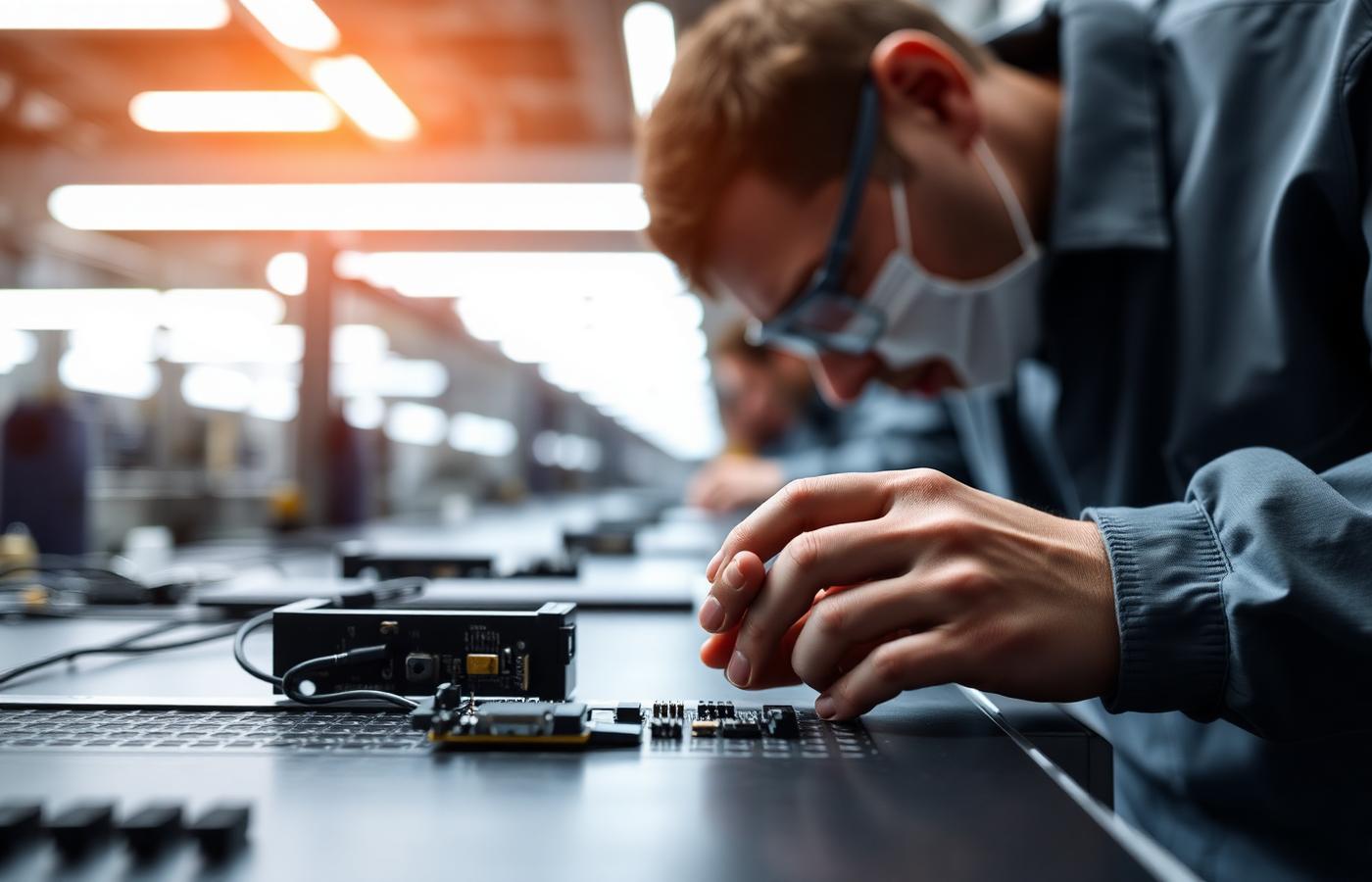 Comparison of poor vs. effective task lighting on an assembly line.
Proper task-area lighting improves accuracy and reduces errors by providing the right light level and quality for each specific job.
Why Is Glare Control so Critical for Worker Safety and Productivity?
Glare is one of the most overlooked but detrimental aspects of poor industrial lighting. It's not just an annoyance; it's a safety hazard.
Direct glare from an overly bright or poorly shielded luminaire can cause momentary blindness, which is extremely dangerous around moving machinery, forklifts, or overhead cranes. Reflected glare, or veiling reflections, from polished metal surfaces, liquids, or CNC control screens can obscure details, leading to production errors and eye strain.
Modern lighting standards quantify this with the Unified Glare Rating (UGR). For industrial settings, a UGR of ≤22 is often a target for general areas, while precision task areas demand a UGR of ≤19.
Achieving this isn't about reducing light output; it's about controlling the light with advanced optics. High-quality linear LED high bays use precision-molded lenses or specialized diffusers to shape the light and shield the LED source from direct view at typical viewing angles.
When planning a retrofit, a simulation in software like DIALux is essential to predict and mitigate glare issues before a single fixture is installed.
How Can Smart Controls Like DALI-2 Maximize Energy Savings Post-Retrofit?
Installing efficient LED luminaires cuts energy consumption significantly, but integrating smart controls can unlock an additional 30-50% in savings. While simple on/off switching or 0-10V dimming offers some flexibility, a DALI-2 (Digital Addressable Lighting Interface) system provides granular control and valuable data.
- Task-Area Zoning: With DALI-2, each luminaire has a unique address. This allows you to group fixtures into logical zones that don't have to follow physical wiring circuits. The assembly line can be one zone, the inspection station another, and the walkways a third, each with independent dimming levels and schedules.
- Daylight Harvesting: Sensors placed near skylights or windows can measure the amount of natural light entering the space. The DALI-2 system then automatically dims the nearby luminaires to maintain the target illuminance level (e.g., 500 lux), saving energy on bright days without any manual intervention.
- Occupancy and Motion Sensing: In areas with intermittent traffic like storage aisles, break rooms, or corridors, occupancy sensors can be used to bring lights to full brightness when someone is present and dim them to a low level (or turn them off) after a period of inactivity.
- System Monitoring: DALI-2 provides two-way communication. The system can report back on the status of each luminaire and driver, providing alerts for failures and tracking energy consumption. This simplifies maintenance and allows for data-driven optimization of lighting schedules.
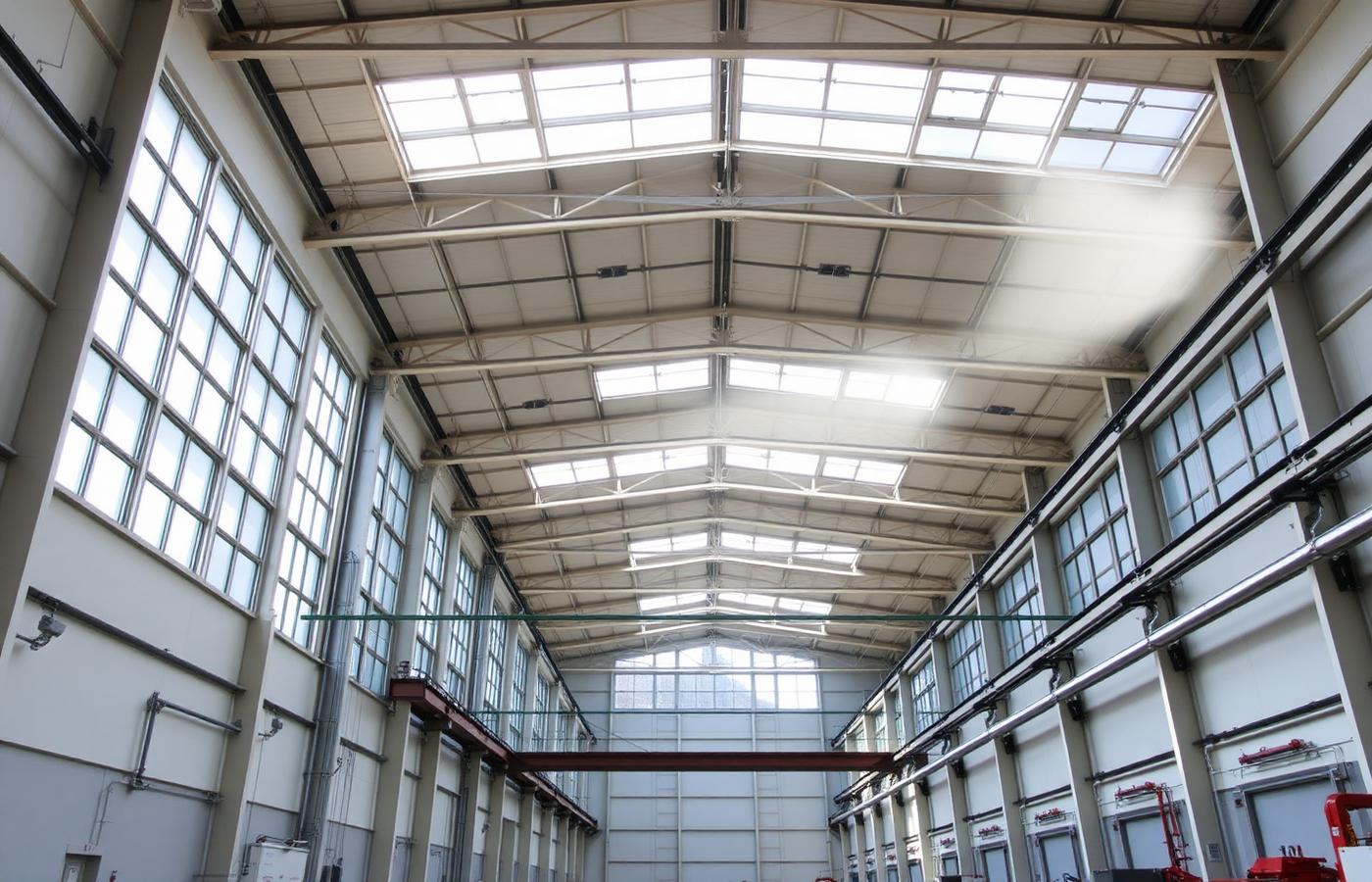 LED high bays in a factory automatically dimming to harvest daylight.
Smart controls like DALI-2 with daylight harvesting can reduce energy consumption by an additional 30-50%.
What's the Real Payback? Calculating the ROI for a Production Hall LED Retrofit
The financial justification for a lighting retrofit is compelling and multi-faceted. The payback period is often much shorter than plant managers expect, typically falling within 1-3 years for facilities operating 24/7. The calculation must include direct energy savings, reduced maintenance costs, and where possible, the financial impact of improved productivity and safety.
Table 2: Illustrative Retrofit Payback Analysis (Based on 100 Fixtures, 6,000 Hrs/yr, €0.25/kWh)
| Parameter | Legacy 400W Metal Halide | Modern 150W LED High Bay | Improvement |
|---|---|---|---|
| System Power per Fixture | 455W (incl. ballast) | 150W | 67% reduction |
| Luminaire Efficacy | ~65 lm/W | ~160 lm/W | 146% increase |
| Rated Lifespan (L70) | 15,000 hours | >80,000 hours (L80B10) | >5x longer lifespan, better lumen decay |
| Annual Energy Use (kWh) | 273,000 kWh | 90,000 kWh | 183,000 kWh saved |
| Annual Energy Cost | €68,250 | €22,500 | €45,750 saved per year |
| Annual Maintenance Cost | ~€2,500 (lamp/ballast) | €0 | €2,500 saved per year |
| Total Annual Savings | - | €48,250 | - |
| Typical Project Payback | - | < 2 Years | (Based on typical luminaire & install costs) |
Note: This is an illustrative example. Actual savings depend on local energy rates, operating hours, and project costs.
Specifying for Longevity: What Luminaire Characteristics Matter Most for an Industrial Environment?
Choosing the right luminaire is crucial for the long-term success of a retrofit. Procurement should look beyond the initial cost and lumen package and focus on specifications that indicate quality, durability, and performance.
As a specifier, demanding comprehensive data is key. A manufacturer should always provide IES and LDT photometric files for every product, enabling independent verification of performance in DIALux or other lighting design software.
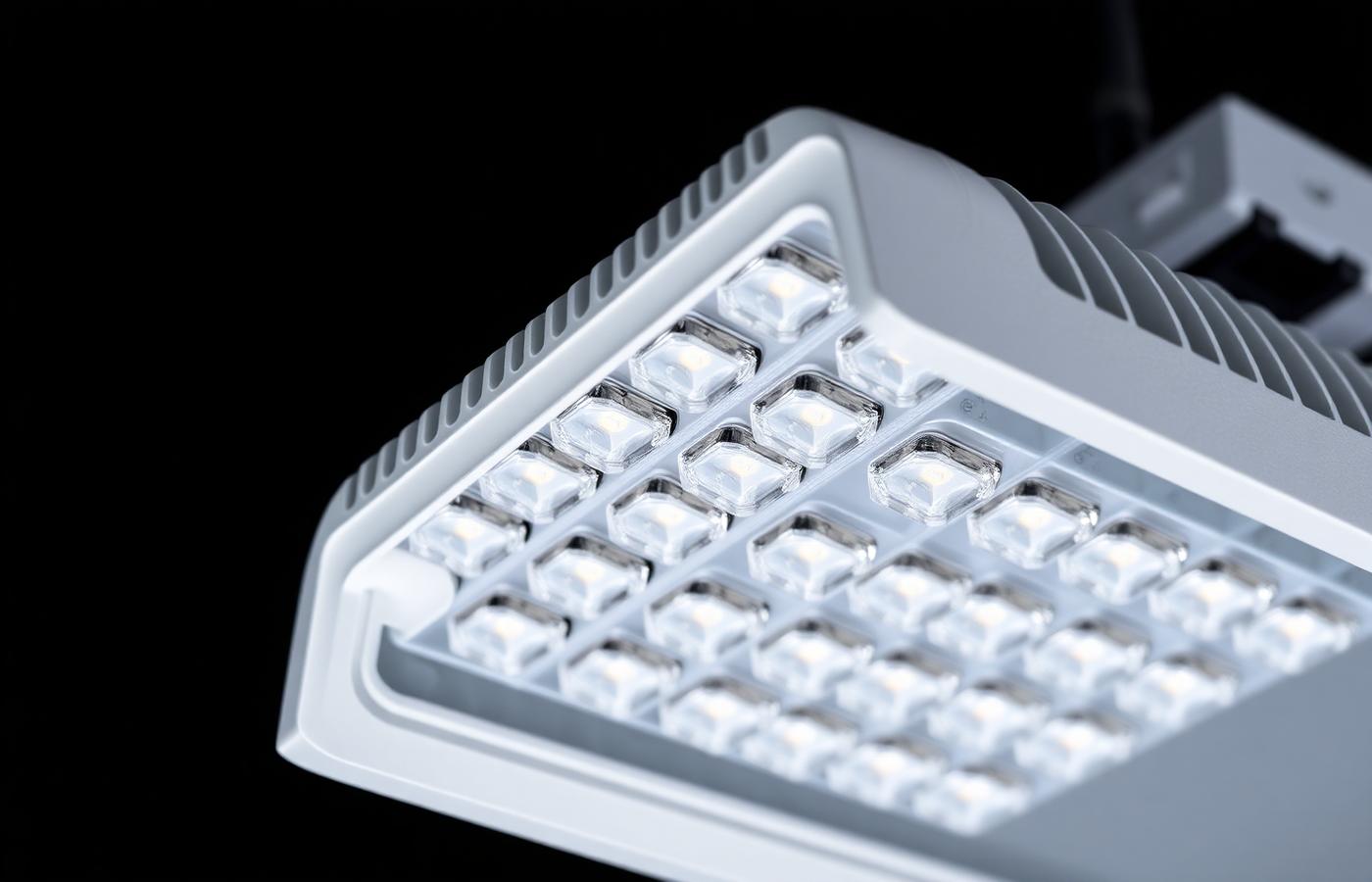 Close-up of the precision optics on a modern industrial LED high bay fixture.
Advanced optics are key to controlling glare (UGR) and directing light precisely where it's needed.
Table 3: Specification Profile: XHLWX Industrial Linear High Bay Series
| Parameter | Specification / Capability | Standard / Protocol | Notes |
|---|---|---|---|
| Luminous Efficacy | 150 - 180 lm/W | ErP, DLC | High efficiency is key to maximizing energy savings and meeting Ecodesign requirements. |
| CCT Options | 3000K, 4000K, 5000K, 6500K | ANSI C78.377 | 4000K or 5000K are most common for productivity and alertness in industrial settings. |
| Color Rendering | CRI Ra > 80 / Ra > 90 options | CIE 13.3 | CRI >90 is critical for inspection and color-matching tasks. R9 >50 available. |
| Color Fidelity / Gamut | TM-30 Rf > 80, Rg > 95 (for CRI 80) | IES TM-30-20 | Provides a more complete picture of color rendition than CRI alone. |
| Unified Glare Rating (UGR) | UGR < 19 and UGR < 22 optic variants available | EN 12464-1 | Achieved through precision-engineered polycarbonate lenses. |
| Beam Angle Options | 30°, 60°, 90°, 120°, Double Asymmetric | IESNA LM-79 | A wide range of optics ensures optimal light distribution for any mounting height/application. |
| Control Interface | 0-10V, DALI-2, Zigbee, Casambi Wireless | DALI-2 (IEC 62386) | Flexible control options for simple dimming or advanced network integration. |
| Ingress / Impact Protection | IP65 standard, up to IP67 optional | IEC 60529 / EN 62262 | IP65 ensures protection against dust and water jets. IK08 rated for impact resistance. |
| Certifications | CE, RoHS, ENEC, CB | EU/Global Directives | Independently certified for safety, performance, and material compliance. |
| Component Brands | Osram, Samsung, Bridgelux LEDs; Tridonic, Mean Well drivers | ISO 9001 | Use of globally recognized, high-quality components ensures reliability and longevity. |
What About Phased Installation and Emergency Lighting?
Logistical planning is as important as technical specification. A well-managed installation minimizes downtime and ensures a smooth transition.
- Phased Installation: A large facility retrofit is almost always executed in phases. This can be done by production line, by building section, or during scheduled annual maintenance shutdowns. We often design solutions with 'plug-and-play' connectors or compatibility with existing trunking systems to drastically reduce the time needed on-site for each phase.
- Emergency Lighting Integration: A retrofit is the perfect opportunity to upgrade your emergency lighting system. Modern LED luminaires can be fitted with integrated emergency battery packs. These self-contained units provide 1-3 hours of illumination during a power failure, ensuring safe egress paths in compliance with standards like EN 1838. Alternatively, specific luminaires can be wired to a central battery or inverter system. The new design must clearly map out these emergency fixtures and ensure they meet required lux levels along escape routes and at safety stations.
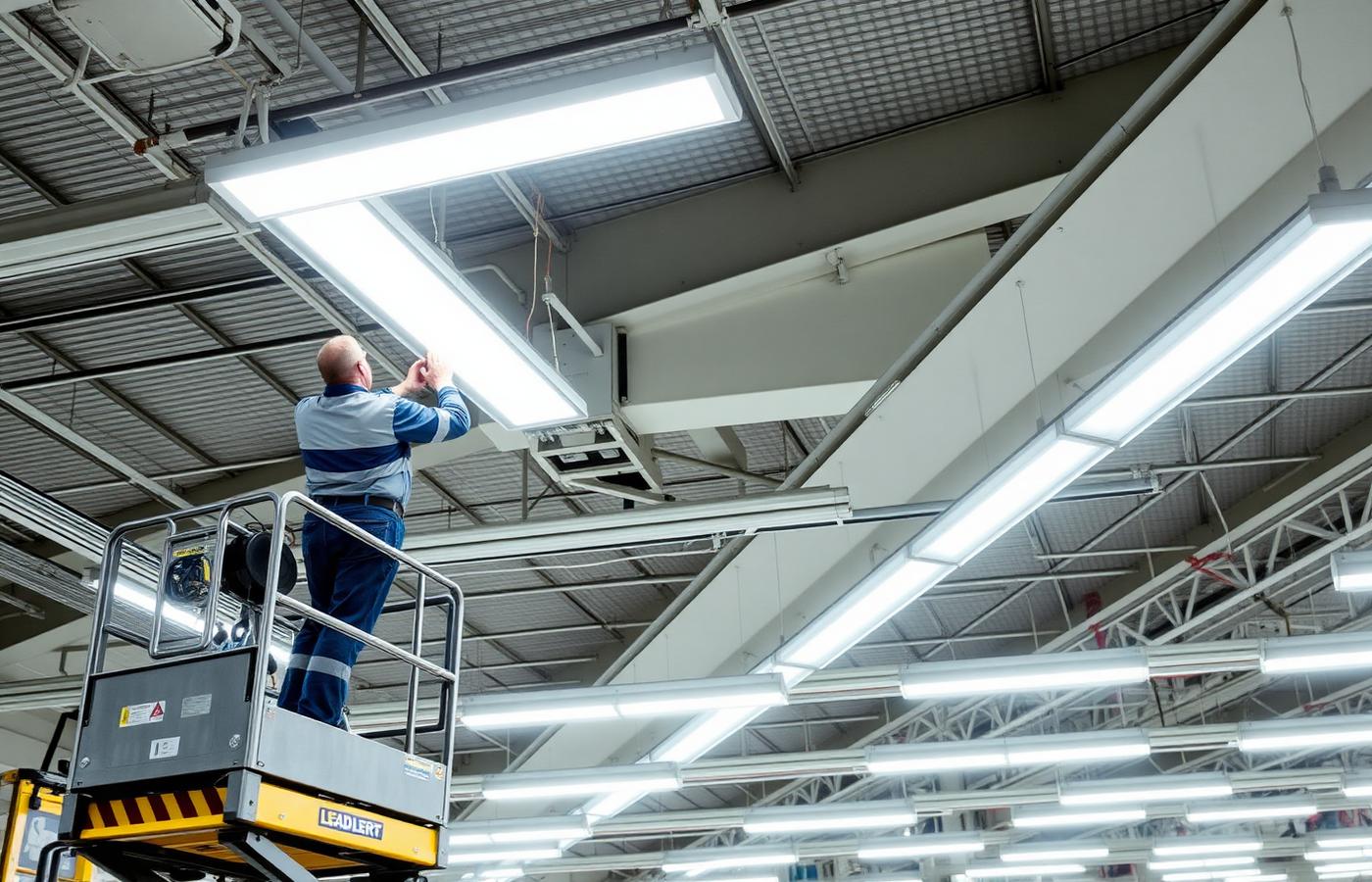 A wide view of a production hall after a successful LED lighting retrofit.
The final result of a well-executed retrofit: a safe, efficient, and brightly lit work environment.
Ultimately, a production workshop lighting retrofit is a high-return investment in your facility's core infrastructure. It delivers immediate and measurable savings in energy and maintenance while creating a safer, more productive, and compliant working environment.
The key is to approach it as an engineering project, supported by a partner who understands the nuances of industrial applications.com), a Custom Indoor LED Lighting Manufacturer based in China, we provide the technical expertise, simulation support, and customizable hardware to ensure your retrofit project delivers on its promise from day one and for years to come.
Frequently Asked Questions
Q: What Does a Lifespan Rating Like L80B10 at 80,000 Hours Mean?
It's a standardized metric for LED longevity. L80 means the luminaires will retain at least 80% of their initial light output after the rated period. B10 means only 10% of a large sample of these luminaires are expected to have degraded below that 80% threshold. So, at 80,000 hours, 90% of the fixtures will still be providing more than 80% of their original light.
Q: Will the Color of the LED Light Change Over Time?
High-quality LED luminaires exhibit excellent color stability. This is measured by the MacAdam ellipse metric, with a rating of <3 SDCM (Standard Deviation of Color Matching) indicating that any color shift over the luminaire's life will be imperceptible to the human eye. Cheaper products with poor thermal management may show a noticeable color shift towards blue or green over time.
Q: Is DALI-2 Significantly More Expensive Than a Standard 0-10V Dimming System?
While DALI-2 enabled drivers and controllers have a slightly higher upfront cost, the total project cost can be comparable or even lower. This is because DALI-2 uses a simple two-wire, polarity-free bus that can be run alongside power cables, reducing wiring complexity. The long-term savings from advanced features like daylight harvesting, individual addressing, and fault monitoring provide an ROI that far outweighs the initial hardware difference.
Q: How Does Dust and Dirt Accumulation Affect LED High Bay Performance?
Dust build-up on a luminaire can reduce its light output, a factor known as Luminaire Dirt Depreciation (LDD). For a dusty factory, specifying IP65 rated fixtures is crucial as they are fully dust-tight. Their smooth housing designs are also easier to clean. In a lighting design calculation, an LDD factor (e.g., 0.90 for a clean environment with annual cleaning) is used to ensure required light levels are maintained between cleaning cycles.
Q: What Is 'flicker' and Why Is It a Concern in Workshops?
Flicker is the rapid, often invisible, modulation of light output from a fixture. Even imperceptible flicker (>100Hz) can cause eye strain, headaches, and the dangerous 'stroboscopic effect,' where rotating machinery can appear to be stationary or moving slowly. Quality LED drivers are designed to have very low flicker, often specified with a Percent Flicker of <5% or a PstLM value <1, ensuring visual comfort and safety.
Q: We Run a Single 8-hour Shift. Is the ROI on an LED Retrofit Still Good?
Yes, though the payback period will be longer than for a 24/7 facility. A typical single-shift operation running ~2,500 hours/year can still expect a payback period of 3-5 years. The savings are not just from energy; eliminating the annual maintenance costs of replacing fluorescent tubes or metal halide lamps and ballasts, which often require hiring a scissor lift, contributes significantly to the ROI regardless of operating hours.
Sources and Technical References
- EN 12464-1:2021: Light and lighting - Lighting of work places - Part 1: Indoor work places. Publisher: European Committee for Standardization (CEN)
- IES RP-7-17: Recommended Practice: Lighting for Manufacturing Facilities. Publisher: Illuminating Engineering Society (IES)
- ISO 8995-1:2002 (CIE S 008/E:2001): Lighting of indoor work places. Publisher: International Organization for Standardization (ISO) / International Commission on Illumination (CIE)
- IEC 62386: Digital addressable lighting interface. Publisher: International Electrotechnical Commission (IEC)
- EU 2019/2020 & EU 2019/2015: Ecodesign requirements for light sources and separate control gears (ErP). Publisher: The European Commission
Need a tailored lighting plan for your project?
Our senior lighting designers reply within 48 hours with a free design proposal & quotation.