
Senior Care Lighting 2026: Circadian & Anti-Glare Design Guide
Quick answer
A comprehensive guide to senior care lighting design. Learn how to use circadian rhythms, higher lux levels, and anti-glare optics for safety, comfort, and we
Introduction — the Design Problem in Senior Care
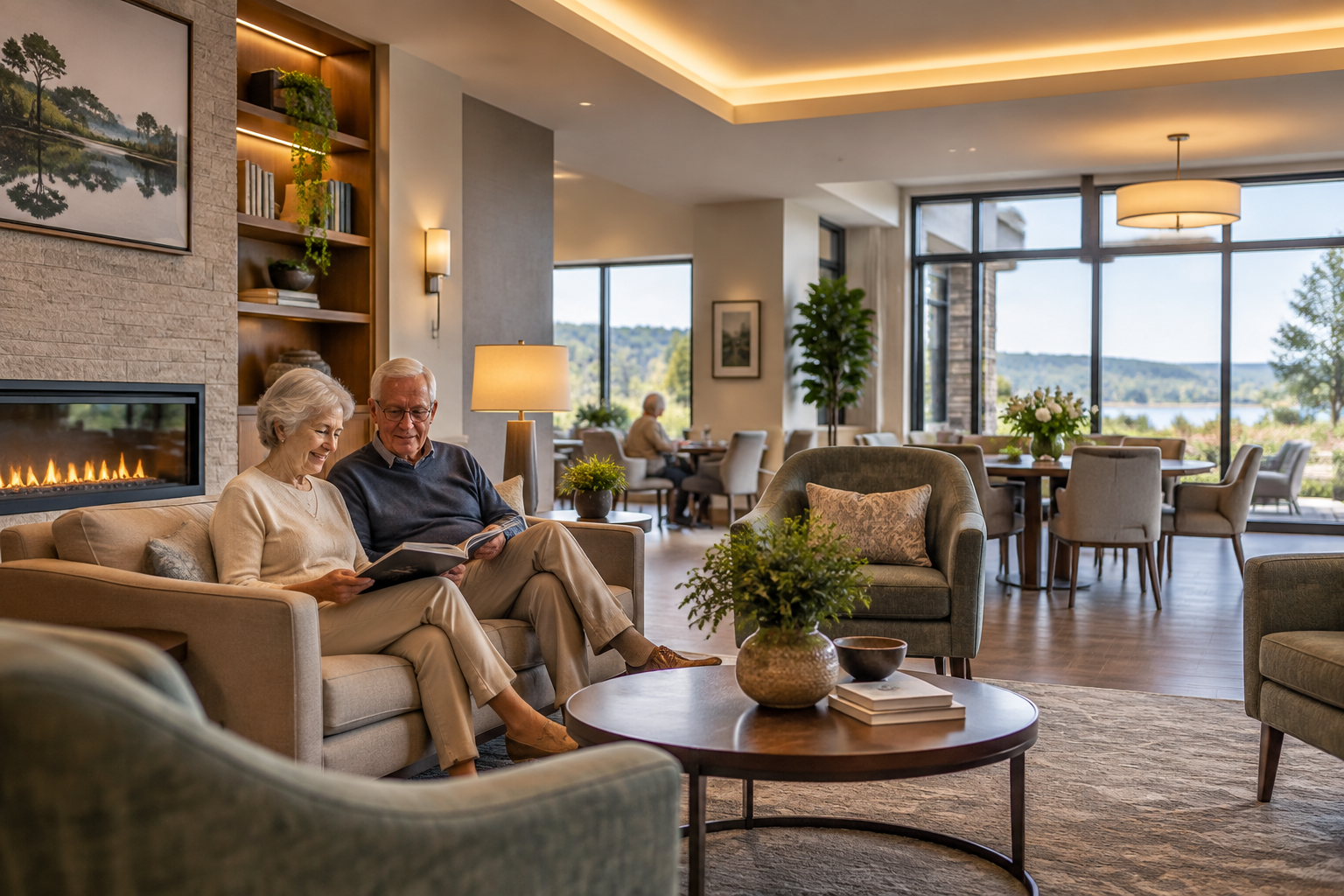
com), a Custom Indoor LED Lighting Manufacturer based in China, we recognize that lighting for senior living facilities presents a unique and critical design challenge. As people age, their eyes undergo significant changes; they require significantly more light to see clearly, yet they become far more sensitive to glare.
This paradox is the central problem: how to provide high levels of illumination for safety and task performance while simultaneously creating a comfortable, glare-free, and psychologically supportive environment. Furthermore, the powerful, non-visual effects of light on sleep cycles, mood, and alertness—known as circadian rhythm—are now a primary consideration in modern healthcare design, demanding a more sophisticated approach than ever before.
Lighting Criteria and Standards for Senior Care
Effective senior care lighting adheres to strict international standards for safety and well-being. The physiological changes in an ageing eye—including a yellowing lens that filters blue light, a smaller pupil that admits less light, and slower adaptation to changing brightness—mean that a person over 65 may need two to four times more light than a 20-year-old for the same visual task.
Simply increasing brightness is not the solution, as it can create debilitating glare. Instead, a successful design must balance illuminance, glare control, color rendition, and spectral tuning.
Key standards provide crucial benchmarks. In Europe, EN 12464-1:2021 (Light and lighting - Lighting of work places - Part 1: Indoor work places) provides illuminance and glare requirements for healthcare premises, including rest homes.
In the United States, IES RP-28-20 (Lighting and the Visual Environment for Senior Living) offers comprehensive, evidence-based recommendations tailored specifically to this demographic. Additionally, the WELL Building Standard v2 places a strong emphasis on circadian lighting, providing metrics for designing light that supports human health.
A recommended design target for general circulation areas and resident rooms is typically 300-500 lux, a significant increase from older standards, with extremely low glare (UGR < 19).
| Parameter | Recommended Specification | Standard / Rationale | Notes |
|---|---|---|---|
| Correlated Color Temperature (CCT) | 2700K - 5000K Tunable White | WELL v2, IES RP-28-20 | A dynamic CCT range is essential for effective circadian lighting, simulating the natural progression of daylight. |
| Color & Fidelity (CRI / TM-30) | CRI Ra > 90; R9 > 50; TM-30 Rf > 90 | EN 12464-1, IES RP-28-20 | High color fidelity ensures residents can accurately identify medications, food, and facial expressions. |
| Glare Control (UGR) | UGR < 19 (Circulation), UGR < 16 (Reading) | DIN EN 12464-1, IES RP-28-20 | Critical for visual comfort in older adults who are highly susceptible to disability glare. Lower is always better. |
| Light Control System | DALI-2 DT8 or Casambi Wireless | IEC 62386 | DALI-2 DT8 is the global standard for color-tunable control. Casambi offers a robust wireless alternative for retrofits. |
| Housing & Durability | IP44 (min. in wet areas), IK06 | IEC 60529, IEC 62262 | Ensures protection against dust, moisture (especially in bathrooms), and light impacts for longevity and safety. |
| Certification & Quality | CE, RoHS, ErP, ISO9001 | EU Directives, ISO Standards | Guarantees compliance with European safety, environmental, and energy efficiency regulations and manufacturing quality. |
| Key Components | Bridgelux Vesta® Tunable White COBs, Tridonic DALI-2 DT8 Driver | Manufacturer Specification | Using premium components ensures consistent performance, reliability, and long-term color stability. |
Luminaire Selection and Optics
Choosing the right luminaire and optic is critical to balance high light output with visual comfort. The focus must be on the quality of light, not just the quantity.
Indirect lighting, where light is bounced off ceilings and walls, is a cornerstone of good senior care design because it creates soft, diffuse illumination with minimal shadows and glare. Direct-view luminaires, such as downlights, must be selected with extreme care, prioritizing those with deep-recessed light sources, high-quality diffusers, and specialized optics to shield the lamp from normal viewing angles.
The goal is to illuminate the environment, not the eye.
For a resident's room, a layered lighting approach using different luminaire types is most effective. This allows the user to adapt the lighting to their specific needs, whether it's reading, socializing, or preparing for sleep.
| Luminaire Type | Glare Control (UGR) | Application Suitability | Circadian Impact | Verdict |
|---|---|---|---|---|
| Standard Recessed Downlight | Typically >22 | Low | Low | Avoid for General Lighting. The high potential for direct glare makes these unsuitable for primary ambient lighting above beds or seating areas. |
| Low-Glare Recessed Downlight | Typically <16 | High (Task/Accent) | Medium | Excellent for Tasks. Use with a deep baffle or black reflector over task areas like kitchenettes or desks, but not as the sole source of ambient light. |
| Indirect LED Cove Lighting | Not Applicable (N/A) | Excellent (Ambient) | High | Best for Ambient Light. Provides soft, uniform, and completely glare-free illumination. Ideal for pairing with a tunable white system for circadian support. |
| Wall-Mounted Bed Light (Up/Down) | <19 (Indirect), <16 (Down) | Excellent (Task/Ambient) | High | Essential for Resident Rooms. A quality bidirectional fixture provides ambient uplighting and a focused, low-glare reading light, giving the resident full control. |
How Can Lighting Improve Safety and Prevent Falls?
Strategic lighting design dramatically reduces fall risk by improving visibility and eliminating shadows. Falls are a leading cause of injury in older adults, and poor lighting is a major contributing factor.
To combat this, designs should ensure high uniformity and eliminate dark spots, especially at flooring transitions. Vertical illuminance—the light falling on vertical surfaces like doors and faces—should be a design target to help with orientation and hazard perception.
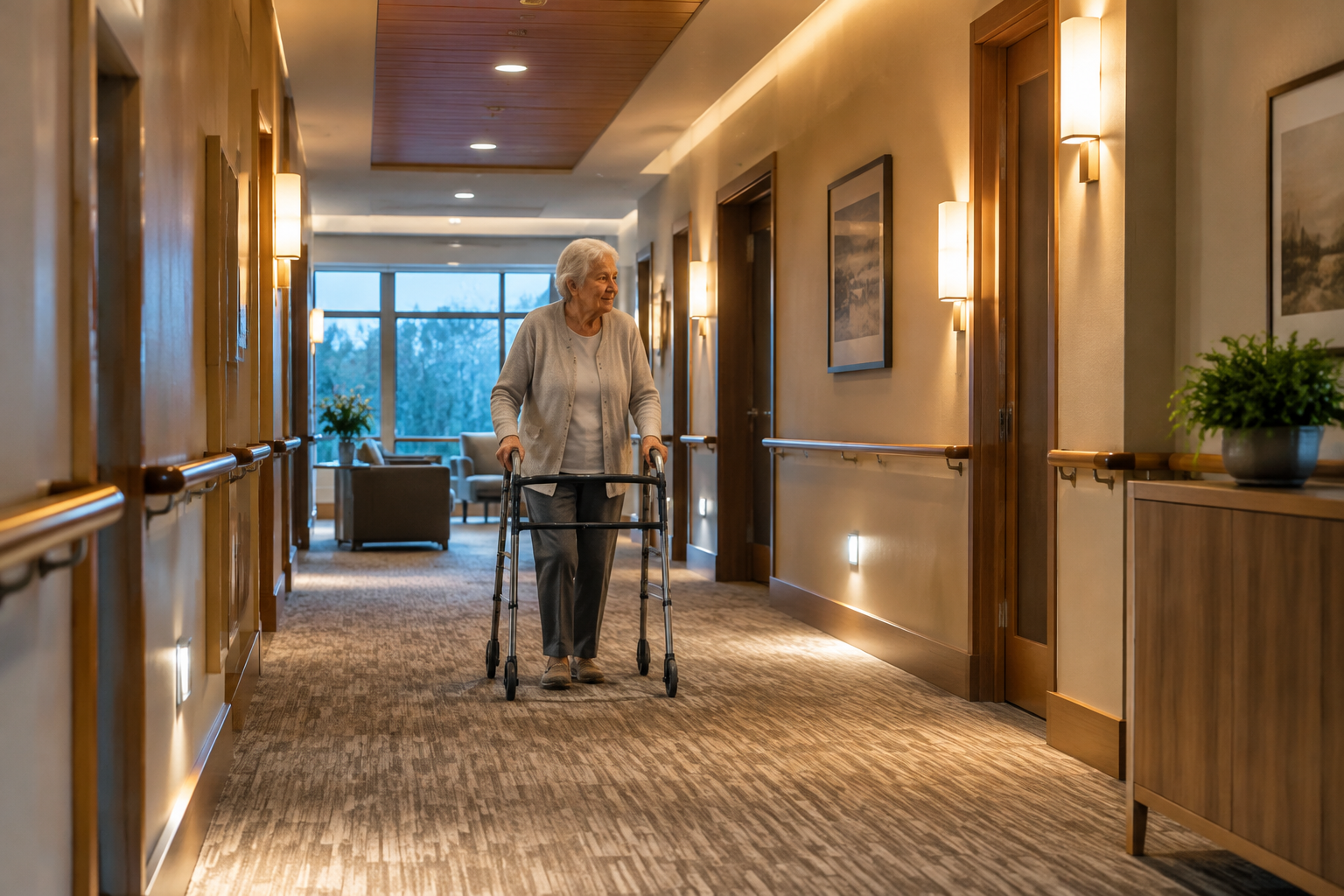
Most critically, a well-designed wayfinding system for nighttime is essential. This involves low-level (recommended 5-10 lux), glare-free lighting integrated into corridors, baseboards, or wall sconces, guiding residents from their bed to the bathroom without disrupting their sleep state.
What Is Circadian Lighting and Why Is It Crucial in Senior Care?
Circadian lighting uses tunable white LEDs to mimic natural daylight, regulating sleep-wake cycles. Many seniors, especially those with limited mobility or cognitive decline, have disrupted circadian rhythms, leading to poor sleep, daytime agitation, and depression.
, a design target of 4000K–5000K) during the day to increase alertness and suppress melatonin., <2700K) to promote relaxation and the natural onset of sleep.
The WELL v2 standard provides specific targets for this, measuring the biological effect of light (Melanopic Equivalent Daylight Illuminance) to ensure a truly effective system.
How Do You Control Glare for Sensitive Ageing Eyes?
Controlling glare requires a multi-faceted approach using optics, fixture placement, and indirect lighting. The Unified Glare Rating (UGR) is a key metric, and a design target of UGR < 19 should be mandatory for all general areas in a senior care facility, as specified in EN 12464-1.
This is achieved by specifying luminaires with deep-set LEDs and high-performance optics like microprismatic lenses or high-transmission opal diffusers. Most importantly, the design strategy should prioritize indirect lighting.
By directing light onto matte-finish ceilings and walls, the entire surface becomes a low-intensity, large-area luminaire, delivering soft, comfortable, and useful light without any direct view of a bright LED source.
 Senior Care Lighting 2026: Circadian & Anti-Glare Design Guide: How can lighting improve safety and prevent falls?
Controls, Energy, and Commissioning
Advanced lighting controls are essential for delivering dynamic circadian scenes and maximizing energy efficiency. A DALI-2 (Digital Addressable Lighting Interface) system is the ideal wired solution.
Specifically, DALI-2 drivers with DT8 (Device Type 8) functionality allow for seamless and standardized control over color temperature and intensity from a single address, simplifying the implementation of sophisticated circadian profiles. For retrofit projects or areas where new wiring is difficult, wireless systems like Casambi provide a powerful and flexible alternative via a Bluetooth mesh network.
Sensors are the key to unlocking automation and energy savings. Occupancy sensors in common areas, bathrooms, and staff rooms ensure lights are only on when needed.
Daylight harvesting sensors, placed near windows, can automatically dim the artificial lighting in response to available natural light, reducing energy consumption by up-to 40% in some areas. Proper commissioning is a final, vital step.
It involves a qualified technician programming the scenes, setting sensor timeouts and sensitivity, and ensuring the system is intuitive for staff to operate, transforming a complex system into a simple, effective tool for better care.
Photometric Files & Compliance
Verifiable photometric data is the foundation of compliant and effective lighting design simulations. At XHLWX, we provide standardized IES and LDT photometric files for our entire range of specification-grade luminaires.
These files contain a precise digital fingerprint of a fixture's light distribution, intensity, and power consumption. Lighting designers and engineers import these files into specialized software like DIALux, RELUX, or AGI32 to build a virtual model of the senior care facility.
This simulation process is non-negotiable for professional projects. It allows designers to accurately predict illuminance levels (lux), uniformity, and importantly, the Unified Glare Rating (UGR) on any surface.
By simulating the design, we can guarantee that the final installation will meet the strict requirements of standards like EN 12464-1 and IES RP-28-20 before a single fixture is ordered. Beyond performance, all products destined for EU markets must carry CE marking, demonstrating compliance with health, safety, and environmental protection standards, including the RoHS directive (Restriction of Hazardous Substances) and the ErP directive (Energy-related Products), which sets minimum efficiency requirements.
Our manufacturing processes are certified under ISO9001 for consistent quality management.
 Senior Care Lighting 2026: Circadian & Anti-Glare Design Guide: Photometric Files & Compliance
Frequently Asked Questions
Q: What Is the Ideal Lux Level for a Senior's Room?
The recommended design target for general ambient light in a resident's room is higher than typical residential standards, around 300 lux. For task areas like a reading chair or bedside table, a dedicated, controllable light providing 500-750 lux is crucial. These recommendations from IES RP-28-20 help compensate for age-related vision loss and improve safety.
Q: Is Tunable White Lighting Expensive to Implement?
While the initial cost for luminaires and controls is higher than for a static system, the price has decreased significantly. A DALI-2 DT8 system offers a standardized and cost-effective wired solution. The long-term benefits—improved sleep, reduced agitation, and better well-being for residents—provide a strong return on investment that goes far beyond simple energy savings.
Q: How Does CRI Affect Lighting for the Elderly?
A high Color Rendering Index (CRI > 90) is critically important. It ensures that colors appear natural and vibrant, which directly impacts safety and quality of life. For seniors, high-fidelity color rendering helps in distinguishing medications, identifying bruises or skin changes, and improves the appeal of food, all of which are vital aspects of care.
Q: What Is the Best Color Temperature for Night Lighting?
For nighttime wayfinding, the best practice is to use a very warm, amber, or red-shifted light with a color temperature below 2200K. The illuminance level should be low, around 5-10 lux at floor level. This spectrum of light is minimally disruptive to the production of melatonin, the sleep hormone, helping residents return to sleep easily after a nighttime trip to the bathroom.
Sources and Technical References
For further reading and detailed specifications, we recommend consulting the primary source documents that inform best practices in senior care lighting:
- EN 12464-1:2021: Light and lighting — Lighting of work places — Part 1: Indoor work places.
- IES RP-28-20: Recommended Practice: Lighting and the Visual Environment for Senior Living.
- The WELL Building Standard, v2: A performance-based system for measuring, certifying, and monitoring features of the built environment that impact human health and well-being.
- Lighting Research Center (LRC) at Rensselaer Polytechnic Institute: Publishes extensive research on light for older adults and circadian stimulus.
 Senior Care Lighting 2026: Circadian & Anti-Glare Design Guide: Q: How does CRI affect lighting for the elderly?
Request a Custom Quote
com), a Custom Indoor LED Lighting Manufacturer based in China, we specialize in developing luminaires tailored to the unique demands of healthcare and senior living projects across the EU, US, and Middle East. Our engineering team can help you select or customize low-glare downlights, circadian-ready linear profiles, and integrated lighting systems that meet stringent glare, performance, and safety requirements.
We provide full photometric support and design assistance to ensure your project is a success. Contact us today to discuss your project specifications and receive a custom quote.
Need a tailored lighting plan for your project?
Our senior lighting designers reply within 48 hours with a free design proposal & quotation.