
Shopping Mall Atrium Lighting Design 2026: DALI & Casambi Guide
Quick answer
Explore expert strategies for shopping mall atrium and corridor lighting. This guide covers EN 12464-1 standards, luminaire selection, DALI-2/Casambi controls
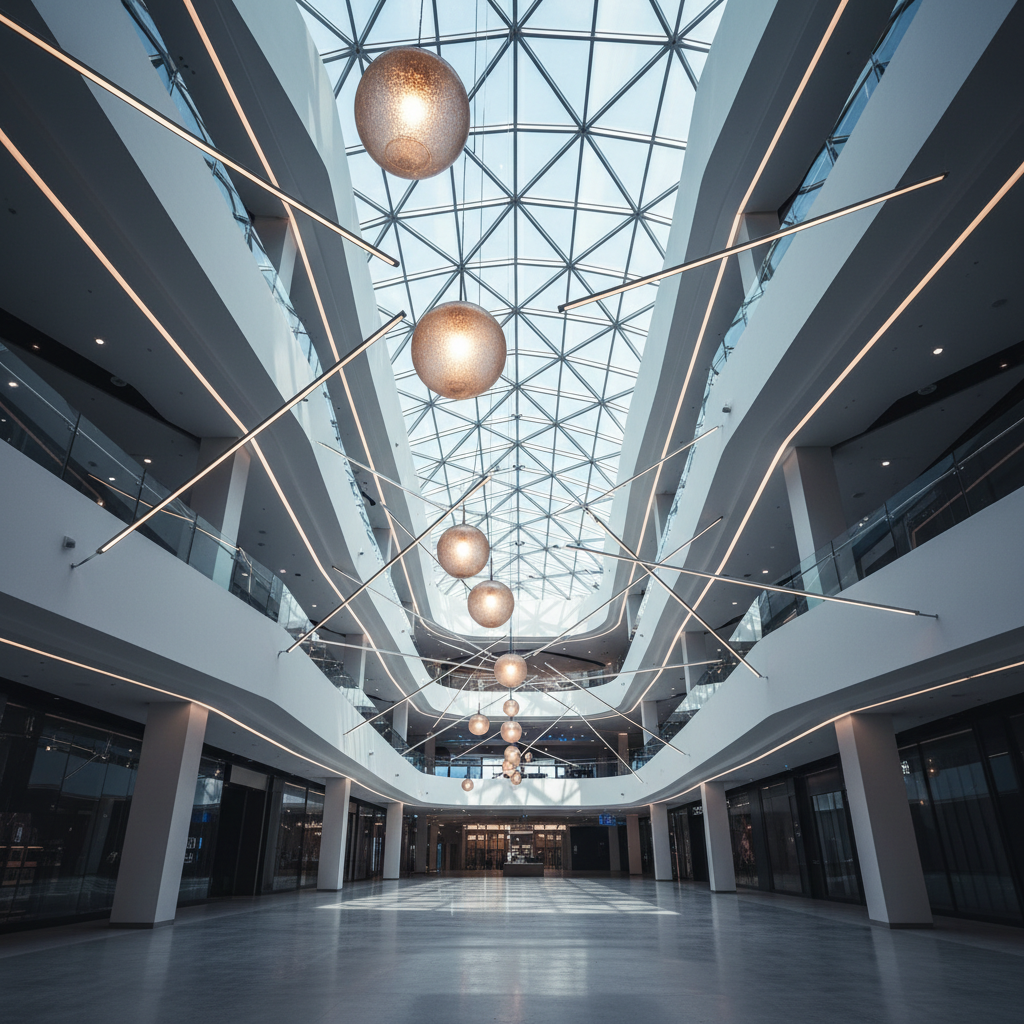
Introduction — the Design Problem in This Space
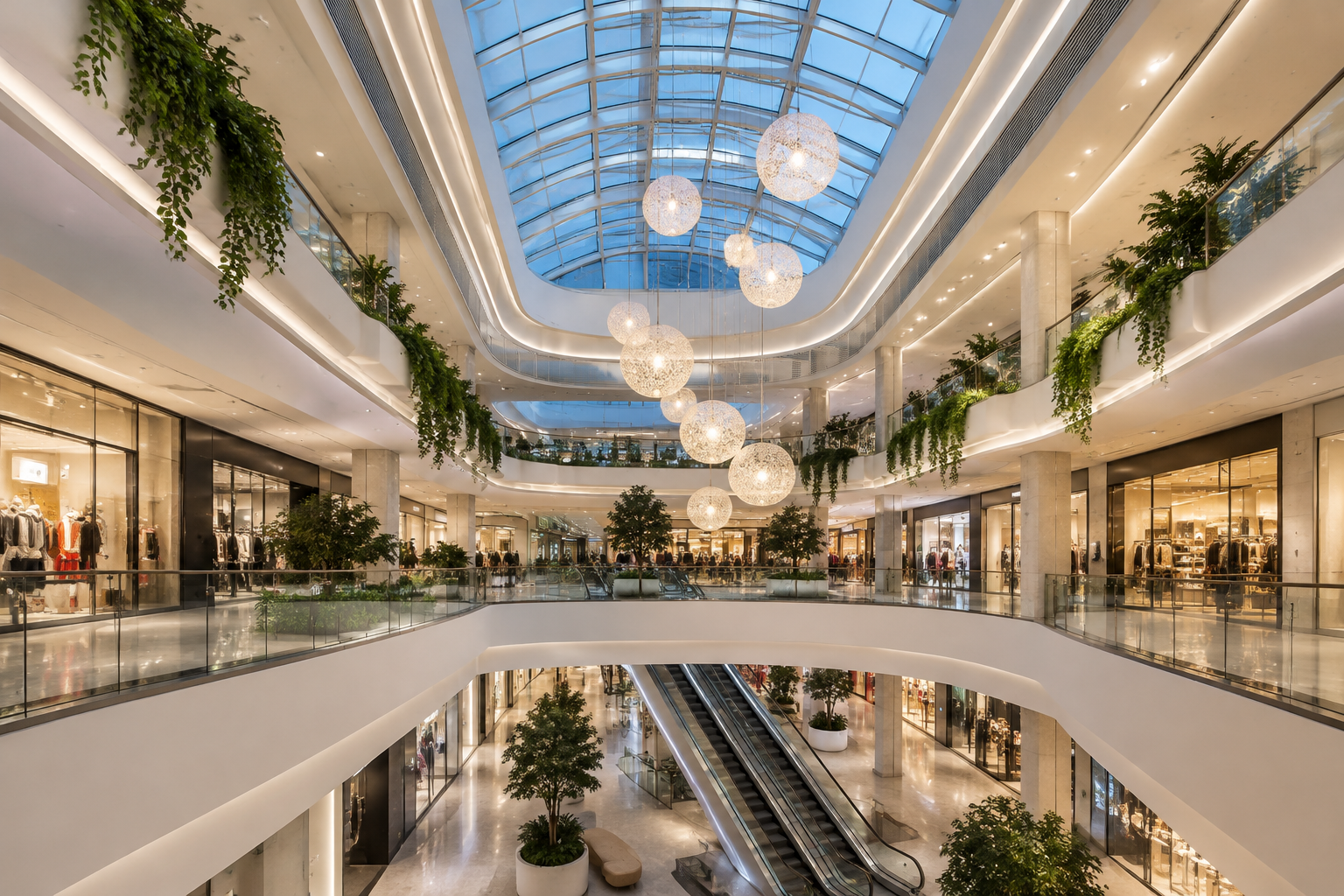
At XHLWX (led-project-light.com), a Custom Indoor LED Lighting Manufacturer based in China, we understand that shopping mall atrium and circulation lighting must balance architectural drama with functional performance and energy efficiency. The core challenge lies in creating a comfortable, visually engaging, and safe environment across vast, multi-story spaces with diverse functions. From the grand scale of the central atrium to the intimate pathways of corridors and the transitional nature of escalators, the lighting design must unify the space, guide visitors intuitively, and reinforce the mall's brand identity while adhering to stringent energy codes and performance standards.
Lighting Criteria and Standards for This Application
Effective mall lighting adheres to strict international standards for safety, comfort, and visual appeal. For projects in the EU, EN 12464-1:2021 is the primary reference, specifying illuminance levels, uniformity, and glare limits for different zones. In the US, the IES (Illuminating Engineering Society) Recommended Practices (RP) series provides similar guidance. Modern designs also incorporate human-centric principles from standards like the WELL Building Standard v2, which considers the impact of light on visitor well-being. Key targets include maintaining 200 lux in main circulation areas and ensuring a Unified Glare Rating (UGR) below 22 to prevent visual discomfort, especially with reflective floor and wall surfaces common in malls.
| Parameter | Recommended Specification | Governing Standard | Notes |
|---|---|---|---|
| Luminous Efficacy | >120 lm/W | ErP (EU) 2019/2020 | Essential for reducing operational energy costs and meeting modern eco-design requirements. |
| Correlated Color Temperature (CCT) | 3000K / 4000K (Tunable White option) | Designer Specification | 3000K creates a warm, inviting atmosphere; 4000K offers a neutral, crisp feel. Tunable White allows for dynamic changes. |
| Color Rendering & Fidelity | CRI >90, TM-30 Rf >90, Rg ≈ 100 | EN 12464-1, WELL v2 | High fidelity (Rf) and a balanced gamut (Rg) ensure merchandise, finishes, and skin tones appear natural and vibrant. |
| Unified Glare Rating (UGR) | <22 (Circulation), <19 (Seated Areas) | EN 12464-1:2021 | Critical for visual comfort in large spaces with many light sources. Achieved through deep-baffle optics and careful placement. |
| Control Protocol | DALI-2 (DT6/DT8) / Casambi / 0-10V | DiiA / Bluetooth SIG | DALI-2 is recommended for new builds; Casambi for retrofits. 0-10V provides basic dimming. |
| Housing Protection | IP20 (General), IP44 (Entrances/Canopies) | IEC 60529 | IP44 is required for areas potentially exposed to moisture or cleaning spray. IK08 rating recommended for accessible luminaires. |
| Certifications | CE, RoHS, ErP, ISO9001:2015 | EU Directives, ISO | Ensures market access, safety, environmental compliance, and manufacturing quality control. |
| Chip / Driver Brands | Bridgelux, Samsung, Osram / Tridonic, Mean Well | Manufacturer Warranty | Specifies use of reputable components for proven reliability, performance, and long service life. |
Luminaire Selection and Optics
Selecting the right luminaire type is critical for addressing the diverse scales and functions within a shopping mall. A layered lighting approach—combining ambient, accent, and architectural lighting—creates visual interest and functional clarity. The primary challenge in atriums is delivering sufficient light to the floor from high ceilings (often 15m+) without causing glare. In corridors and on escalators, the focus shifts to ensuring safe transit, intuitive wayfinding, and a seamless visual journey.
| Luminaire Type | Primary Application | Pros | Cons | Verdict |
|---|---|---|---|---|
| High-Power Adjustable Downlight | Atrium Floor & Feature Accent | High lumen output, precise beam control (15°-60°), excellent glare management with deep baffles. | Can create a scalloped effect on walls if not spaced correctly; requires careful aiming. | Essential for providing functional light to the main floor and highlighting key architectural or retail features from a distance. |
| Large-Scale Custom Pendant | Atrium Ambient & Decorative | Acts as a central design statement, fills large volumes, provides soft, diffuse ambient light. | Can be a significant budget item; requires structural support; may complicate maintenance. | Excellent for establishing the mall's identity and providing general illumination, especially when combined with other layers. |
| Recessed Linear Wall Grazer | Vertical Surface Illumination | Creates visual height and drama, highlights textures, improves spatial perception, guides movement. | Requires close coordination with architectural finishes; potential for veiling reflections on glossy surfaces. | A powerful tool for defining the architectural volume of the atrium and corridors, making the space feel larger and more dynamic. |
| Integrated Step/Handrail Lighting | Escalator & Stair Safety | Provides direct illumination on treads and risers, enhances safety, low-glare, creates a clean aesthetic. | Higher initial cost; requires integration with the escalator/stair manufacturer. | The premium solution for escalator safety, meeting standards like EN 12464-1 for illuminance on steps while minimizing glare. |
How Do You Light a Multi-story Atrium Effectively?
Layering light is the fundamental strategy for illuminating high-volume atrium spaces successfully. This involves a three-pronged approach. First, an ambient layer from large pendants or indirect coves provides a soft, general base illumination. Second, a focal layer using high-output, narrow-beam adjustable downlights precisely targets the floor, vendor kiosks, and seating areas to ensure functional light levels. Finally, an architectural layer, often using linear wall grazers, accentuates vertical surfaces, columns, and textures, which defines the scale of the space and prevents a "cave effect."
What Is the Best Way to Control Glare in Glass-filled Atriums?
Managing glare requires careful luminaire placement, deep-baffled optics, and precise beam control. The goal is to keep the Unified Glare Rating (UGR) below the recommended maximum of 22. Select luminaires with deep-set LED sources and dark, matte-finish baffles. Use accessories like honeycomb louvers to further cut off high-angle light. Most importantly, use simulation software to position fixtures so their beams do not directly hit the sightlines of people on upper-level balconies or reflect off glass balustrades and storefronts into their eyes.
How Does Tunable White Lighting Benefit a Shopping Mall Environment?
Tunable White systems mimic natural daylight cycles to enhance visitor well-being and adapt the mall's atmosphere. By using DALI-2 DT8 or similar protocols, the Correlated Color Temperature (CCT) can be programmed to shift from a cool, energizing 4000K-5000K during midday to a warm, relaxing 2700K-3000K in the evening. This supports human circadian rhythms, a key principle of the WELL v2 standard. It also offers commercial flexibility, allowing the mall's ambiance to be dynamically altered for seasonal promotions, events, or time-of-day traffic patterns.
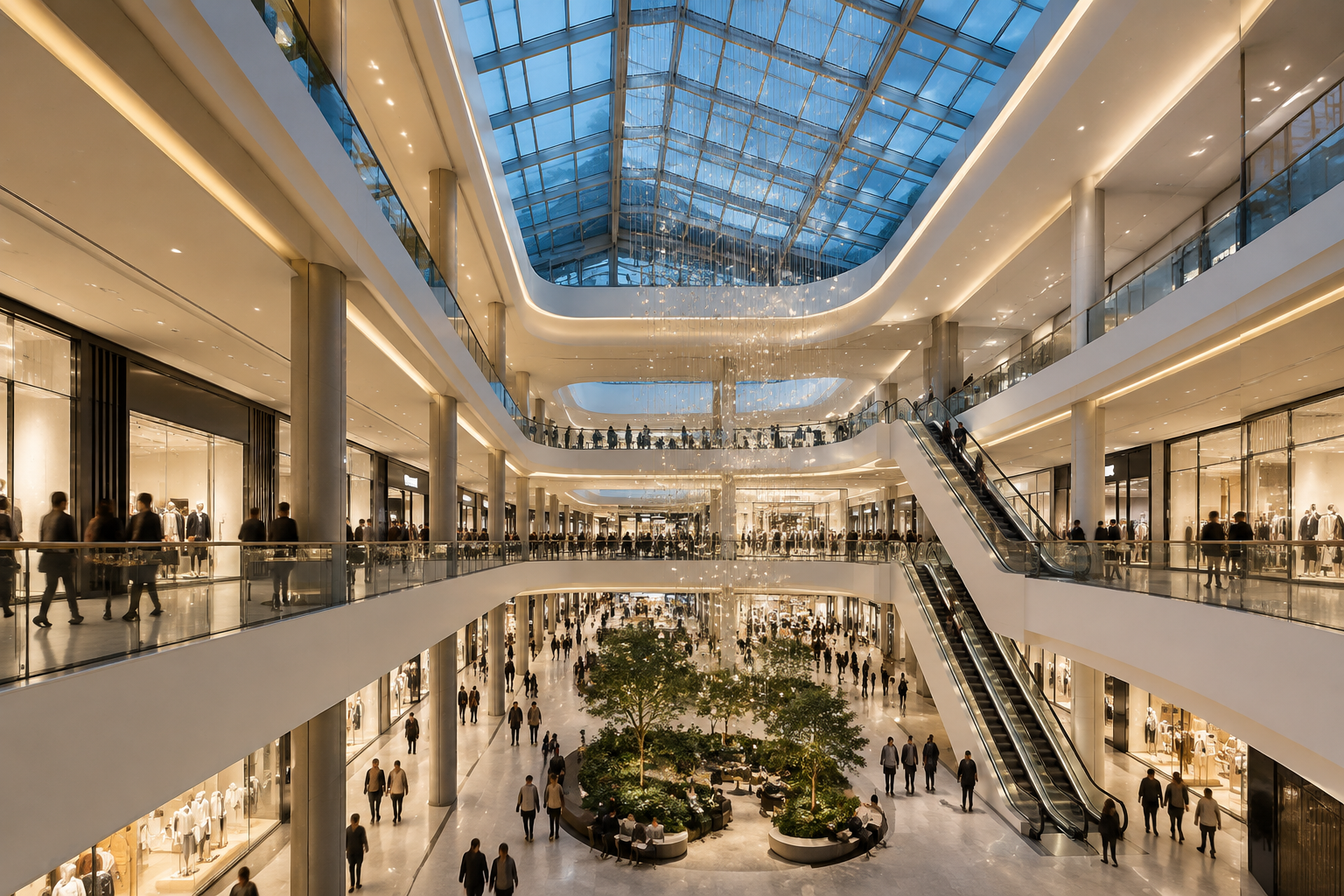 Shopping Mall Atrium Lighting Design 2026: DALI & Casambi Guide: How do you light a multi-story atrium effectively?
Controls, Energy and Commissioning (DALI-2 / Casambi / Sensors)
Intelligent lighting controls are non-negotiable for achieving energy efficiency and operational flexibility in modern malls. The two dominant protocols, DALI-2 and Casambi, offer distinct advantages.
DALI-2 (Digital Addressable Lighting Interface) is a robust, globally standardized wired protocol ideal for new constructions. Its two-wire bus connects all fixtures, sensors, and switches, allowing for individual or group control, advanced scene setting, energy consumption monitoring, and luminaire diagnostics. This granular control is perfect for scheduling changes, daylight harvesting in the atrium, and integrating with the central Building Management System (BMS).
Casambi offers a wireless solution based on Bluetooth Mesh technology. It is exceptionally well-suited for retrofits or areas where running new control wiring is impractical. Commissioning is done via a user-friendly mobile app, offering flexibility in grouping and scene creation. While highly scalable, it is often favored for controlling specific zones rather than an entire multi-level mall, though it can be gateway-integrated with wired systems like DALI.
Combining these controls with sensors maximizes energy savings. Daylight sensors installed near skylights can automatically dim the electric lighting in the atrium, saving significant energy. Presence/motion sensors (PIR) are essential for corridors and service areas, ensuring lights are on only when needed, especially during off-peak hours.
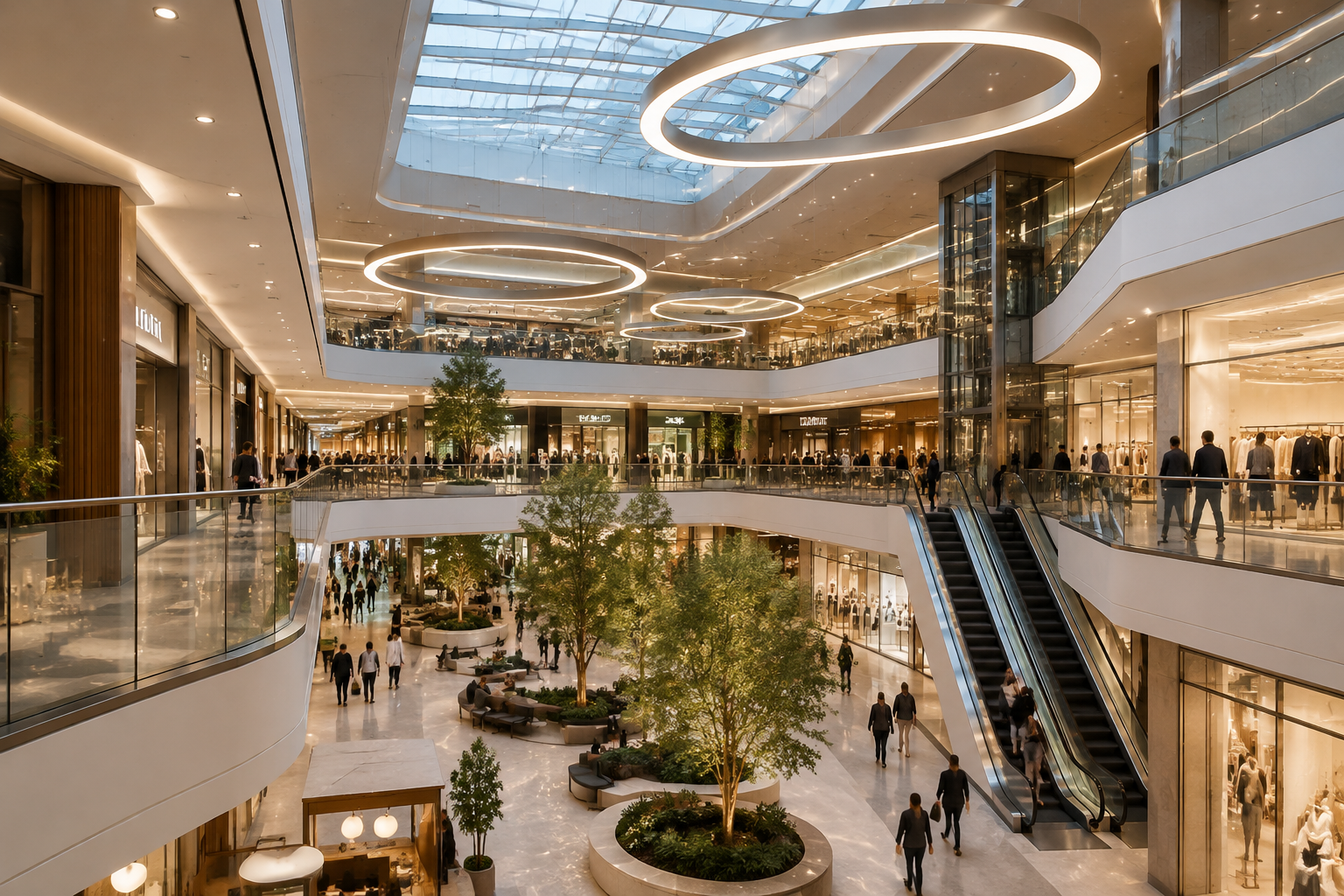 Shopping Mall Atrium Lighting Design 2026: DALI & Casambi Guide: Controls, energy and commissioning (DALI-2 / Casambi / sensors)
Photometric Files & Compliance (IES / LDT / DIALux / CE / RoHS / ErP)
Verifying a lighting design's compliance requires accurate photometric data and professional simulation software. At XHLWX, we provide complete photometric files in both IES (North American standard) and LDT (European standard) formats for all our custom luminaires. These files are the digital blueprint of a fixture's light distribution, intensity, and power consumption.
Lighting designers import these IES and LDT photometric files into simulation software like DIALux or Relux. This allows them to build a 3D model of the shopping mall and accurately predict the lighting performance.
The software generates detailed reports showing illuminance maps, uniformity ratios, and UGR calculations. This virtual commissioning process is critical for ensuring the design will meet the specific requirements of standards like DIN EN 12464-1 before a single fixture is ordered or installed.
For market access in Europe, all luminaires must carry the CE mark, indicating conformity with health, safety, and environmental protection standards. Compliance with RoHS (Restriction of Hazardous Substances) and the energy-efficiency requirements of ErP (Energy-related Products Directive) are also mandatory. Our manufacturing processes are certified under ISO9001, guaranteeing consistent quality and reliability.
Frequently Asked Questions
Q: What Is a Good CRI and TM-30 Value for Retail Lighting?
For premium retail environments, a Color Rendering Index (CRI) above 90 is recommended to make products look appealing. To further refine color quality, TM-30 metrics are key. A fidelity index (Rf) over 90 ensures colors are rendered accurately, while a gamut index (Rg) between 95 and 105 provides vibrant, saturated colors without appearing unnatural. These specifications are vital for fashion and food retailers.
Q: How Much Energy Can I Save with DALI-2 Controls and LED Lighting?
A well-designed system combining high-efficacy LED luminaires (>120 lm/W) with DALI-2 controls can achieve energy savings of over 70% compared to older fluorescent or metal halide lighting. In a large atrium, implementing daylight harvesting alone can reduce lighting energy use by a simulated target of 30-50% during daylight hours, significantly lowering the building's operational carbon footprint.
Q: What Is the Standard Illuminance Level for a Shopping Mall Corridor?
The European standard EN 12464-1:2021 specifies a maintained average illuminance of 200 lux for general circulation areas like corridors. For stairs and escalators, the requirement is 150 lux directly on the steps to ensure safety. The standard also requires the uniformity (Uo) to be at least 0.40 to avoid dark patches and ensure a comfortable visual path.
Q: Do I Need IP-rated Luminaires in a Shopping Mall?
While most general circulation areas can use standard IP20 rated fixtures, specific zones demand higher protection. Luminaires installed in outdoor canopies, near main entrances, or in service areas subject to wet cleaning should be rated at least IP44. This ensures protection against splashing water and solid objects larger than 1mm, which is critical for luminaire longevity and electrical safety in public spaces.
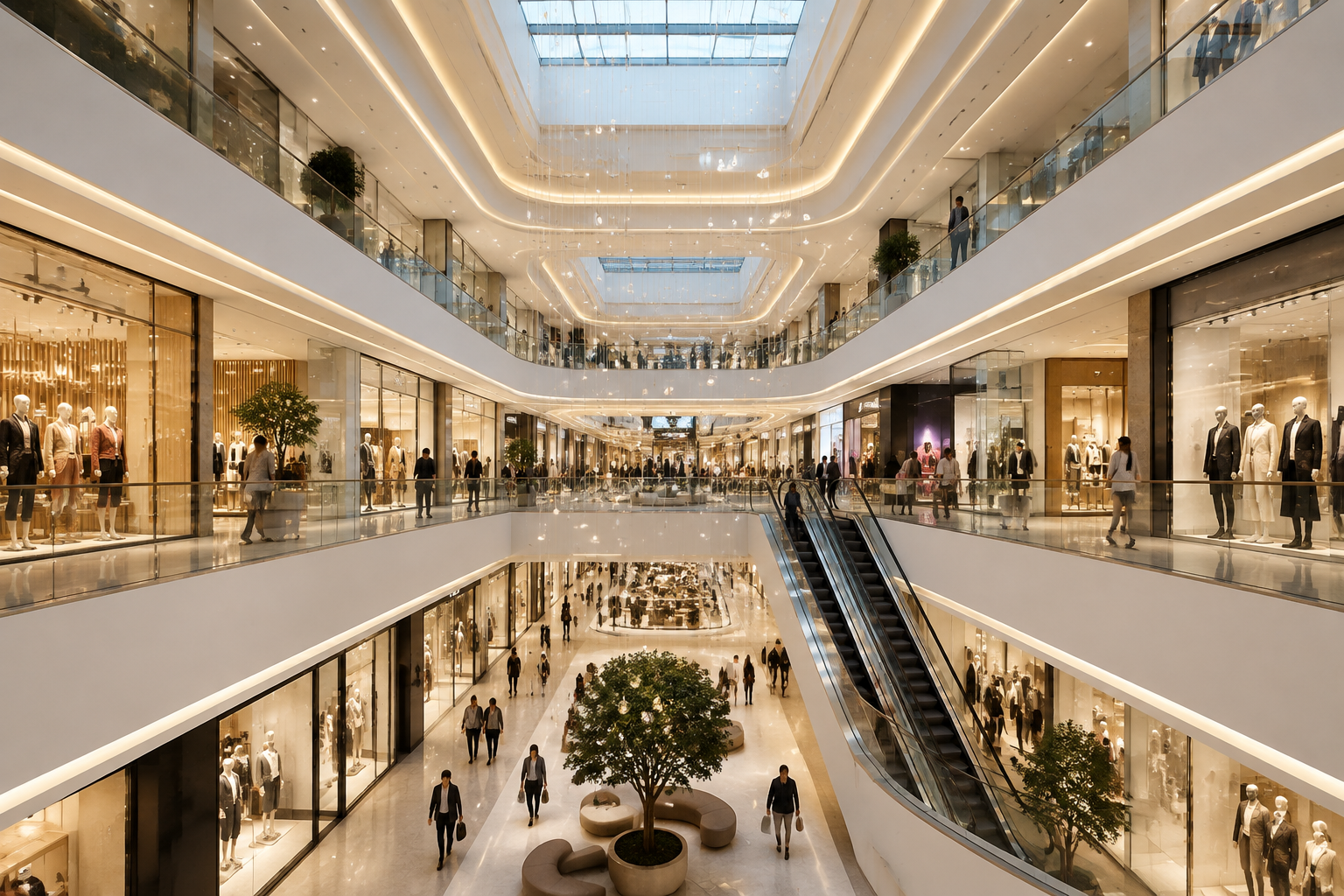 Shopping Mall Atrium Lighting Design 2026: DALI & Casambi Guide: Q: What is a good CRI and TM-30 value for retail lighting?
Sources and Technical References
- CEN. (2021). EN 12464-1:2021 Light and lighting — Lighting of work places — Part 1: Indoor work places. Brussels: European Committee for Standardization.
- Digital Illumination Interface Alliance. (2022). DALI-2 Specification. DiiA.
- Illuminating Engineering Society. (2011). ANSI/IES RP-16-10, Nomenclature and Definitions for Illuminating Engineering. New York, NY: IES.
- International WELL Building Institute. (2020). The WELL Building Standard v2. New York, NY: IWBI.
 Shopping Mall Atrium Lighting Design 2026: DALI & Casambi Guide: Q: Do I need IP-rated luminaires in a shopping mall?
Request a Custom Quote
At XHLWX (led-project-light.com), a Custom Indoor LED Lighting Manufacturer based in China, we specialize in developing and manufacturing luminaires tailored to your project's unique architectural and performance needs. From high-power atrium downlights with specific beam angles to fully integrated linear systems, our engineering team works with you to create the perfect solution. We support projects across the EU, US, and Middle East, providing comprehensive photometric data and design assistance. Contact our solutions team to discuss your shopping mall project and request a no-obligation quote or DIALux lighting design support.
Need a tailored lighting plan for your project?
Our senior lighting designers reply within 48 hours with a free design proposal & quotation.