
Supermarket Lighting Design 2026: Fresh-Food CRI95 & Track Guide
Quick answer
A complete guide to modern supermarket lighting design. Learn how to use high CRI95 track lighting for fresh food, meet EN 12464-1 standards, and cut costs wi
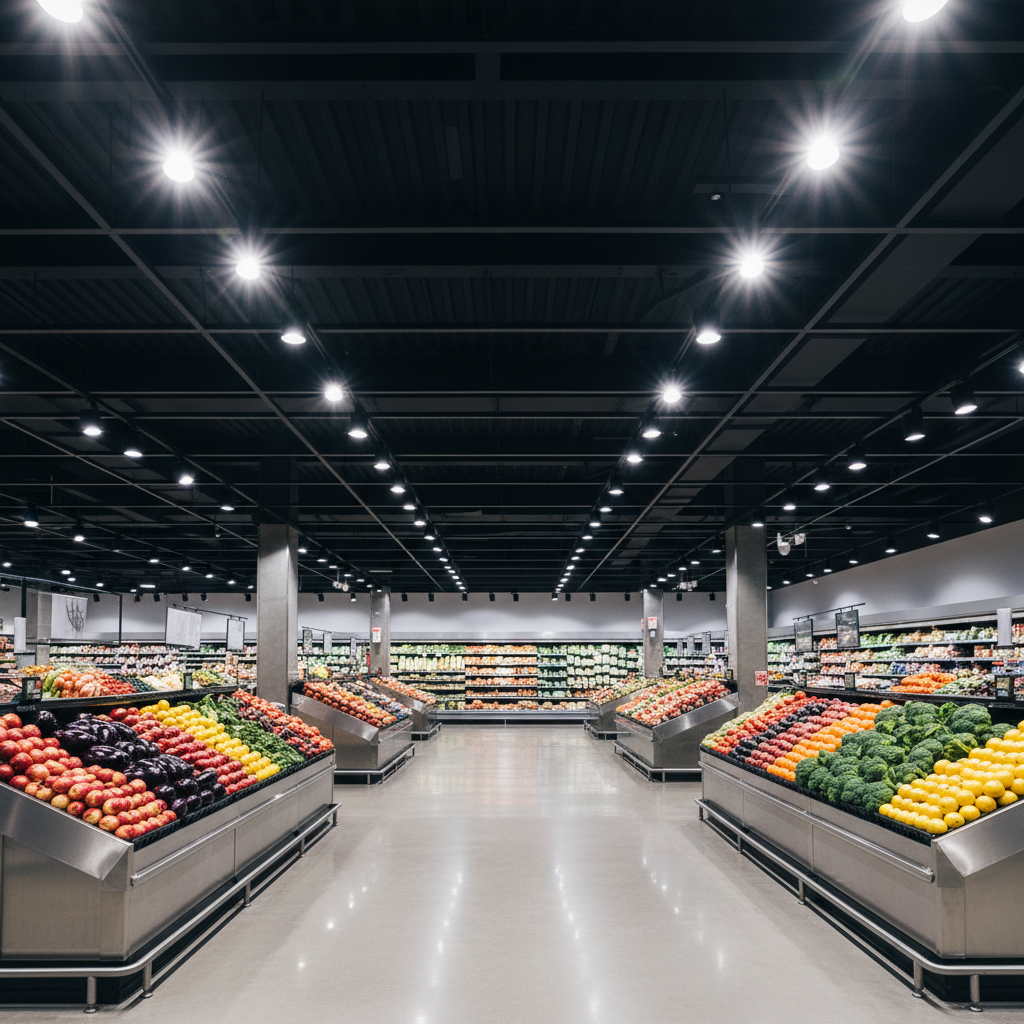
Introduction — the Design Problem in This Space
At XHLWX (led-project-light.com), a Custom Indoor LED Lighting Manufacturer based in China, we understand that supermarket lighting has evolved from a utility into a critical sales and branding tool. The primary design challenge is creating a visually compelling environment that enhances product appeal, guides customer flow, and minimizes operational costs, all while ensuring visual comfort and safety. Moving beyond outdated fluorescent systems, modern retail demands a multi-layered approach using specialized LED technology to make fresh produce vibrant, aisles clear, and the checkout experience seamless. This strategy directly impacts customer perception, basket size, and brand loyalty.
Lighting Criteria and Standards for This Application
Effective supermarket lighting must satisfy specific photometric criteria defined by international standards. Key considerations include illuminance levels (lux), Unified Glare Rating (UGR), and color rendering quality (CRI and TM-30), which vary significantly between different zones like aisles, fresh food counters, and checkouts. Adhering to standards like EN 12464-1 is not just about compliance; it is fundamental to creating a successful and comfortable retail space. These metrics ensure that products are seen in their best light, navigation is intuitive, and both staff and customers experience minimal visual discomfort.
| Parameter | Recommended Specification | Standard Compliance | Notes |
|---|---|---|---|
| Color Quality | CCT: 3000K-4000K, custom food spectra; CRI >90 (95+ for fresh food); TM-30 Rf>90, Rg>100 | EN 12464-1, WELL v2 | High CRI/Rf makes produce look fresh. Rg>100 indicates color saturation, enhancing reds and greens. |
| Illuminance (Ēm) | General Aisles: 300 lx; Fresh Food/Counters: 500 lx; Checkouts: 500 lx | EN 12464-1, IES RP | Higher levels on feature displays draw attention. Must ensure good vertical illuminance on shelves. |
| Glare Control (UGR) | Aisles: <22; Checkouts/Task Areas: <19 | EN 12464-1 | Low glare is crucial for staff comfort and safety, particularly for cashiers looking at screens and customers. |
| Control & Dimming | DALI-2, 0-10V, Casambi (Bluetooth Mesh) | IEC 62386 (DALI) | DALI-2 allows for individual luminaire control, energy monitoring, and sensor integration. |
| Luminaire Components | Osram/Bridgelux/Samsung LED Chips; Tridonic/Mean Well Drivers; IP20/IP44 Housing | CE, RoHS, ErP, ISO9001 | High-quality components ensure long lifespan (L80B10 >50,000 hrs), stable performance, and safety. |
Luminaire Selection and Optics
Choosing the right luminaires and optics is crucial for executing a layered lighting design. A successful scheme typically combines different fixture types, with LED track lighting providing flexibility for feature areas, linear trunking systems delivering efficient aisle illumination, and downlights serving circulation zones. Each type is selected based on its application-specific strengths, such as the directional precision of spotlights or the uniform coverage of linear systems. The goal is to build a cohesive, functional, and aesthetically pleasing lighting environment.
| Luminaire Type | Primary Application | Flexibility | Efficiency (lm/W) | Verdict |
|---|---|---|---|---|
| LED Linear Trunking | General aisles, back-of-house storage | Low-Medium | 140-180 lm/W | Excellent for uniform, efficient illumination of long aisles with high vertical light on shelves. |
| LED Track Spotlights | Fresh food sections, promotional end caps, feature displays | High | 100-130 lm/W | Essential for accent lighting. Allows precise aiming and easy repositioning as store layouts change. |
| Recessed Downlights | Entrance, circulation areas, checkout zones | Low | 110-140 lm/W | Good for providing clean, unobtrusive general lighting where task-specific or accent lighting is not needed. |
| Specialty Pendants | Cafes, wine sections, customer service desks | Medium | 90-120 lm/W | Situational choice for creating distinct zones and adding a decorative, brand-specific element to the design. |
How Does CCT and CRI Impact Fresh Food Sales?
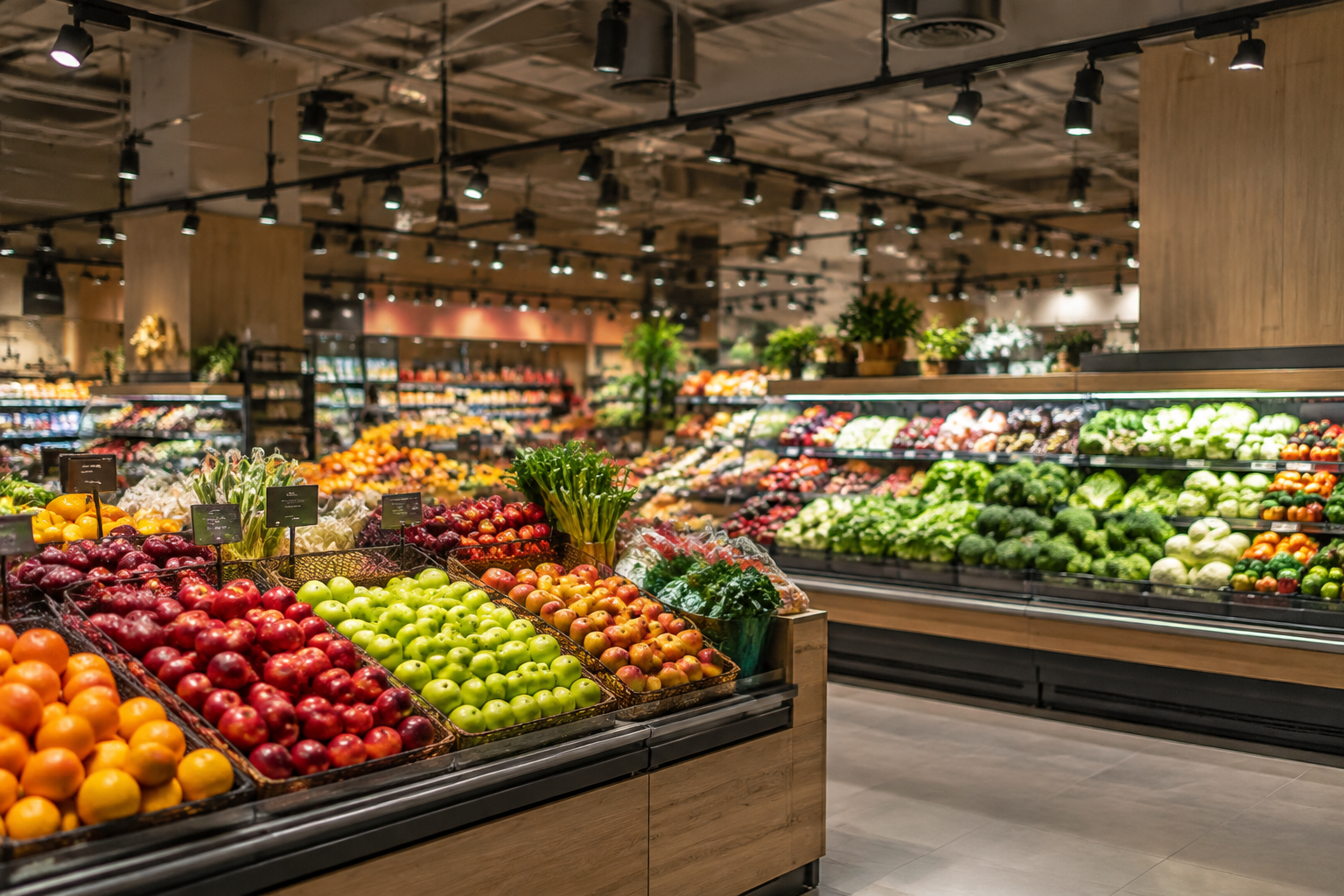
High-quality color rendering directly influences a customer's perception of freshness and quality. Using luminaires with a Colour Rendering Index (CRI) of 95 or higher ensures that the natural colours of fruits, vegetables, and meats are rendered faithfully, making them appear more appealing. Specialised Correlated Colour Temperatures (CCT) and spectra further enhance specific products: a warm 2700K light enriches the golden tones of bread, while specific LED recipes with boosted red saturation (high TM-30 Rg) make meat look leaner and fresher without distortion. This targeted approach can significantly lift product perception and drive purchasing decisions.
What Is the Best Lighting for Long Grocery Aisles?
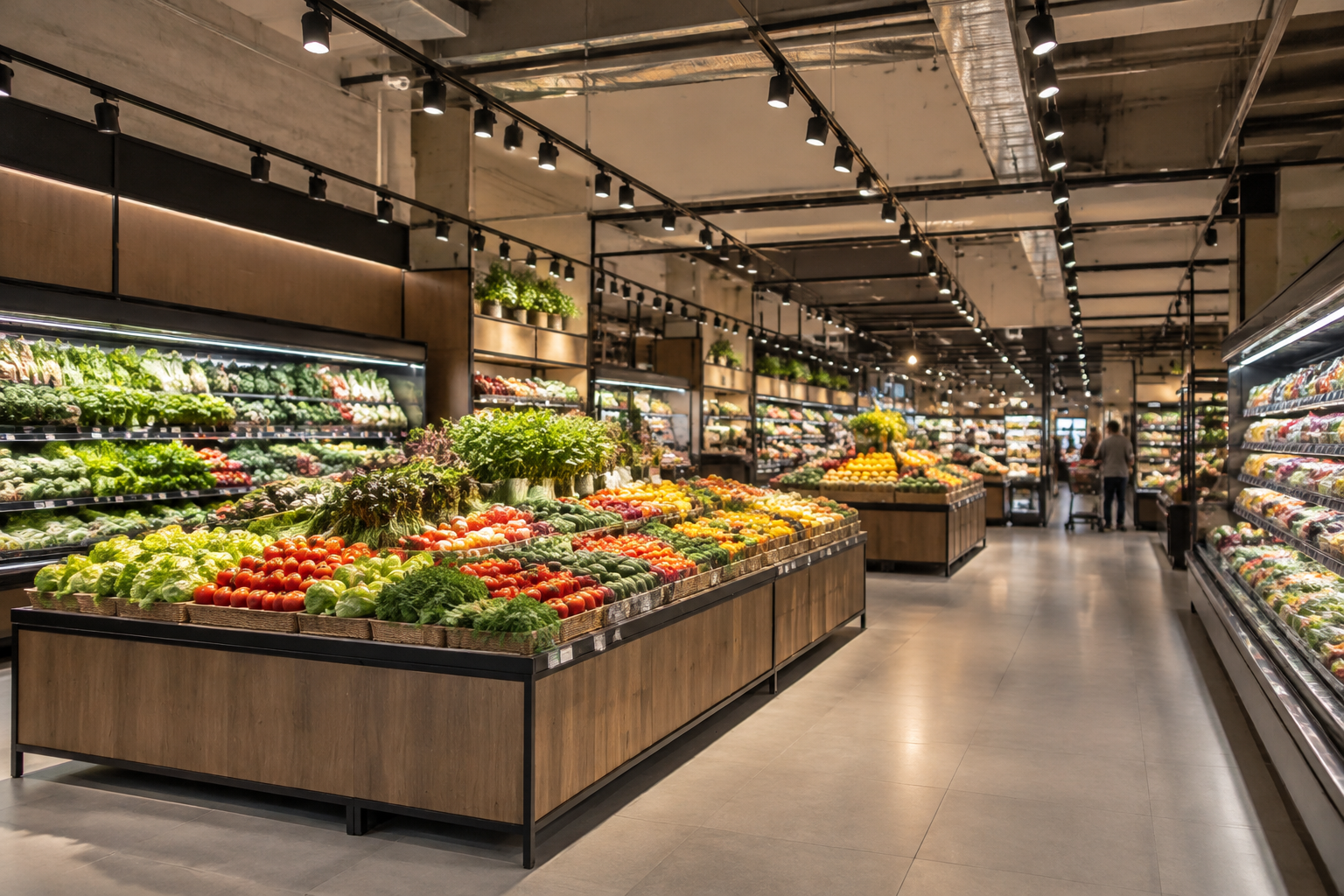
LED linear trunking systems are the ideal solution for illuminating long grocery aisles efficiently. These systems provide excellent horizontal and vertical illuminance, ensuring that products are clearly visible on all shelves, from top to bottom. Their continuous-row design eliminates dark spots common with discrete fixtures, creating a uniform and inviting path for customers. Many trunking systems also feature integrated tracks for power and data (like DALI-2), simplifying installation and allowing for the easy addition of accent spotlights for promotional displays within the aisle itself.
Why Is UGR<19 Important at the Checkout Area?
Maintaining a Unified Glare Rating (UGR) below 19 is critical for employee well-being and operational accuracy. Checkout staff perform visually demanding tasks, frequently shifting their gaze between products, screens, and customers. Excessive glare from overhead lighting causes eye strain, fatigue, and headaches, which can lead to reduced productivity and increased errors. By adhering to the UGR<19 recommendation in EN 12464-1 for task areas, retailers create a comfortable working environment, demonstrating a commitment to staff health and ensuring a smooth, efficient final touchpoint for the customer journey.
 Supermarket Lighting Design 2026: Fresh-Food CRI95 & Track Guide: How does CCT and CRI impact fresh food sales?
Controls, Energy and Commissioning
Smart lighting controls are essential for maximizing energy efficiency and reducing operational expenditure. Systems like DALI-2 (Digital Addressable Lighting Interface) offer granular control over every luminaire, enabling strategies such as task-tuning, scene-setting, and daylight harvesting. By integrating sensors, lighting levels can adjust automatically based on the amount of natural light available or the presence of people, cutting energy use by an additional 20-40% in some areas. Wireless solutions like Casambi provide similar functionality with greater installation flexibility, making them ideal for retrofits. Proper commissioning ensures these systems perform as designed, delivering sustained savings and optimal performance.
Photometric Files & Compliance
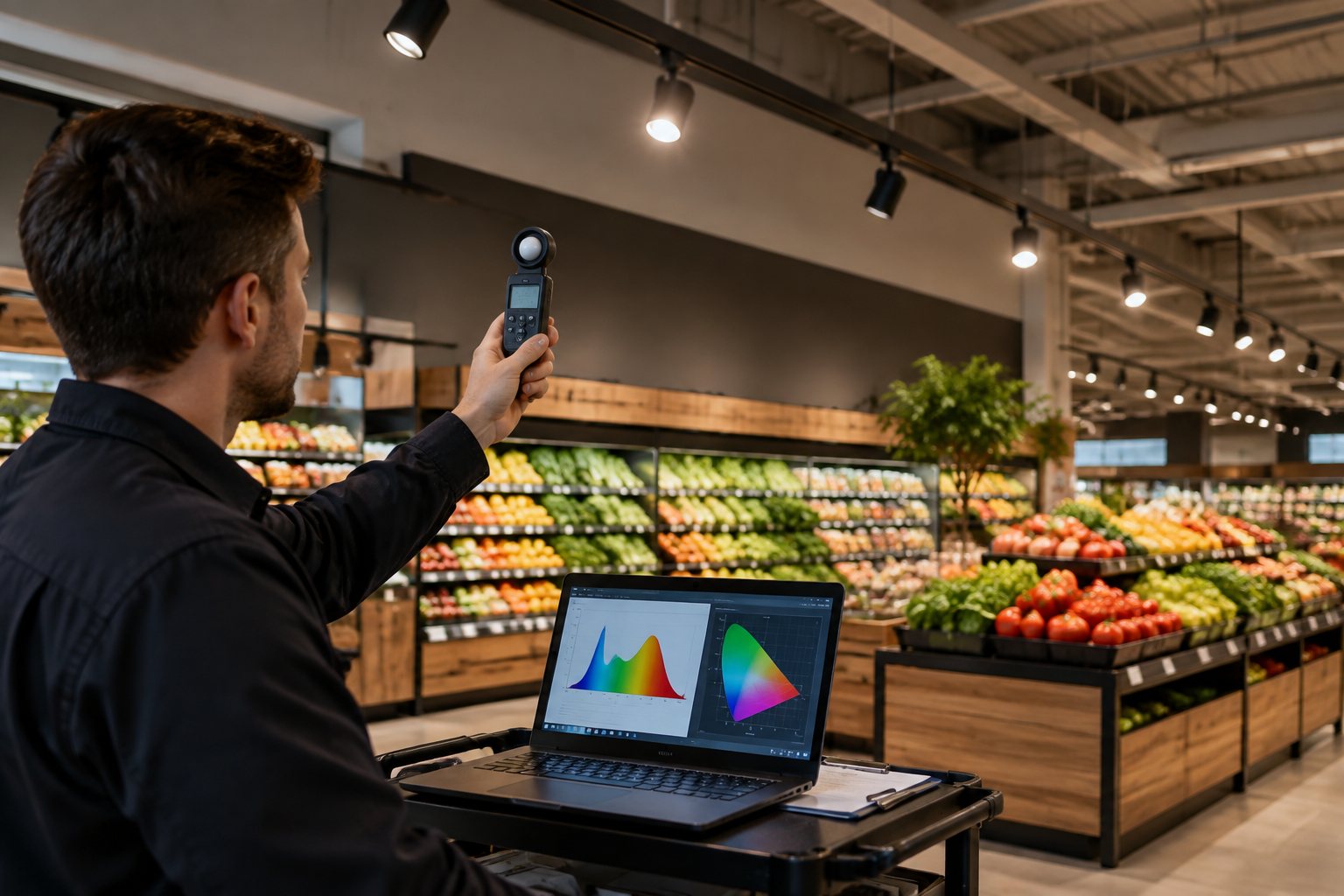
Accurate lighting design and verification are impossible without comprehensive photometric data. At XHLWX, we provide complete IES and LDT photometric files for our entire range of customisable luminaires, forming the digital backbone of any professional lighting plan. These files allow lighting designers to import our products into simulation software like DIALux or Relux. Within this software, designers can build a virtual model of the supermarket to verify that the proposed design meets all targets for illuminance, uniformity, and UGR as specified by standards like EN 12464-1 and IES RP. This simulation process mitigates risk, ensures compliance with regulations like CE, RoHS, and ErP, and guarantees the project's success before a single fixture is installed.
 Supermarket Lighting Design 2026: Fresh-Food CRI95 & Track Guide: Photometric files & compliance
Frequently Asked Questions
Q: What Is the Typical Energy Saving When Upgrading from Fluorescent to LED in a Supermarket?
Upgrading from traditional T8 fluorescent tubes to modern LED linear systems typically yields energy savings of 50-65% based on luminaire efficiency alone. When combined with a DALI-2 control system that enables daylight harvesting and occupancy sensing, total energy savings can reach 70-80%. This significant reduction in consumption delivers a rapid return on investment, often within 1.5 to 3 years.
Q: Is a High CRI Rating Necessary for the Entire Store?
No, it is a strategic choice based on budget and branding. While fresh food zones (produce, meat, bakery) benefit immensely from CRI 95+ to maximize product appeal, general aisles and circulation spaces can be effectively lit with CRI 80+ luminaires. This balanced approach optimizes cost. However, specifying a minimum of CRI 90 throughout the store creates a cohesive, high-quality visual environment that elevates the entire brand perception.
Q: How Long Does a Typical Custom LED Supermarket Lighting Project Take with XHLWX?
A standard project timeline is typically 10 to 14 weeks from the initial order. This includes 1-2 weeks for design finalization and photometric simulation (DIALux plan), 4-6 weeks for custom luminaire manufacturing and testing, and 4-6 weeks for international sea freight to the EU or US. Air freight options are available to significantly shorten the delivery time for urgent projects.
Q: What Does TM-30 Tell Me That CRI Doesn't?
TM-30 provides a more complete picture of color rendition. While CRI (Ra) averages a few pastel colors, TM-30 uses 99 color samples and provides two key metrics: Fidelity Index (Rf) and Gamut Index (Rg). Rf is similar to CRI, measuring accuracy. Rg measures color saturation; an Rg value over 100 means the light source makes colors more vivid, which is highly desirable for making fresh food look more vibrant and appealing.
Sources and Technical References
- EN 12464-1:2021: Light and lighting - Lighting of work places - Part 1: Indoor work places.
- DIN EN 12464-1:2021-11: German edition of the European standard.
- IES The Lighting Handbook, 10th Edition: Includes recommended practices (RP) for retail lighting in North America.
- WELL Building Standard v2: Features related to visual lighting design and circadian lighting.
- IEC 62386: The international standard for DALI (Digital Addressable Lighting Interface).
 Supermarket Lighting Design 2026: Fresh-Food CRI95 & Track Guide: Q: How long does a typical custom LED supermarket lighting project take with XHLWX?
Request a Custom Quote
At XHLWX (led-project-light.com), a Custom Indoor LED Lighting Manufacturer based in China, we specialize in creating tailored lighting solutions that meet the specific needs of supermarket and retail clients across the EU, US, and Middle East. Our engineering team provides comprehensive support, including DIALux lighting simulations, luminaire customization, and guidance on achieving compliance with local standards. We offer a wide range of high-CRI and specialized-spectrum products to make your merchandise stand out. Contact us today to discuss your project requirements and receive a detailed, no-obligation quote.
Need a tailored lighting plan for your project?
Our senior lighting designers reply within 48 hours with a free design proposal & quotation.