
Theater Lighting Design 2026: House Light & Dimming Guide
Quick answer
Master theater house lighting design with our 2026 guide. Explore deep dimming, color rendering, and control systems like DALI-2 for perfect audience experien
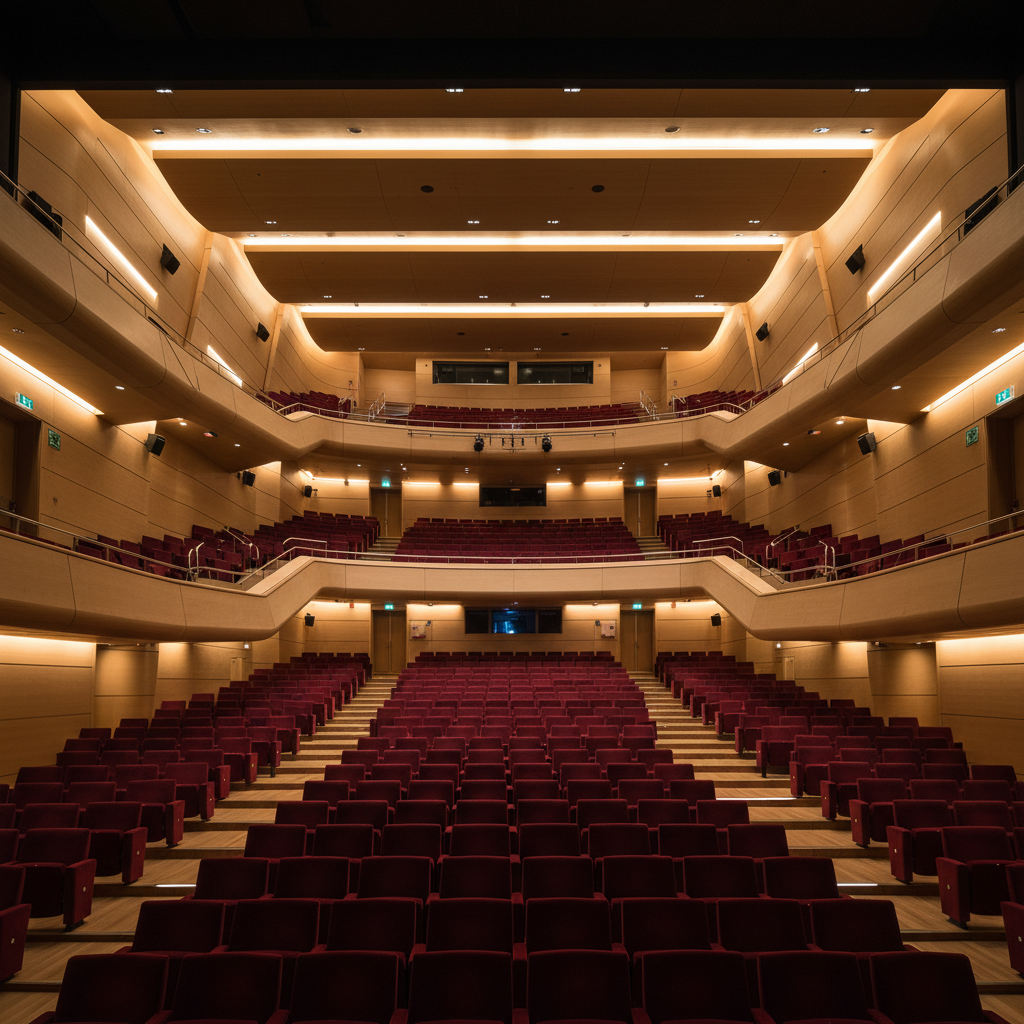
Introduction — the Design Problem in This Space
At XHLWX (led-project-light.com), a Custom Indoor LED Lighting Manufacturer based in China, we understand that exceptional theater house lighting is an invisible art form. The core design challenge is creating an immersive, comfortable, and safe environment that seamlessly transitions from a welcoming ambiance to complete darkness without distracting the audience. This involves balancing architectural aesthetics, stringent safety standards, and flawless integration with sophisticated show control systems, a task demanding precision in both luminaire performance and control technology.
Lighting Criteria and Standards for This Application
Adhering to established standards is foundational to successful theater lighting design. Key documents like EN 12464-1 and IES RP-28 provide the quantitative framework for creating a safe, functional, and comfortable space. These standards dictate illuminance levels for various conditions—from full brightness during intermissions (e.g., 200 lux) to low levels for safe movement during a performance (e.g., 5-20 lux on stairs and aisles). Beyond raw brightness, parameters like color rendering (CRI), color fidelity (TM-30), and glare control (UGR) are critical for rendering the architectural space accurately and ensuring visual comfort. A high-quality specification ensures that the lighting enhances the patron experience from the moment they enter until the final curtain call.
| Parameter | Recommended Specification | Standard / Guideline | Notes |
|---|---|---|---|
| Color Temperature (CCT) | 2700K – 3000K (Warm White) | WELL v2 / IES RP-28 | Creates a warm, inviting atmosphere. Must maintain consistency (e.g., within a 2-step MacAdam ellipse) across all luminaires and dimming levels. |
| Color Rendering / Fidelity | CRI Ra > 95, TM-30 Rf > 90, Rg ≈ 100 | IES TM-30-20 | Ensures architectural finishes, interiors, and patrons' skin tones are rendered accurately and vibrantly, crucial for a premium experience. |
| Glare Control (UGR) | < 19 (Design Target for staff areas) | EN 12464-1 | In seating areas, focus is on shielding and beam control to prevent any direct view of the LED source, making UGR less relevant than proper design. |
| Dimming Control & Range | DALI-2 (DT6/DT8), 100% to 0.1% (Deep Dimming) | IEC 62386 | Must be flicker-free across the entire dimming curve, especially for broadcast/recording applications. Stepless, smooth dimming is non-negotiable. |
| Housing & Safety | IP20 / IK03 (General), IP44 / IK07 (Aisle/Step) | IEC 60529 / EN 62262 | Aisle and step lighting requires higher durability to withstand foot traffic and cleaning. All luminaires must be securely mounted. |
| Driver & Chip | Tridonic / Mean Well Drivers; Bridgelux / Samsung LEDs | Manufacturer Specification | Use of premium components is essential for longevity, color consistency, and reliable dimming performance. |
| Certification | CE / RoHS / ErP (EU), ISO9001 | Regional / Quality Standard | Verifies compliance with European safety, environmental, and energy efficiency standards. ISO9001 demonstrates quality management systems. |
Luminaire Selection and Optics
Choosing the right luminaires is critical for executing the lighting design's intent. The selection process involves matching fixture types to specific architectural and functional needs within the auditorium. For instance, adjustable high-output downlights are ideal for illuminating seating areas from high ceilings, while low-profile linear fixtures are perfect for creating subtle, continuous light along aisles and steps. The optics—lenses and reflectors—are just as important as the light source itself, shaping the beam to deliver light precisely where it's needed without causing distracting spill or glare. A well-considered mix of luminaires provides a flexible toolkit to create layers of light that build the desired atmosphere.
| Luminaire Type | Primary Application | Key Benefit | Key Consideration | Verdict |
|---|---|---|---|---|
| Adjustable Gimbal Downlight | Seating areas from high ceilings | Precise aiming and beam control (15°-60°) | Mounting access for maintenance, potential glare if aimed poorly. | Excellent Choice for primary house lighting. Allows for precise focus to highlight seating blocks and avoid light spill onto performance areas. |
| Fixed Wide-Beam Downlight | Circulation, under-balcony | Broad, uniform illumination for general ambiance | Less flexible; requires careful planning of placement and spacing. | Recommended for areas with lower ceilings or where general, even coverage is the main priority over accenting. |
| Architectural Cove/Wall Washer | Perimeter, architectural details | Creates soft, indirect light; enhances spaciousness | Requires specific architectural provisions (coves, ledges). | Ideal for accentuating architectural forms and providing a high-quality ambient layer of light that reduces contrast and is very low-glare. |
| Integrated Linear Step Light | Stairs, aisle pathways | Provides low-level, direct safety lighting | Durability (IK rating), glare shielding, and clean integration. | Essential for safety and guidance. Must be low-profile, robust, and use optics that direct light onto the treads without shining into patrons' eyes. |
How to Achieve True Dim-to-Dark Performance?
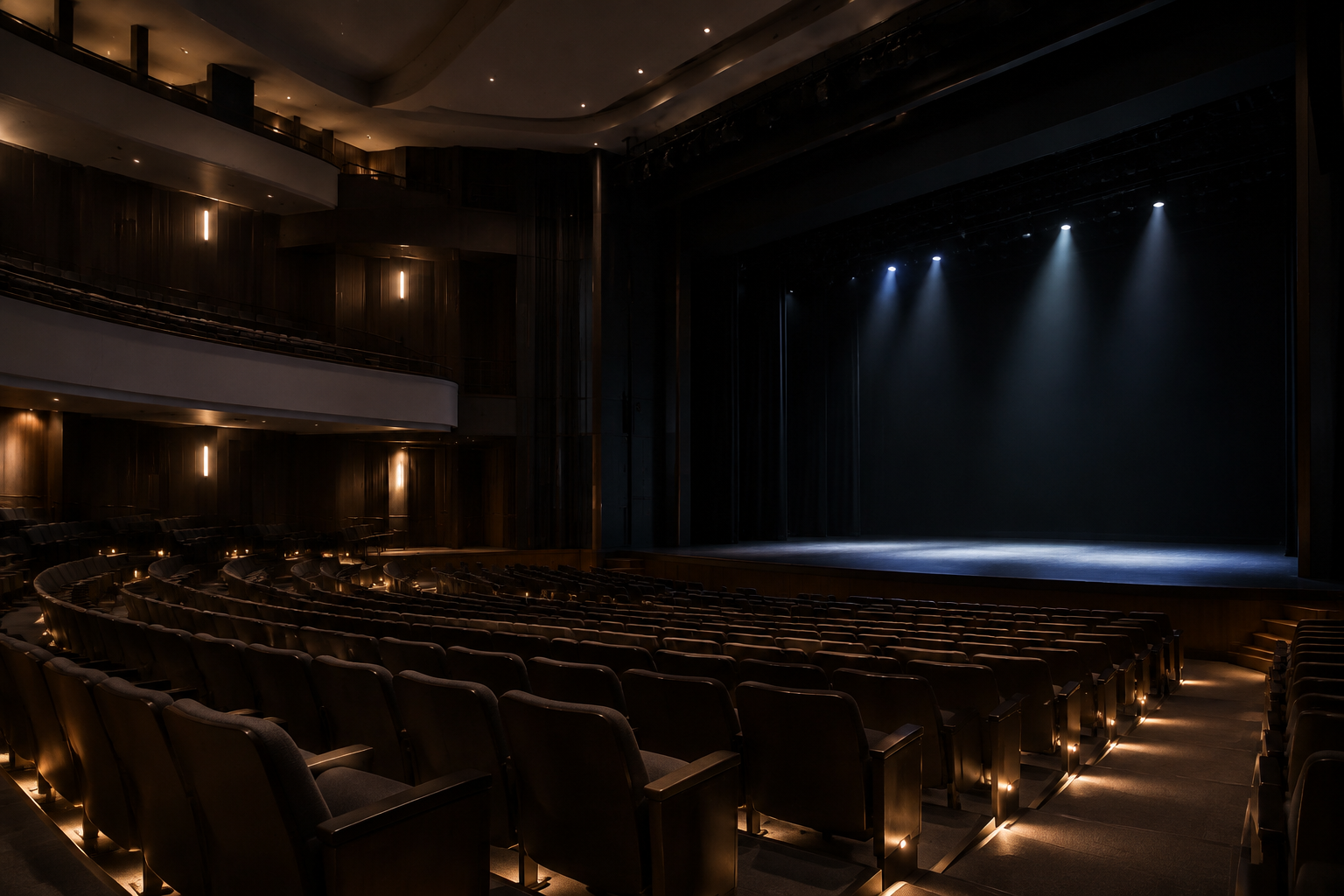
True theatrical dim-to-dark performance requires specialized drivers and precise control protocols. Achieving a smooth, stepless fade to 0.1% or lower without flicker is the goal, mimicking the beloved decay of tungsten lamps. This is best achieved using high-quality DALI-2 drivers that support deep dimming, often employing a hybrid of Constant Current Reduction (CCR) and Pulse Width Modulation (PWM) to maintain stability at the lowest light levels. Cheaper drivers that rely solely on high-frequency PWM can cause issues for broadcast cameras, while poor CCR drivers can lead to color shift at the low end. Specifying premium drivers and ensuring they are correctly configured is paramount.
Why Is High CRI and TM-30 Critical for House Lights?
High-quality color rendering enriches the entire patron experience before the show even begins. While stage lighting creates the world of the performance, house lighting reveals the world of the theater itself. A high CRI (Ra > 95) ensures that the rich reds of the upholstery, the warm tones of the woodwork, and the varied complexions of the audience are rendered faithfully and look vibrant. The IES TM-30 standard provides a more detailed picture, with a high Fidelity Index (Rf) confirming accuracy and a Gamut Index (Rg) near 100 indicating that colors are not oversaturated or distorted. This level of color quality contributes to a premium, comfortable, and visually pleasing environment.
What Are the Best Practices for Aisle and Step Lighting?
Effective aisle and step lighting prioritizes safety and subtlety above all else. The primary goal is to guide patrons safely without creating a visual distraction that detracts from the performance or pre-show ambiance. Best practice involves using low-level, shielded light sources that direct illumination downward onto the walking surface, with illuminance levels meeting the minimums set by standards like IES RP-28 (typically 5-20 lux). Integrated linear LED profiles recessed into the nosing of steps or miniature, shielded downlights placed low on aisle-facing seats are excellent solutions. These fixtures must be robust (rated to at least IK07) and low-glare to be effective and durable.
 Theater Lighting Design 2026: House Light & Dimming Guide: How to Achieve True Dim-to-Dark Performance?
Controls, Energy and Commissioning (DALI-2 / Casambi / Sensors)
Sophisticated control is the brain that animates a modern theater lighting system. DALI-2 is the dominant protocol for this application, offering individual luminaire addressing, status feedback, and seamless integration with theatrical control consoles via DALI-to-DMX gateways. This allows house lights to be perfectly cued with show sequences. For retrofits or smaller venues, wireless mesh systems like Casambi offer remarkable flexibility. Beyond performance integration, control systems are key to energy management. Occupancy sensors can bring lights to a functional level for cleaning crews and turn them off when spaces are vacant, while daylight sensors in lobbies can adjust light levels, saving energy without manual input. The commissioning phase is vital to set dimming curves, group fixtures, and program scenes to ensure flawless operation.
Photometric Files & Compliance (IES / LDT / DIALux / CE / RoHS / ErP)
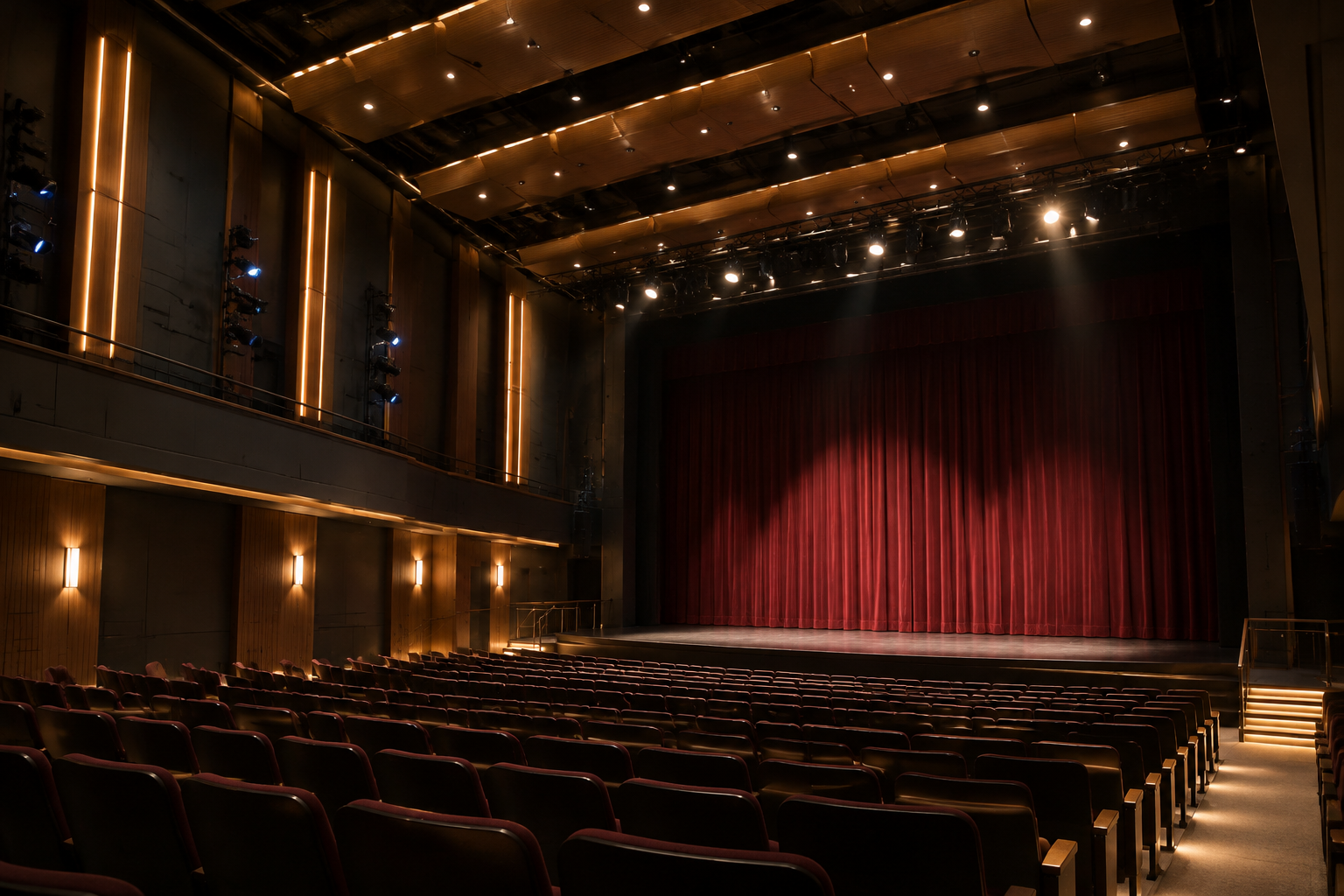
Verifiable performance data is the foundation of a predictable and compliant lighting installation. At XHLWX, we provide comprehensive photometric files in IES and LDT formats for all our luminaires, enabling precise and reliable project simulation. Lighting designers use these files in software like DIALux to model the auditorium, predict illuminance levels, calculate uniformity, and assess glare before a single fixture is ordered. This simulation process is crucial for guaranteeing that the final installation will meet the stringent requirements of standards like EN 12464-1. Furthermore, all our products carry the necessary compliance markings, including CE for European market access, RoHS for hazardous substance restriction, and ErP for energy efficiency, backed by our ISO9001 certified quality management system.
 Theater Lighting Design 2026: House Light & Dimming Guide: Photometric files & compliance (IES / LDT / DIALux / CE / RoHS / ErP)
Frequently Asked Questions
Q: What Is the Ideal CCT for Theater House Lights?
The recommended color temperature (CCT) is typically between 2700K and 3000K. This warm white light creates a welcoming and luxurious ambiance, similar to traditional tungsten lamps. Consistency is key, so specifying luminaires with a tight color tolerance, such as a 2-step MacAdam ellipse, is crucial to avoid noticeable color differences across the auditorium.
Q: Can LED House Lights Dim as Smoothly as Tungsten?
Yes, modern LEDs can dim just as smoothly as tungsten, but it requires the right technology. The key is specifying luminaires with high-quality DALI-2 drivers capable of deep dimming to 0.1% or lower. This ensures a completely stepless and flicker-free fade to black, which is critical for both the audience's experience and for video recording.
Q: What UGR Rating Should Be Targeted for a Theater Auditorium?
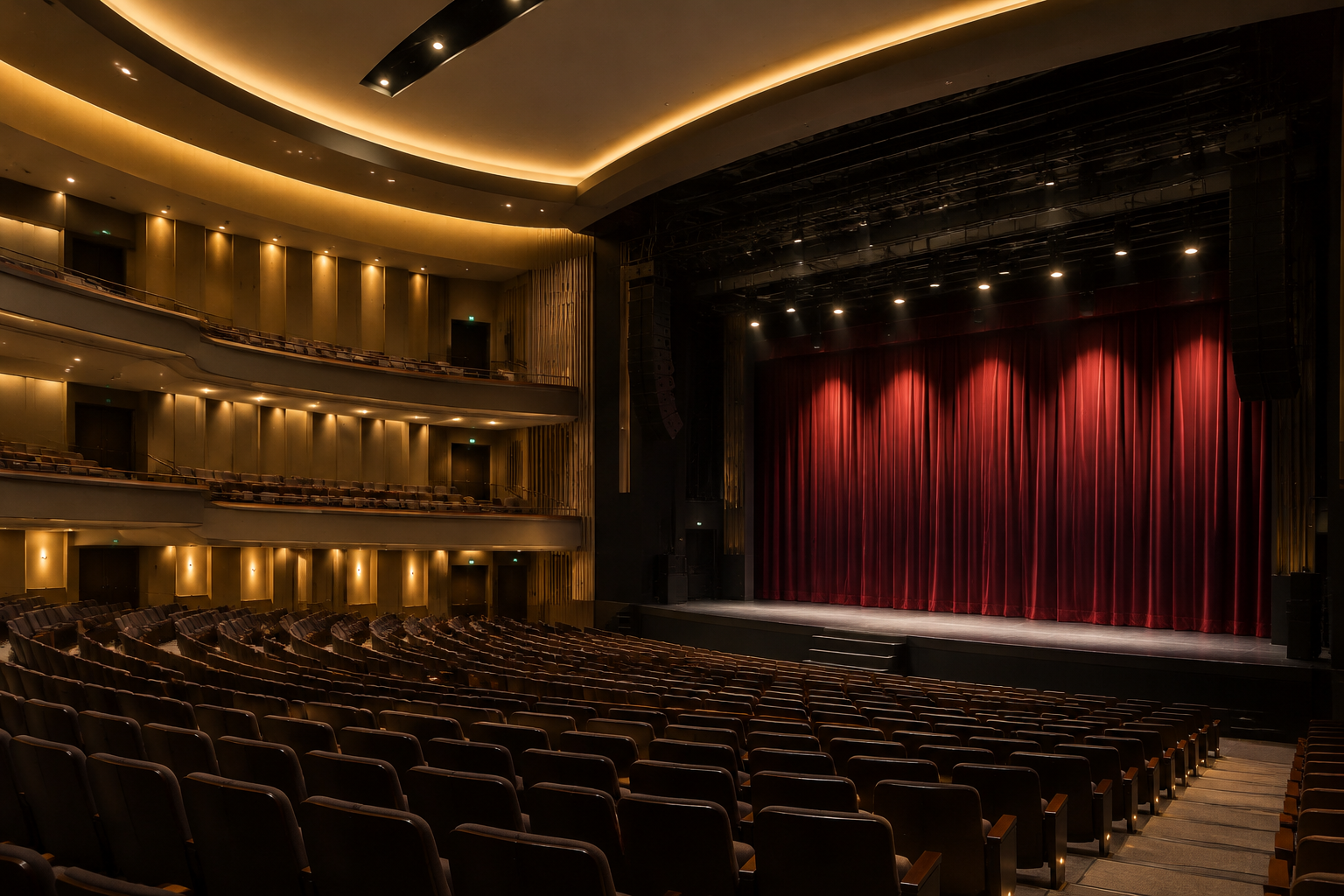
While UGR < 19 is a standard target for many interior spaces, in a theater auditorium the focus shifts to direct glare control. The primary goal is to ensure no audience member can see a bare LED source from any seat. This is achieved through luminaire design—using deep-baffled downlights, shielding accessories like snoots, and careful aiming rather than relying on a calculated UGR value.
Q: How Long Do Professional LED Theater Luminaires Last?
Professional-grade LED luminaires, like those from XHLWX, are typically rated for L80 B10 at 50,000 hours or more. This means that after 50,000 hours of use, 90% of the luminaires will still have at least 80% of their original light output. This long lifespan dramatically reduces maintenance cycles and costs compared to older lamp-based technologies.
Sources and Technical References
- EN 12464-1:2021: Light and lighting — Lighting of work places — Part 1: Indoor work places.
- IES RP-28-20: Lighting and the Visual Environment for Older Adults and the Visually Impaired.
- IES TM-30-20: IES Method for Evaluating Light Source Color Rendition.
- WELL Building Standard v2: Light Concept.
- IEC 62386: Digital Addressable Lighting Interface (DALI).
 Theater Lighting Design 2026: House Light & Dimming Guide: Q: What UGR rating should be targeted for a theater auditorium?
Request a Custom Quote
At XHLWX (led-project-light.com), a Custom Indoor LED Lighting Manufacturer based in China, we specialize in developing and manufacturing specification-grade luminaires for demanding projects like theaters and auditoriums. Our engineering team works with lighting designers, architects, and consultants to create tailored solutions that meet precise performance and aesthetic requirements. Contact us with your project specifications to receive a detailed proposal and photometric design support.
Need a tailored lighting plan for your project?
Our senior lighting designers reply within 48 hours with a free design proposal & quotation.