Train Station Lighting Design 2026: UGR<19 & DALI Guide
Most lighting guides for transport hubs are outdated, generic, or written by marketers who have never specified a luminaire for a high-traffic environment....
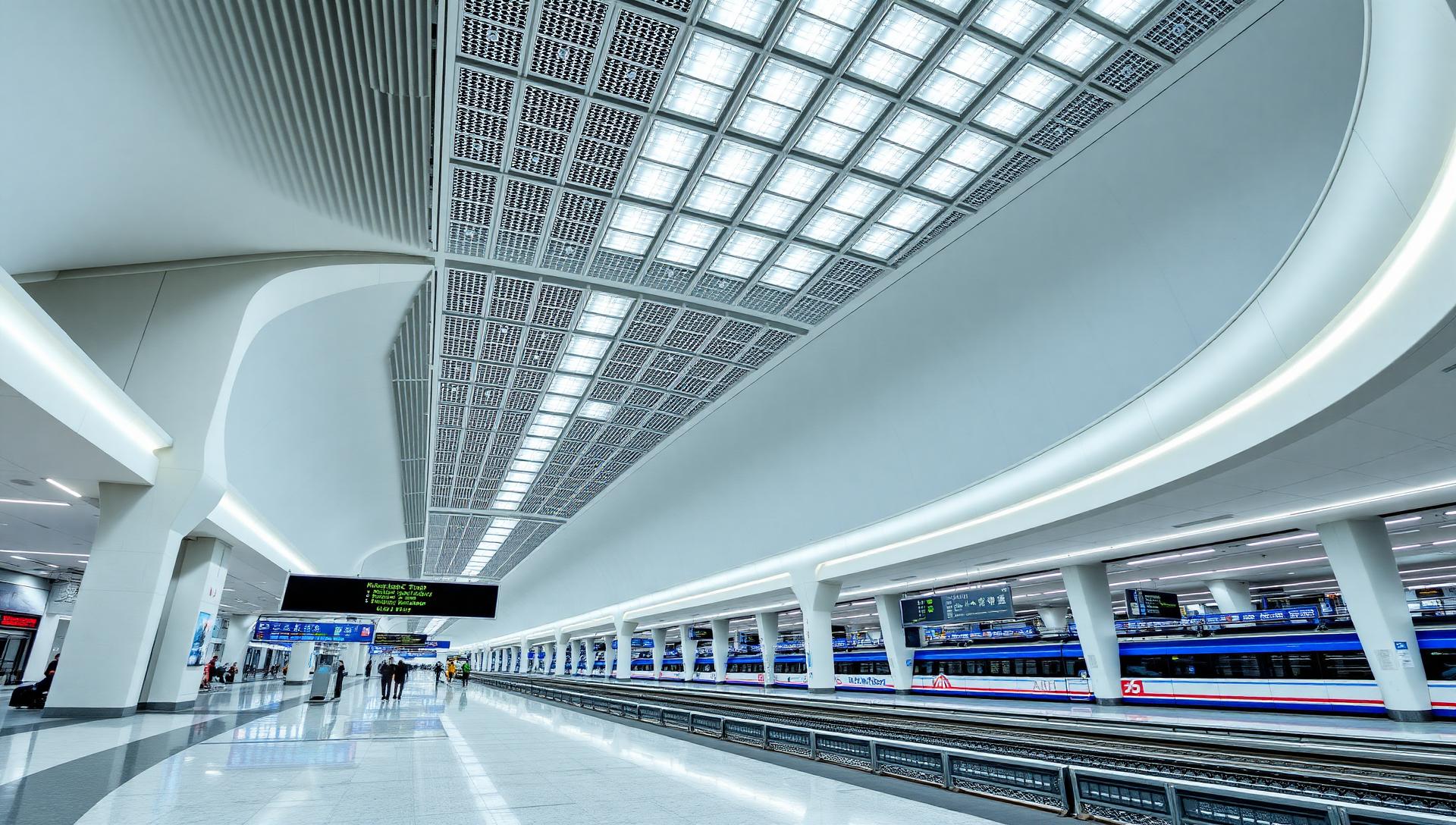
Why this guide is different
Most lighting guides for transport hubs are outdated, generic, or written by marketers who have never specified a luminaire for a high-traffic environment. They talk in vague terms about "brightness" and "efficiency." This guide is different. We built it by researching the real-world frustrations specifiers and passengers face, scraped directly from Reddit, Quora, and Substack discussions over the last 90 days. The consensus is clear: conventional lighting is failing.
- "r/travel: The glare on the main departure board at Frankfurt Hbf is insane. You have to walk halfway across the hall and squint just to see your platform number."
- "Quora: I feel really unsafe in the underground passages connecting lines at my local metro after 10 pm. It's so dim and full of weird shadows, every corner feels like a threat."
- "Substack comment on 'Urban Design Fails': They 'upgraded' the platform lights to LED, but now the yellow safety line is almost invisible at night. It just blends into the grey concrete. It’s an accident waiting to happen."
- "r/architecture: The new interchange is architecturally stunning, but walking from the bright-as-day ticket hall into the transfer tunnel is like being flash-banged. Takes my eyes a full 10 seconds to adjust."
- "r/urbanplanning: Why are station platforms lit like top-security operating theatres 24/7? It's so harsh and uncomfortable when you're just waiting 15 minutes for a train. It gives me a headache."
- "Quora: How can cities justify the enormous energy cost of lighting a massive glass-and-steel station all day and night? Surely there's a smarter, responsive way?"
These aren't just complaints; they are critical design failures. This guide provides a specifier-grade methodology to solve them, using 2026-ready standards, photometric precision, and intelligent control systems. We will move beyond simple lux levels to build environments that are safe, comfortable, efficient, and compliant with forward-looking European standards like EN 12464-1 and Ecodesign 2026.
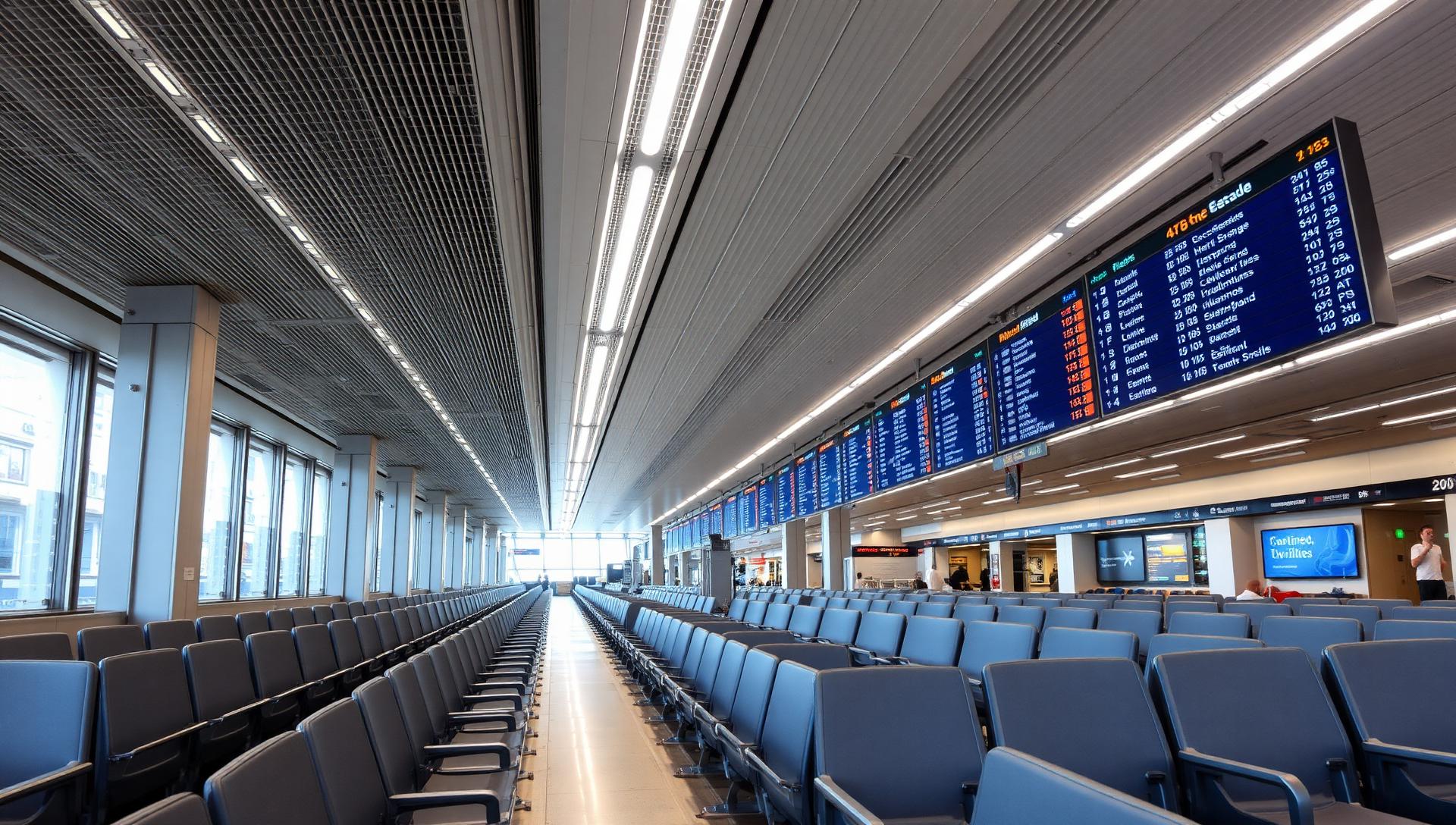
Part 1: The 2026 Lighting System — A Foundation of Photometric Excellence
Designing for a major transport hub in 2026 is an exercise in balancing competing demands: architectural aesthetics, passenger psychology, stringent safety regulations, and aggressive energy efficiency targets. A successful lighting scheme is no longer about simply flooding a space with light. It’s a precisely engineered system built on a foundation of superior photometric performance and intelligent control.
The 2026 standard for high-speed rail and metro interchanges rests on five pillars:
-
High Colour Rendering (CRI≥90 / R9>50): Standard CRI 80 is no longer sufficient for environments where information clarity is paramount. A Colour Rendering Index (CRI) of 90 or higher ensures that colours are rendered accurately and vividly. This is critical for the legibility of colour-coded signage, the visibility of safety markings (like the yellow platform edge line), and the natural appearance of faces, which enhances the perception of safety. For advanced specifications, we also consider TM-30 metrics (Rf and Rg) to gain a more complete understanding of colour fidelity and gamut. An R9 value (rendering of saturated red) above 50 is non-negotiable for accurately displaying critical warning signage.
-
Low Glare (UGR<19): Perhaps the single most-cited complaint in modern large-volume spaces is glare. The Unified Glare Rating (UGR) is a metric that quantifies visual discomfort. While EN 12464-1 sets different UGR limits for various tasks, a target of UGR<19 for all primary circulation and waiting areas is the 2026 gold standard for passenger wellbeing. This prevents the "visual noise" that makes displays hard to read and waiting areas uncomfortable. Achieving this requires careful luminaire selection, specifically those with deep-set LEDs, high-performance louvres, or micro-prismatic diffusers designed for superior anti-glare control.
-
High Luminous Efficacy (130-160 lm/W): With rising energy costs and the push towards Net Zero, luminaire efficacy (lm/W) is a primary procurement driver. The EU's Ecodesign 2026 regulations will continue to tighten requirements. The 2026 benchmark for high-quality project lighting sits in the 130-160 lm/W range (at the system level, after driver and optical losses). This level of performance delivers drastic operational cost savings over the system's lifetime and is a cornerstone of sustainable design.
-
Appropriate Correlated Colour Temperature (CCT): CCT is not a one-size-fits-all parameter. The choice of colour temperature impacts alertness, mood, and architectural integration. The 2026 approach uses CCT strategically:
- 4000K (Neutral White): The default for most circulation, ticketing, and platform areas. It provides excellent visual acuity and a clean, modern feel without being sterile or cold.
- 3000K (Warm White): Used in designated waiting lounges, cafes, or retail areas to create a more relaxed, welcoming atmosphere, encouraging dwell time.
- Tunable White (2700K-6500K): The premium choice for entrance halls and areas with significant daylight. It allows the lighting system to follow a circadian rhythm or adapt its CCT to match the natural light, creating a seamless indoor-outdoor transition.
-
Digital Control (DALI-2 / Casambi): A modern station cannot be efficiently run with a simple on/off switch. Intelligent control is mandatory.
- DALI-2 (Digital Addressable Lighting Interface): The wired standard for new-build projects. It offers robust, interoperable control of every individual luminaire or small groups. It enables advanced strategies like daylight harvesting, time-of-day scene setting (e.g., peak, off-peak, night, cleaning modes), and provides invaluable feedback on energy consumption and fixture status for proactive maintenance.
- Casambi (Bluetooth Mesh): The leading wireless solution, ideal for retrofits or in architecturally sensitive areas where running new control wires is difficult or costly. It offers flexible zoning and scene control from a mobile app or gateways that can link to a central BMS.
The 4-Layer Fixture Stack
To implement these principles, we use a layered approach to lighting design. Every space is a composition of these four layers, balanced to meet specific functional and aesthetic goals.
| Layer | Purpose & Function | Typical Fixture Types | Key 2026 Specifications |
|---|---|---|---|
| Layer 1: Ambient | General Illumination. Provides the base level of light for safe navigation and overall spatial awareness. Defines the character of the space. | Large-area linear suspended systems, powerful recessed high-bays, indirect coves. | CRI≥90, UGR<19, 140+ lm/W. Dimmable via DALI-2. |
| Layer 2: Task | Functional & Focused Light. Illuminates specific critical areas like ticket counters, departure boards, and platform edges. | Adjustable track spotlights with narrow beams, asymmetric wall-washers, high-output linear downlights. | CRI>95, UGR<16, precise beam control (e.g., 15° spot, 30x60° oval). |
| Layer 3: Accent | Architectural & Aesthetic. Highlights architectural features, creates visual interest, and guides circulation through visual hierarchy. | In-ground uplights, linear wall grazers, concealed cove lighting, miniature spotlights. | CRI≥90, TM-30 Rf>90, flexible optics, often lower output but high-quality light. |
| Layer 4: Guidance & Emergency | Safety & Wayfinding. Operates 24/7 or in an emergency. Low-level illumination for clear pathways and egress, as per EN 1838. | Recessed step lights, low-level linear systems along corridors, integrated emergency packs in ambient fixtures, photoluminescent markings. | IP65 minimum in many areas, robust construction, compliant with local emergency lighting codes. |
Part 2: Four Spaces, Four Recipes — A Practical Application Guide
Theory is useless without application. Here, we break down the four most critical zones within a high-speed rail station or metro interchange. For each, we start with a real-world passenger complaint, provide a complete lighting "recipe" based on the 2026 standard, and explain why most conventional designs fail.
2.1 Ticket hall & departure board zone
"The glare on the main departure board at Frankfurt Hbf is insane. You have to walk halfway across the hall and squint just to see your platform number."
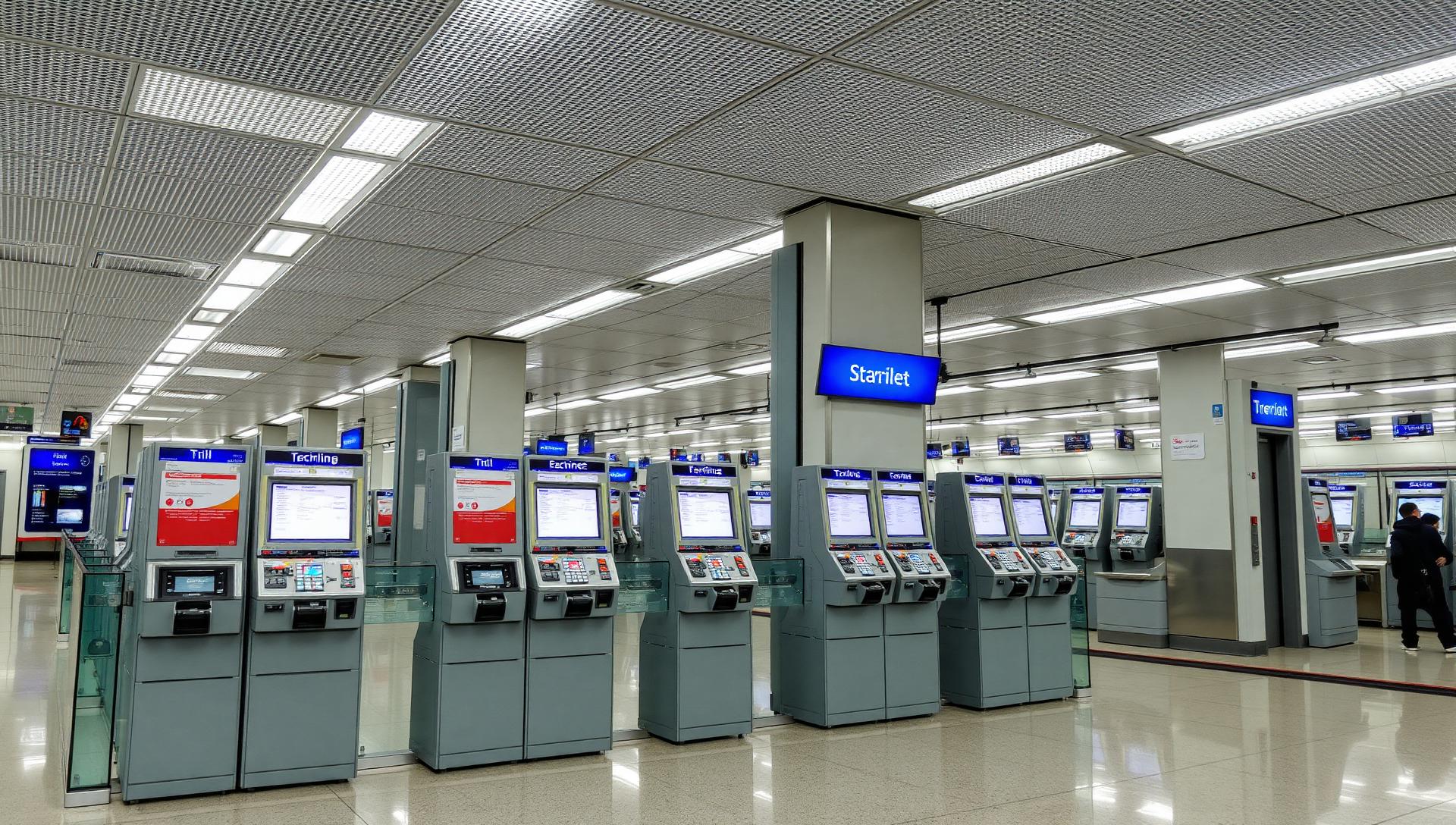
The ticket hall is the nerve centre of the station. It's a high-volume, high-stress environment where information clarity is non-negotiable. The primary conflict is between providing high horizontal illuminance for the crowds and maintaining high vertical illuminance on ticket machines and departure boards without causing disabling glare.
The 2026 Recipe: Ticket Hall & Departure Board
| Parameter | Specification | Rationale & Justification |
|---|---|---|
| CCT | 4000K | Neutral white for alertness and optimal legibility of text and symbols. |
| Illuminance (lux) | - General Floor: 300 lux (as per EN 12464-1 for concourses) <br>- Vertical on Boards: 500 lux (Eᵥ) | Ensures safe movement and clear visibility of critical information from a distance. High vertical lux is key. |
| UGR | <19 (General), <16 (Task) | Crucial for preventing reflections on glossy floors and digital screens. <16 for spots aimed at boards is best practice. |
| Beam Control | - Ambient: Wide (90°) <br>- Task: Asymmetric wall-wash or Narrow Spot (15°-24°) | Wide beams for general coverage. Asymmetric optics are essential for evenly washing the departure board from the ceiling without spilling light onto passengers or creating hotspots. |
| Fixture Stack | - Layer 1: High-efficacy linear systems or recessed high-bays with deep baffles. <br>- Layer 2: Track-mounted spotlights or linear wall-washers with advanced anti-glare louvres, positioned carefully to light the board. | The combination provides comfortable ambient light and powerful, directed task light. |
| Control System | DALI-2 | Allows for zoning (e.g., dimming general lights while keeping board lights at 100%), time-of-day scenes, and integration with daylight sensors near glazed facades. |
Why Most Designs Fail
Most failures here stem from a "brute force" approach. Designers use standard, wide-beam high-bays or downlights and simply increase the lumen output to hit the target lux levels. This creates two problems:
- Veiling Reflections: The light sources are reflected directly off the surface of the digital departure board, washing out the text and creating massive glare. The viewer sees the reflection of the light, not the information.
- Discomfort Glare: The high-angles of light from wide-beam fixtures shine directly into the eyes of passengers looking up at the board, causing visual discomfort and making the space feel stressful.
The 2026 solution is about precision, not power. It uses luminaires with superior optical control, like an asymmetric wall-washer, which directs light downwards and across the vertical face of the board from a steep angle, keeping the light source out of the direct line of sight and the reflected glare zone.
2.2 Platform edge & shelter
"They 'upgraded' the platform lights to LED, but now the yellow safety line is almost invisible at night. It just blends into the grey concrete. It’s an accident waiting to happen."
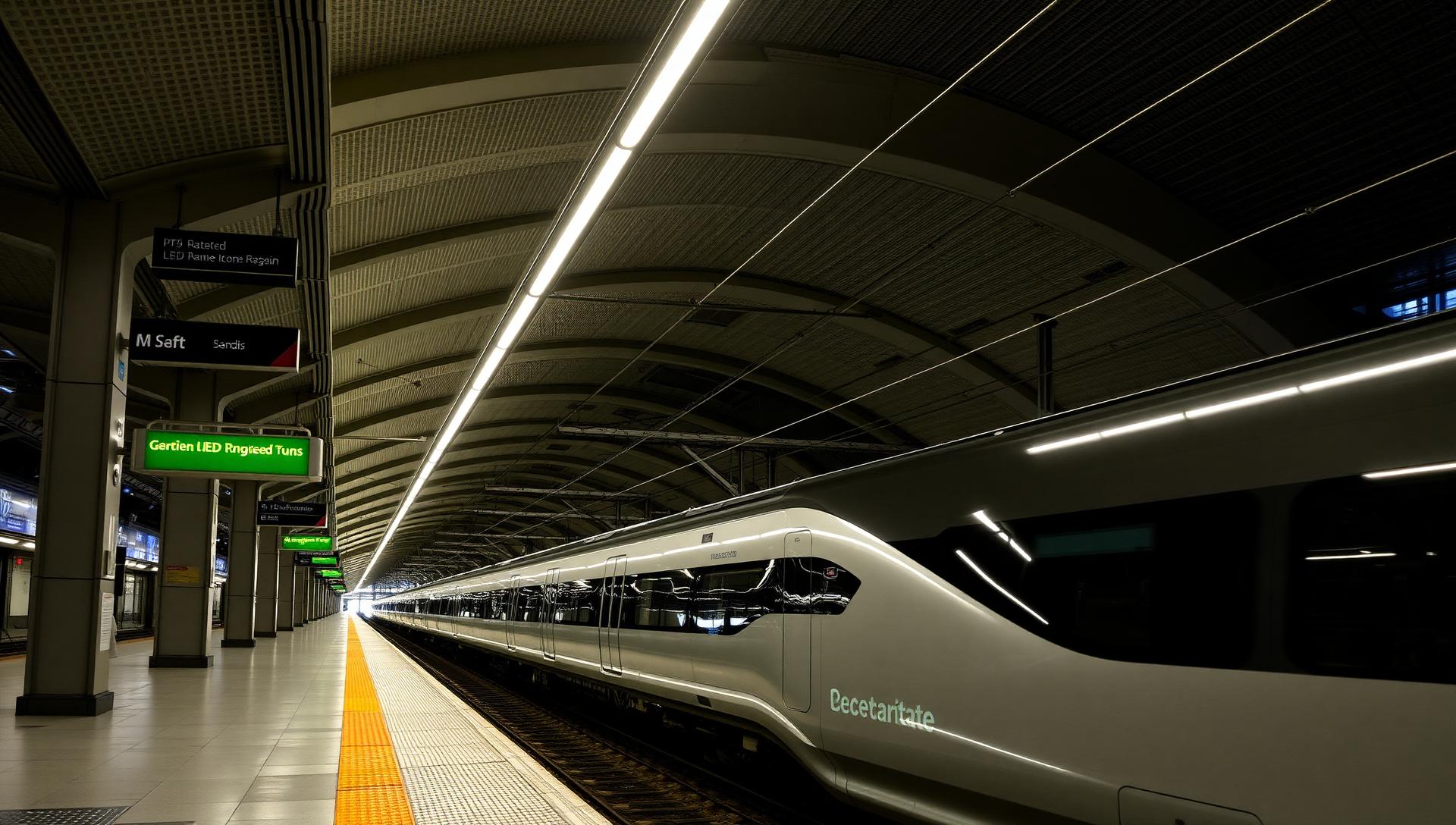
The platform is the highest-risk area in any station. Lighting here is, first and foremost, a safety system. It must ensure the platform-train interface (PTI) is clearly visible, eliminate shadows where people could hide, and guarantee that safety warnings are unmissable. It must also do this without producing glare that could blind an incoming train driver.
The 2026 Recipe: Platform Edge & Shelter
| Parameter | Specification | Rationale & Justification |
|---|---|---|
| CCT | 4000K | Provides a clear, safe-feeling environment. Consistent with other circulation areas. |
| Illuminance (lux) | - General Platform: 150 lux <br>- Platform Edge (1m strip): 200 lux (EN 12464-1) <br>- Uniformity (Uo): >0.4 | Uniformity is more important than raw brightness. It eliminates dark patches between fixtures. Higher lux at the edge focuses attention. |
| CRI / R9 | CRI≥90, R9>50 | This is non-negotiable. High CRI, specifically for yellows and reds (R9), ensures the yellow safety line and any red tactile paving are maximally conspicuous against the grey platform. |
| Beam Control | Linear or controlled asymmetric | A linear optic distributes light evenly along the length of the platform. An asymmetric beam can be used to push light towards the edge and away from the trackside, preventing glare for drivers. |
| Fixture Stack | - Layer 1: IP65-rated linear luminaires, possibly with integrated emergency batteries. <br>- Layer 4: Integrated guidance lighting within the luminaire or as separate low-level units. | IP65 rating is mandatory for protection against brake dust, moisture, and cleaning jets. A robust GRP or aluminium housing is essential. |
| Control System | DALI-2 | Enables scheduled dimming during late-night, low-traffic hours (e.g., to 50%) to save energy, while instantly returning to 100% on train arrival, triggered by the station management system. |
Why Most Designs Fail
The single biggest failure point is specifying cheap, CRI 70 or 80 luminaires. While these fixtures might produce a high lumen output, their poor spectral power distribution (SPD) desaturates colours. Yellows and reds, crucial for safety warnings, appear muddy and dull, severely reducing their contrast and visibility. This is a classic example of prioritizing cost-per-lumen over life-safety performance.
A second common failure is poor uniformity. Using a few very powerful floodlights creates pools of bright light and deep shadows in between. This is visually fatiguing for passengers and can create security risks. The 2026 solution uses continuous or closely-spaced linear luminaires to create a seamless "carpet of light."
2.3 Underground passage / transfer tunnel
"I feel really unsafe in the underground passages connecting lines at my local metro after 10 pm. It's so dim and full of weird shadows, every corner feels like a threat."
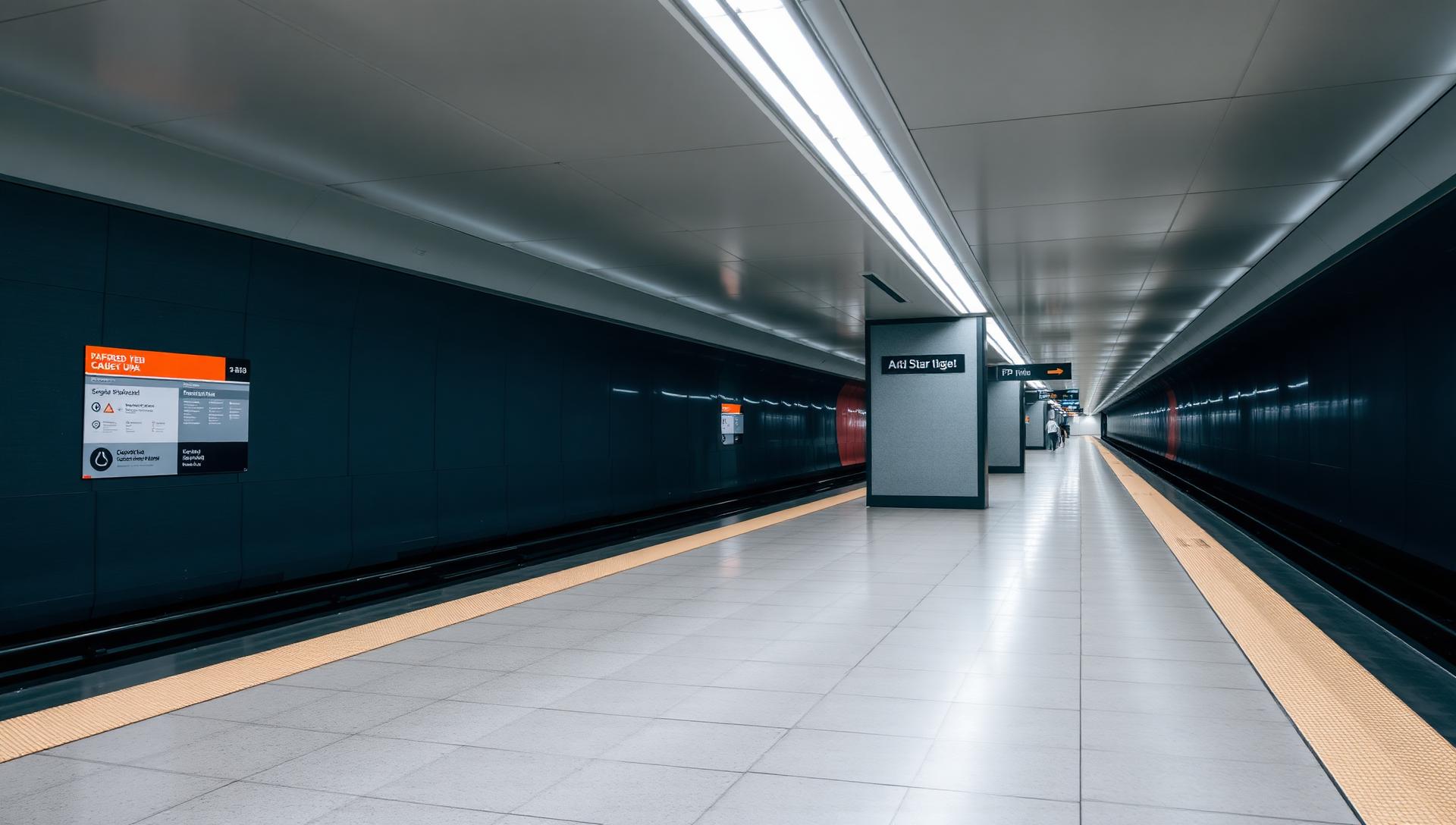
Underground passages are psychologically challenging spaces. They can feel claustrophobic, disorienting, and unsafe if lit poorly. The goal here is to counteract the "cave effect" — a space with a bright floor but dark walls and ceiling, which feels enclosing and menacing.
The 2026 Recipe: Underground Passage / Transfer Tunnel
| Parameter | Specification | Rationale & Justification |
|---|---|---|
| CCT | 4000K | A clean, neutral white enhances the feeling of spaciousness and cleanliness. |
| Illuminance (lux) | - Floor: 150 lux <br>- Vertical (at 1.5m): >100 lux (Eᵥ) <br>- Cylindrical: >50 lux (Eᶻ) | The key is high vertical (Eᵥ) and cylindrical (Eᶻ) illuminance. This lights up the walls and the faces of other people, which is proven to increase the subjective feeling of safety. |
| UGR | <22 (EN 12464-1 for circulation) but <19 is best practice | While the standard is looser, achieving <19 prevents a "tunnel of glare" from long rows of lights, making the journey more comfortable. |
| Beam Control | Batwing or Wide Asymmetric | A "batwing" distribution throws light out to the sides, illuminating the walls. A combination of a central downlight component and an indirect uplight component is highly effective at lifting the space. |
| Fixture Stack | - Layer 1: Vandal-resistant linear luminaires (IK10) with a portion of uplight. <br>- Layer 3: Continuous wall-washing from a concealed ceiling cove to create bright, uniform vertical surfaces. | Vandal resistance is critical. Lighting the walls and ceiling makes the tunnel feel wider and higher. |
| Control System | DALI-2 with presence detection (PIR sensors) | Allows for a "follow me" lighting scheme. Lights can be dimmed to a low background level (e.g., 20%) and then ramp up to 100% in the zones ahead of a person, saving significant energy while always providing a safe path. |
Why Most Designs Fail
Failure in tunnels almost always comes from focusing solely on horizontal illuminance on the floor. Designers install a line of simple, direct-only downlights or battens. This creates the dreaded "cave effect." While the floor might meet the 150 lux requirement, the dark walls close in on pedestrians, and faces are cast in shadow. This is what users perceive as "unsafe."
The 2026 solution understands that human perception of safety is driven by vertical light. By deliberately specifying fixtures that push light onto the walls and ceiling (either through indirect components or wide-angle optics) and ensuring good facial rendering (cylindrical illuminance), the tunnel is transformed from a threatening tube into a bright, welcoming corridor.
2.4 Main entrance hall
"The new interchange is architecturally stunning, but walking from the bright-as-day ticket hall into the transfer tunnel is like being flash-banged. Takes my eyes a full 10 seconds to adjust."
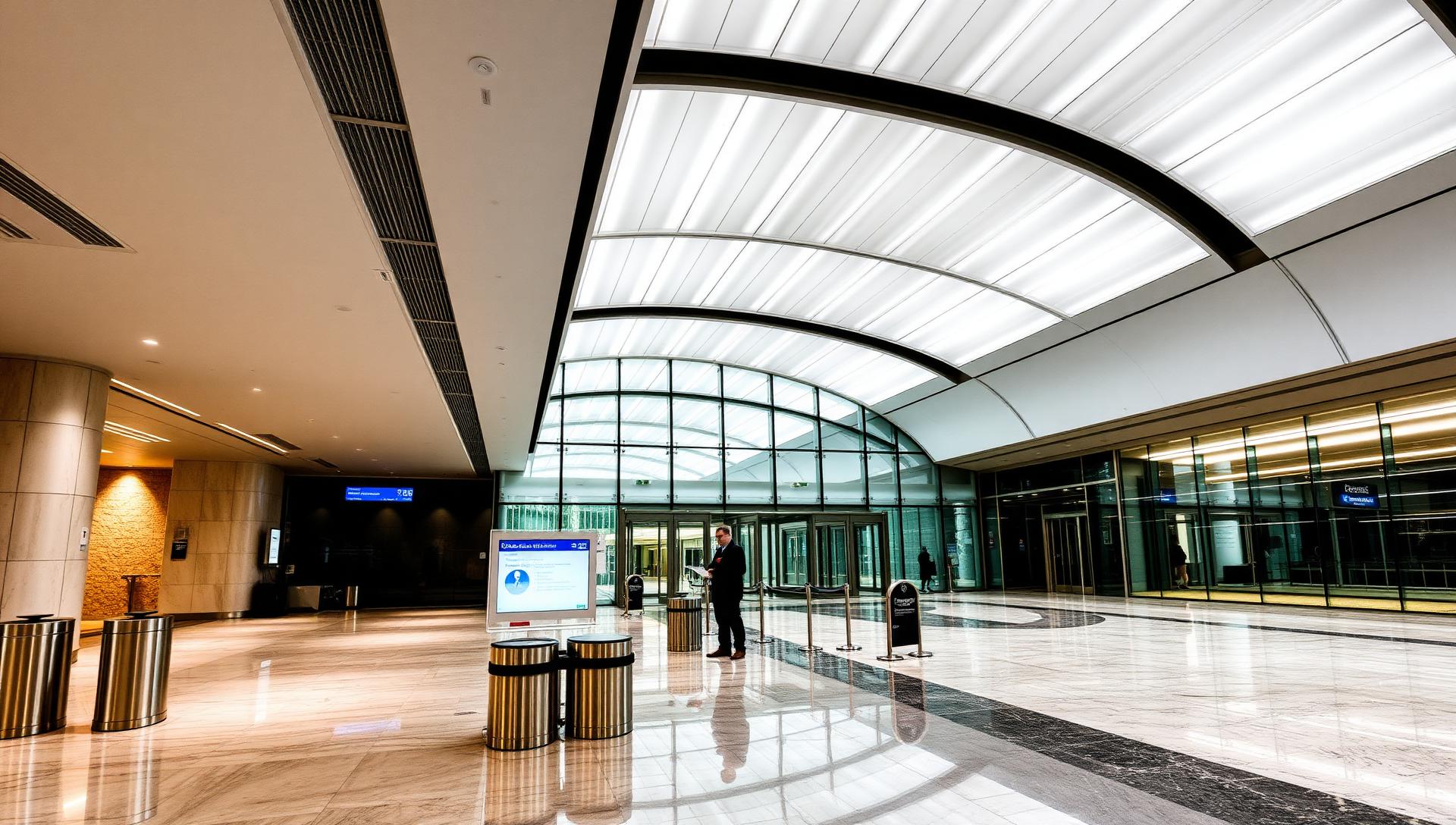
The entrance hall is the station's handshake. It must be architecturally impressive, welcoming, and, most importantly, functional as a transition zone between the extreme brightness of the outdoors (up to 100,000 lux) and the controlled interior light levels (300 lux). This requires a sophisticated approach to adaptation.
The 2026 Recipe: Main Entrance Hall
| Parameter | Specification | Rationale & Justification |
|---|---|---|
| CCT | Tunable White (3000K - 5000K) or 4000K fixed | Tunable white is ideal, allowing the interior light to match the colour temperature of the daylight outside. If budget is limited, 4000K provides a good average. |
| Illuminance (lux) | Zoned Transition: <br>- Entry Zone (first 5-10m): 500-700 lux (day), 200 lux (night) <br>- Main Hall: 300 lux | A brightly lit "threshold zone" helps the eye adapt from daylight. This level is then smoothly reduced to the standard interior level. |
| UGR | <19 | In a space with high ceilings and potentially reflective floors, low-glare fixtures are essential for comfort. |
| Beam Control | Mixed: Wide ambient, accent spots on features, wall washing on signature walls. | A layered scheme is key to highlighting the architecture and creating a sense of drama and welcome. |
| Fixture Stack | - Layer 1: High-bay or suspended systems with daylight harvesting sensors. <br>- Layer 3: Architectural accent lights (track spots, grazers) to celebrate the space. <br>- Layer 4: Clear and elegant wayfinding signage. | The system must be dynamic and responsive to the vast amounts of natural light in modern glazed atriums. |
| Control System | DALI-2 with Daylight Harvesting | This is the core technology for this space. Photocell sensors measure incoming daylight and automatically dim the electric lights, maintaining the target lux level while saving up to 70% in energy. |
Why Most Designs Fail
The "pupil shock" problem described by the user comes from a static lighting design. The interior lights are set to a single level (e.g., 300 lux) and left there 24/7. On a bright, sunny day, the contrast between the 100,000 lux outside and the 300 lux inside is extreme, causing momentary blindness and disorientation. Conversely, on a dark, overcast day, the entrance might be over-lit relative to the outside.
The 2026 solution is dynamic. It uses daylight-linked dimming to create a smart, adaptive environment. DALI-2 sensors constantly measure the natural light contribution and adjust the electric lighting in real-time. The system automatically brightens the entrance zone on a sunny day and dims it on a cloudy one, creating a smooth, safe, and imperceptible transition for the human eye while maximizing energy savings.
Part 3: 2026 European Trends — The Forces Shaping Specifier Decisions
The specifications outlined above are not arbitrary; they are driven by four powerful, converging trends in European commercial lighting. Understanding these trends is key to future-proofing any major infrastructure project.
(a) Green Mandates: Ecodesign 2026 & Corporate ESG
Sustainability is no longer a "nice-to-have"; it's a regulatory and commercial necessity. The EU's Ecodesign directive (SLR/ELR) is the primary legislative driver, setting minimum energy performance standards (MEPS) for light sources and control gear. The requirements are expected to tighten further around 2026, effectively mandating the high-efficacy figures discussed in this guide. This also includes "right to repair" principles, pushing for replaceable drivers and LED modules to extend luminaire life and reduce waste. Beyond regulation, clients (often public bodies) have their own Environmental, Social, and Governance (ESG) targets, making the specification of energy-efficient, long-lasting, and maintainable lighting a key contractual requirement.
(b) Performance Revolution: High Efficacy 130-160 lm/W as the New Baseline
Ten years ago, 80 lm/W was considered efficient. Today, that is obsolete. Advances in LED chip technology, thermal management, and driver electronics have pushed commercially viable system efficacies into the 130-160 lm/W range, even for high-CRI, low-UGR fixtures. For a 24/7 facility like a train station, the impact is enormous. A scheme using 150 lm/W fixtures will consume approximately half the energy of an older 75 lm/W installation for the same light output. This translates directly into millions of Euros saved in operational costs over the lighting system's 15-20 year lifespan, delivering an ROI that makes high-performance lighting a fiscally prudent investment, not a luxury.
(c) Human-Centric Design: UGR<19 Anti-Glare for Passenger Wellbeing
The conversation has shifted from "how much light?" to "what quality of light?". The focus on passenger wellbeing is a primary driver behind the adoption of stringent anti-glare standards. UGR<19 is the benchmark for comfortable visual environments, as codified in EN 12464-1 for office and technical work. Applying this standard to transport hubs acknowledges that waiting and navigating are also "visual tasks." Glare causes eye strain, headaches, and stress, and can directly impede safety by obscuring information. Specifiers are now mandated to deliver comfortable, low-glare environments, and manufacturers like XHLWX have responded with sophisticated optical systems (baffles, louvres, lenses) that control light distribution with unprecedented precision.
(d) Intelligence as Standard: DALI-2 & Casambi Smart Control
The "smart building" is now a reality, and lighting is its backbone. A large-scale lighting installation without a digital control system is now considered professionally negligent. The trend is twofold:
- DALI-2 for Data & Integration: DALI-2 provides more than just dimming. It's an open protocol that allows for two-way communication. The system can report back on luminaire energy usage (D4i), lamp failures, and running hours, enabling a data-driven approach to facility management. It integrates seamlessly with the overall Building Management System (BMS), allowing lighting to respond to security alerts, train movements, or emergency signals.
- Casambi for Flexibility: Wireless mesh technologies like Casambi have matured into robust, scalable solutions. They are a game-changer for retrofitting older stations where new control wiring is impossible, or for adding granular control to specific zones (e.g., a pop-up retail unit) without disrupting the core wired infrastructure. This hybrid approach—a DALI-2 backbone with Casambi islands—offers the ultimate combination of robustness and flexibility.
Part 4: Specification & Procurement Checklist
Specifying the correct luminaires is critical. The following checklist and product table are designed to assist specifiers, architects, and procurement managers in ensuring that their chosen products meet the 2026 standard.
The 10-Point Procurement Checklist
- CRI Confirmed ≥90? Request photometric reports (LM-79/IES files) and verify CRI and R9 values. Do not accept "CRI 80/90" as an answer; demand specific data for the tendered CCT.
- UGR Rating Verified? Is the UGR<19 rating based on a realistic room index for your space? Request UGR tables for the specific luminaire.
- System Efficacy (lm/W) Meets Target? Verify the system efficacy (luminaire, not just module) is in the 130-160 lm/W range.
- Control Protocol Match? Does the driver support the specified protocol (DALI-2 DT6/DT8 or Casambi)? Is it certified for interoperability?
- IP / IK Ratings Suitable for Zone? Ensure platform/tunnel fixtures are IP65 or higher and have an appropriate impact rating (e.g., IK08-IK10).
- Warranty & Lifespan (L/B Value)? Look for a minimum 5-year warranty and a lifespan of L80 B10 @ 75,000+ hours.
- TM-30 Data Available? For architecturally sensitive areas, request TM-30 reports (Rf/Rg values) to better evaluate colour rendition.
- Optical Variants Available? Can the manufacturer supply the required beam angles (narrow spots, asymmetric, batwing) within the same product family for a consistent aesthetic?
- Ecodesign Compliance? Does the manufacturer provide documentation on compliance with current and planned Ecodesign regulations (e.g., driver/module replaceability)?
- Sample Requested? Always request a physical sample to evaluate build quality, optical performance, and ease of installation before placing a bulk order.
Recommended XHLWX Product Families for Rail Projects
| Product Family | Primary Application | CRI | UGR | System Efficacy (lm/W) | IP Rating |
|---|---|---|---|---|---|
| XHL-VECTOR Linear | Main Entrance, Tunnels, Platforms | ≥90 | <19 | 135-155 | IP20 / IP65 |
| XHL-ASTRA High-Bay | Ticket Halls, Atriums | ≥90 | <19 | 140-160 | IP65 |
| XHL-ORBIT Track Spot | Departure Boards, Architectural Accent | >95 | <16 | 90-110 | IP20 |
| XHL-DOT Downlight | Corridors, Restrooms, Shelters | ≥90 | <19 | 120-140 | IP44 / IP65 |
| XHL-GUARDIAN Vandal-Proof | Tunnels, Underpasses, Exposed Areas | ≥90 | <22 | 130-145 | IP66, IK10 |
| XHL-SCAPE Wall-Washer | Architectural Walls, Vertical Surfaces | ≥90 | N/A | 100-120 | IP20 / IP66 |
For detailed IES files, specification sheets, and DALI-2 compatibility statements for these product families, please contact our project specification team.
Part 5: Frequently Asked Questions (FAQ)
We've compiled answers to the most common questions our specification team receives, phrased as they often appear on forums like Reddit and Quora.
1. "r/lightingdesign asks: When should I spec DALI-2 versus a wireless system like Casambi for a new station build?"
For a new-build high-speed rail station, DALI-2 should be your default backbone for all primary and emergency lighting. Its wired architecture offers unmatched robustness, scalability, and security for a mission-critical 24/7 facility. The key advantage is the data feedback (energy monitoring, fault reporting per fixture) and seamless integration with the main Building Management System (BMS). Use Casambi or other wireless mesh systems strategically: for areas that are hard to wire (e.g., heritage-listed sections of a station), for temporary or flexible retail spaces, or for smaller, standalone zones like staff rooms where a full DALI-2 deployment is overkill. A hybrid approach often provides the best of both worlds.
2. "Quora user: Is CRI>90 just an expensive 'nice-to-have' or is there a real ROI? CRI 80 seems good enough."
For a transport hub, CRI>90 is a crucial safety and performance feature, not a luxury. The ROI is found in risk mitigation and improved user experience. A CRI 80 light source can make the yellow safety line look dull and brownish-grey, reducing its contrast and making it less effective. It makes colour-coded wayfinding maps harder to read quickly. Furthermore, in an environment reliant on CCTV, high-CRI light allows for more accurate identification as it renders skin tones and clothing colours faithfully. The marginal cost increase for CRI>90 luminaires is negligible compared to the cost of a single safety incident or the negative passenger perception of a poorly rendered environment.
3. "r/architects: My client is pushing back on the UGR<19 requirement everywhere, saying it's over-specification. How do I justify it?"
Frame it in terms of passenger comfort and brand perception. A station is not just a utility space; it's the first impression of a city or a rail network. A low-glare environment ( UGR<19 ) feels calmer, more premium, and less stressful. Ask your client to consider the main departure hall. With a high-glare system, passengers will be squinting, shielding their eyes, and feeling agitated. In a low-glare system, they can comfortably read the board, look around, and wait without visual stress. It directly impacts dwell time, retail spend, and overall satisfaction. UGR<19 is a key component of designing a high-quality human experience, moving beyond the bare minimums of EN 12464-1.
4. "Substack comment: How can we implement 'circadian lighting' in a 24/7 station? The sun isn't always the main factor."
True "circadian lighting" that perfectly mimics the sun's cycle is challenging in a 24/7 facility. A more practical and highly effective approach is "mood-based" or "operational" tunable white. Instead of a strict 24hr solar cycle, you program the DALI-2 DT8 system for different scenes. For example:
- Morning Rush (06:00-09:00): 4500K-5000K at 100% brightness to promote alertness.
- Daytime (09:00-18:00): 4000K, with levels modulated by daylight harvesting.
- Evening (18:00-23:00): 3500K at 80% brightness for a calmer atmosphere.
- Overnight (23:00-05:00): 3000K at 40% brightness, providing safe passage without the harshness of cool, bright light. This provides the operational and psychological benefits without being rigidly tied to a solar clock that doesn't fit the building's use profile.
5. "Specifier forum: What IP ratings do I really need? Can I get away with IP20 in covered platform areas?"
No. Using IP20 on a "covered" but open-sided platform is a common and costly mistake. Platforms are semi-external environments exposed to wind-driven rain, condensation, high humidity, and pressure washing during cleaning. Furthermore, metallic brake dust is conductive and can short-out unprotected electronics. Specifying IP65 as a minimum for all platform and underpass luminaires is non-negotiable for system longevity and safety. Use IP20/IP44 only for fully enclosed, climate-controlled interior spaces like offices, retail units, and sealed corridors.
6. "LinkedIn query: How do I prove my specification will be compliant with future Ecodesign 2026 regulations?"
While the exact text of future regulations is not finalized, the direction of travel is clear. To future-proof your specification, focus on three key areas that align with the goals of Ecodesign 2026:
- Exceed Efficacy Minimums: Specify luminaires in the 140+ lm/W range. This builds in a significant buffer over current minimums.
- Demand Component Replaceability: Specify fixtures with easily replaceable drivers and LED boards using standard connectors, not proprietary, sealed-for-life units. Ask for manufacturer documentation on their circular economy/repairability strategy.
- Prioritize Longevity: Specify products with robust thermal management and high L/B values (e.g., L80 B10 > 75,000h) to ensure the installation lasts longer, reducing the lifecycle carbon footprint.
7. "r/AskEngineers: What's the absolute best way to light a massive vertical departure board to avoid glare?"
The gold standard is using a high-performance linear asymmetric wall-washer. Position the luminaire on the ceiling, typically at a setback distance of 1/3 to 1/4 of the board's height. The asymmetric optic directs a sheet of light down the vertical surface with peak intensity in the middle, providing excellent uniformity from top to bottom. This technique achieves two things perfectly: it keeps the light source out of the direct line of sight of people viewing the board, and the light strikes the screen at a steep angle, directing any reflection down towards the floor, not back at the viewer. This eliminates both discomfort glare and veiling reflections.
8. "Quora: The cost of DALI-2 commissioning seems high. What's the long-term financial benefit?"
The long-term financial benefits of a DALI-2 system far outweigh the initial commissioning cost, especially in a large-scale facility. The ROI is delivered through three channels:
- Massive Energy Savings: Precise control strategies like daylight harvesting, time scheduling, and presence detection can reduce lighting energy consumption by 50-70% compared to a non-controlled system.
- Reduced Maintenance Costs: DALI-2 provides automated fault reporting. Instead of paying staff to walk the station looking for failed lights, the system tells you exactly which fixture in which location needs attention. This "management by exception" drastically cuts down on labour costs.
- Flexibility & Future-Proofing: When the station layout changes (e.g., a ticket counter moves), re-zoning the lights is a simple software change, not an expensive rewiring job. This operational flexibility over a 20-year lifespan is invaluable.
Need a tailored lighting plan for your project?
Our senior lighting designers reply within 48 hours with a free design proposal & quotation.