
University Laboratory Lighting 2026: UGR<16, 500 lux Guide
Quick answer
Discover best practices for university research lab lighting. Our 2026 guide covers EN 12464-1 standards for 500 lux, UGR<16, and chemical resistance. Learn m
Introduction — the Design Problem in University Laboratories
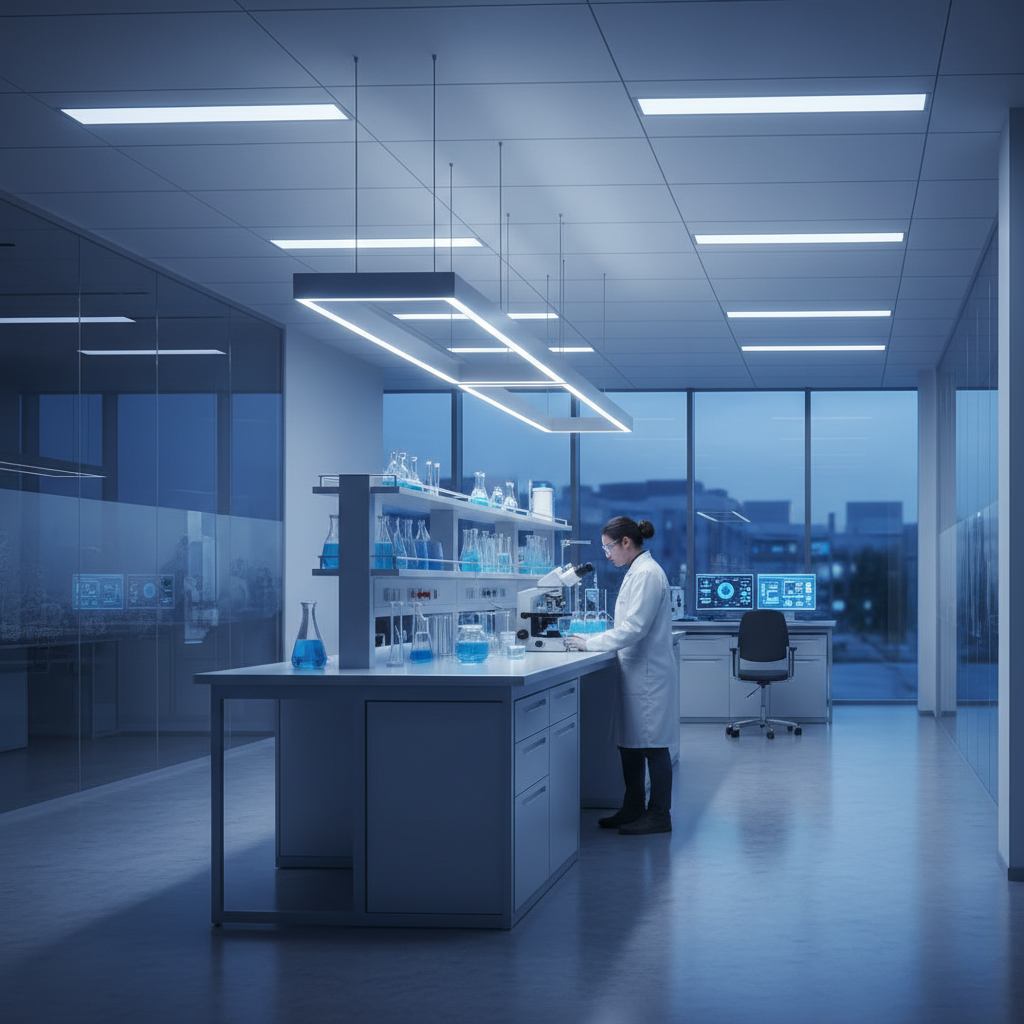
At XHLWX (led-project-light.com), a Custom Indoor LED Lighting Manufacturer based in China, we understand that university research laboratories are among the most demanding indoor environments to illuminate correctly. These spaces blend high-precision visual tasks, diverse and often reflective surface materials, and stringent safety and cleaning protocols. Effective lighting is not a luxury; it is a fundamental component of research integrity, operational safety, and occupant well-being. A poorly lit lab can lead to measurement errors, increased eye strain for researchers, and compromised safety when handling hazardous materials. The core design challenge is to deliver high-quality, glare-free, and uniform light from durable, cleanable, and chemically resistant luminaires.
Lighting Criteria and Standards for Laboratory Applications
Meeting core photometric standards is the essential first step in successful laboratory lighting design. European standards like EN 12464-1 provide clear, non-negotiable targets for illuminance, glare, and color rendering that form the basis of any compliant lighting scheme. For projects in the United States, IES Recommended Practices (such as IES RP-7) offer parallel guidance. Furthermore, human-centric standards like the WELL v2 Building Standard place additional emphasis on light quality's impact on visual comfort and circadian rhythms. For research labs, the key is to not just meet the minimums but to exceed them in critical areas like glare control (UGR) and color rendition (CRI/TM-30) to create a truly high-performance environment. A recommended specification for a new university lab would synthesize these requirements to deliver safety, comfort, and precision.
| Parameter | Recommended Specification | Governing Standard | Notes |
|---|---|---|---|
| Maintained Illuminance (Ēm) | 500 lux (on benches) | EN 12464-1 | Higher levels (e.g., 750 lux) may be required for tasks with very low contrast or fine detail. |
| Unified Glare Rating (UGR) | ≤ 16 (Design Target) | EN 12464-1 | The standard is UGR ≤ 19, but a lower target of 16 is best practice to mitigate glare from reflective surfaces. |
| Color Rendering / Fidelity | CRI Ra > 90, IES TM-30 Rf > 90 | EN 12464-1, IES TM-30 | Essential for accurate color judgment in titrations, microscopy, and sample assessments. |
| Control & Dimming | DALI-2 Addressable | IEC 62386 | Enables individual luminaire control, daylight harvesting, occupancy sensing, and energy reporting. |
| Housing & Ingress Protection | IP65, IK08, PMMA Optic | IEC 60529, IEC 62262 | Ensures fixture is dust-tight, resistant to cleaning jets, can withstand impacts, and resists chemical degradation. |
| System Efficacy & Lifetime | >140 lm/W; L90/B10 @ >50,000h | ErP Directive | High-quality components like a Tridonic driver and Samsung LEDs ensure long-term performance and energy savings. |
| Compliance & Quality | CE, RoHS, ErP, ISO9001 | EU Directives | Non-negotiable certifications for market access, safety, environmental standards, and quality management. |
Luminaire Selection and Optics
Selecting the right luminaire is critical to meeting the stringent UGR and IP rating requirements of a lab. The luminaire's optical system and housing construction are far more important than its basic shape or wattage. For laboratory settings, the focus must be on sealed housings that prevent ingress of dust and moisture, coupled with advanced optical control systems like micro-prismatic lenses that direct light downward efficiently while shielding the lamp source to minimize high-angle glare. While standard office luminaires may seem cost-effective initially, they fail on durability, cleanability, and glare control, making them unsuitable and unsafe for lab applications.
| Luminaire Type | Key Feature | UGR Performance | Verdict |
|---|---|---|---|
| Standard Edge-Lit LED Panel | Low initial cost, slim profile. | UGR ≈ 19-22 | Not Recommended. Prone to glare on reflective benches and typically IP20, making it unsuitable for cleaning protocols. |
| Recessed Low-Glare Panel (Micro-prismatic) | Balanced cost and performance, good glare control. | UGR ≤ 19 (can be <16) | Acceptable. A good choice for general lab areas if a UGR<16 simulation is confirmed in DIALux. Must specify an IP-rated version. |
| Sealed & Gasketed IP65 Luminaire | Sealed housing, easy to clean, chemically resistant materials. | UGR ≤ 19 (optic dependent) | Good Choice. Excellent for cleanrooms and areas needing frequent wash-downs, but the specific UGR performance of the optic must be verified. |
| Linear Profile with Micro-prismatic Optic | Excellent uniformity, design flexibility, superior glare control. | UGR ≤ 16 (Design Target) | Highly Recommended. Provides the best combination of continuous, low-glare illumination over benches and can be configured in IP65 housings. |
How to Light Fume Hoods and Biosafety Cabinets?
Fume hood lighting requires external, sealed, and angled fixtures for optimal safety and visibility. The primary challenge is illuminating the interior task area without casting shadows from the user or the sash, while keeping the luminaire outside the potentially corrosive or hazardous atmosphere inside the cabinet. The solution is to mount an IP65-rated linear LED fixture on the exterior, angled to project light through the glass sash onto the work surface. An asymmetric beam optic is ideal for this application, as it directs light forward and down, minimizing wasted light and preventing glare for the operator.
What Is the Role of Chemical Resistance and IP/IK Ratings?
IP65, IK08, and chemically resistant materials like PMMA are essential for luminaire durability and safety in a lab. The IP (Ingress Protection) rating is critical; IP65 signifies the fixture is completely dust-tight and can withstand low-pressure water jets from any direction, a common scenario during deep cleaning. The IK rating (Impact Protection), such as IK08, ensures the luminaire can resist accidental impacts from lab equipment. Finally, the choice of materials matters immensely. Housings and optics made from PMMA (polymethyl methacrylate) generally offer superior resistance to a wide range of chemicals compared to polycarbonate (PC), preventing cracking, hazing, and premature failure.
Why Is Ra > 90 CRI and Good TM-30 Important in a Lab?
High-fidelity color rendering (CRI > 90 and high TM-30 values) is non-negotiable for accurate sample analysis and research integrity. Many scientific procedures, from chemical titrations that depend on subtle color changes to histopathology where tissue stains must be accurately identified, rely on the researcher's ability to perceive color accurately. A standard CRI 80 light source can misrepresent these colors, leading to errors. The IES TM-30 method provides a more complete picture with its Fidelity Index (Rf) and Gamut Index (Rg). A recommended specification of Rf > 90 ensures colors are rendered accurately and naturally, supporting reliable, repeatable results.
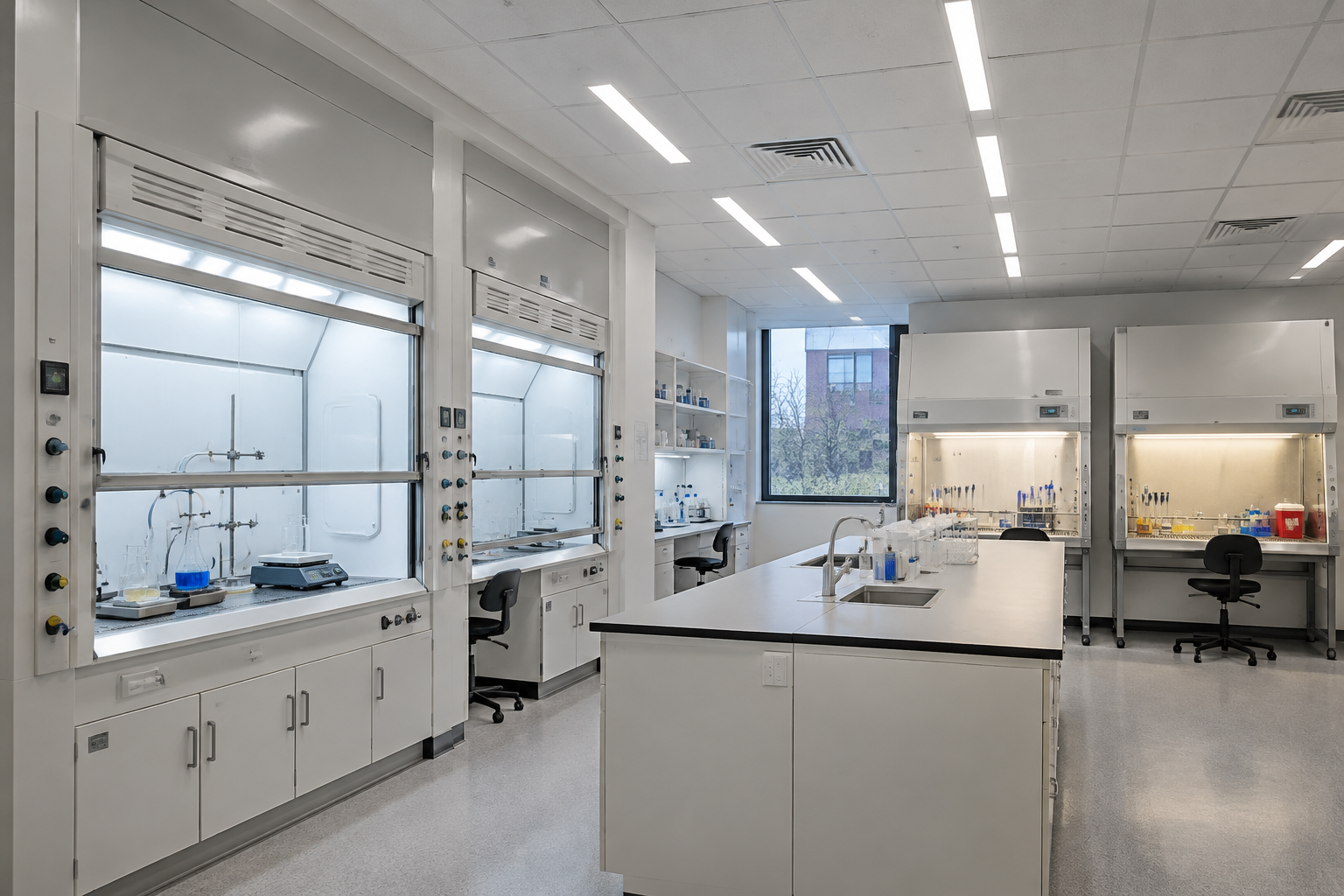 University Laboratory Lighting 2026: UGR<16, 500 lux Guide: How to Light Fume Hoods and Biosafety Cabinets?
Controls, Energy, and Commissioning (DALI-2 / Casambi)
DALI-2 offers the precise, granular control and data feedback crucial for modern, energy-efficient laboratories. As a global standard (IEC 62386), DALI-2 allows each luminaire to be individually addressed, dimmed, and monitored. This enables powerful control strategies that enhance both functionality and efficiency. For example, benches can be grouped and controlled separately from circulation spaces. Integrating DALI-2 daylight and occupancy sensors can yield significant energy savings by automatically dimming or switching off lights in response to available natural light or when a zone is unoccupied. For retrofit projects where running new control wiring is difficult, wireless mesh systems like Casambi offer a highly flexible and robust alternative, providing similar functionality without the need for dedicated control cables.
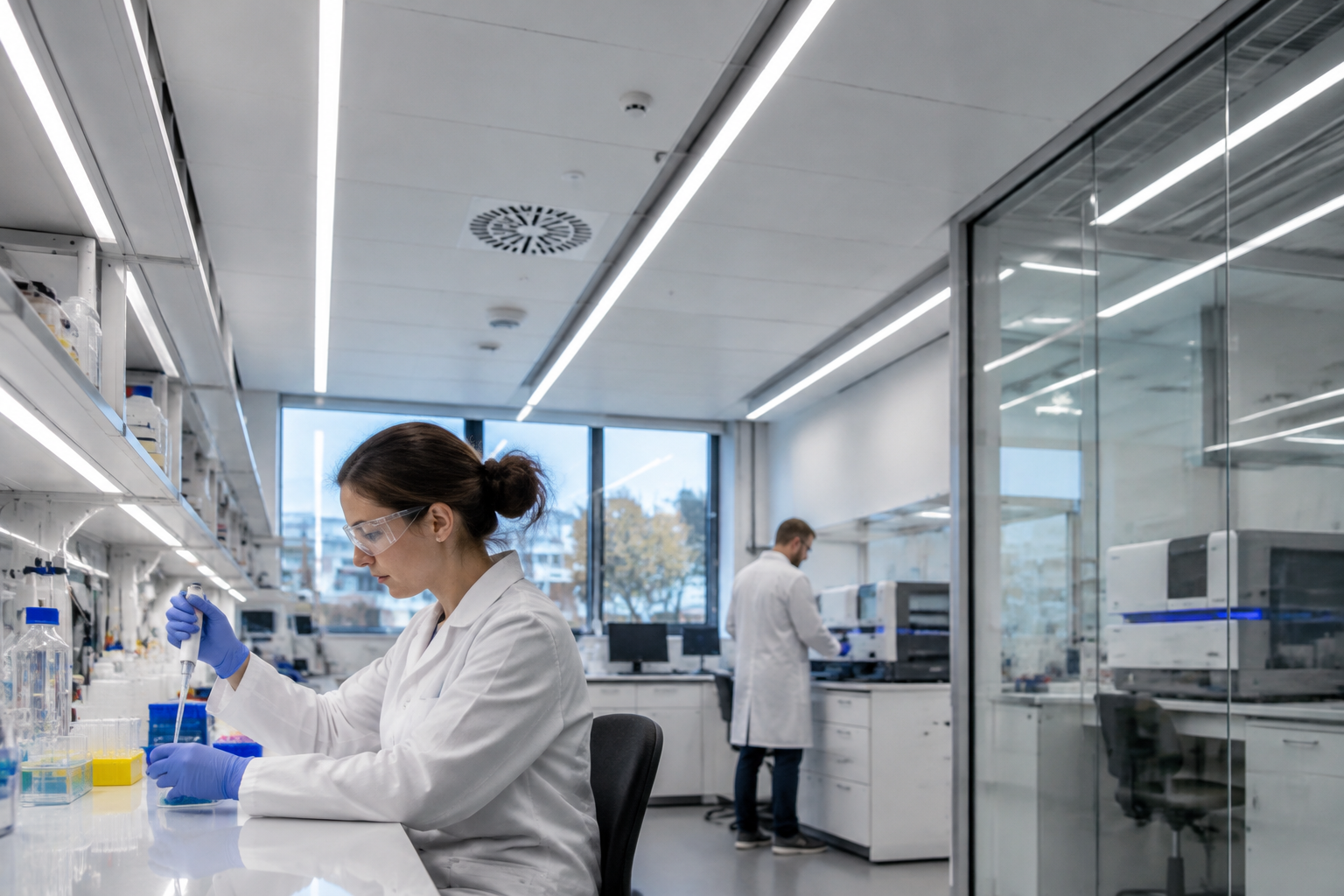 University Laboratory Lighting 2026: UGR<16, 500 lux Guide: Controls, Energy, and Commissioning (DALI-2 / Casambi)
Photometric Files & Compliance (IES / LDT / DIALux / CE / RoHS / ErP)
Verifiable photometric files and proven compliance certificates are mandatory for project approval and operational safety. At XHLWX, we provide comprehensive technical support by supplying standardized IES and LDT photometric files for all our luminaires. These files are the digital DNA of a fixture, containing its exact light distribution data. Lighting designers import these files into planning software like DIALux to create a detailed 3D simulation of the laboratory. This simulation accurately predicts key metrics like illuminance (lux), uniformity, and UGR, allowing designers to prove compliance with EN 12464-1 before a single fixture is installed. All luminaires for the European market must also be accompanied by a Declaration of Conformity showing compliance with CE, RoHS, and ErP directives.
Frequently Asked Questions
Q: What Is the Ideal Lux Level for a University Research Lab?
The EN 12464-1 standard specifies a minimum of 500 lux on the primary task areas, like workbenches and inspection zones. For highly detailed or low-contrast tasks, a higher design target of 750 lux may be beneficial. Uniformity across the task area should be high, with a recommended U₀ of at least 0.6 to avoid shadows and dark spots.
Q: Why Is a UGR of Less Than 16 Recommended Over the Standard <19?
Laboratories are filled with highly reflective surfaces like stainless steel, glassware, and polished benchtops. A lower Unified Glare Rating (UGR) of <16 is a best-practice target that drastically reduces reflected glare and visual fatigue for researchers. This improves concentration and comfort during long, focused tasks, ultimately helping to reduce observational errors.
Q: Can I Use Standard Office LED Panels in a Laboratory?
It is strongly not recommended. Laboratory luminaires require a minimum IP65 rating for protection against dust and liquids during routine cleaning and disinfection. They also need chemically resistant seals and optics. Standard office panels, typically IP20 rated, are not sealed and can be damaged by cleaning agents, posing a significant safety and maintenance risk.
Q: What Is the Difference Between CRI and TM-30 for Color Quality?
CRI (Color Rendering Index) is an older, limited metric that averages just 8 color samples. The newer IES TM-30 method is more comprehensive, using 99 color samples and providing two key values: Rf for color fidelity (accuracy) and Rg for gamut (saturation). For labs, specifying a CRI Ra > 90 and a TM-30 Rf > 90 provides a much more robust guarantee of high-quality light for color-critical work.
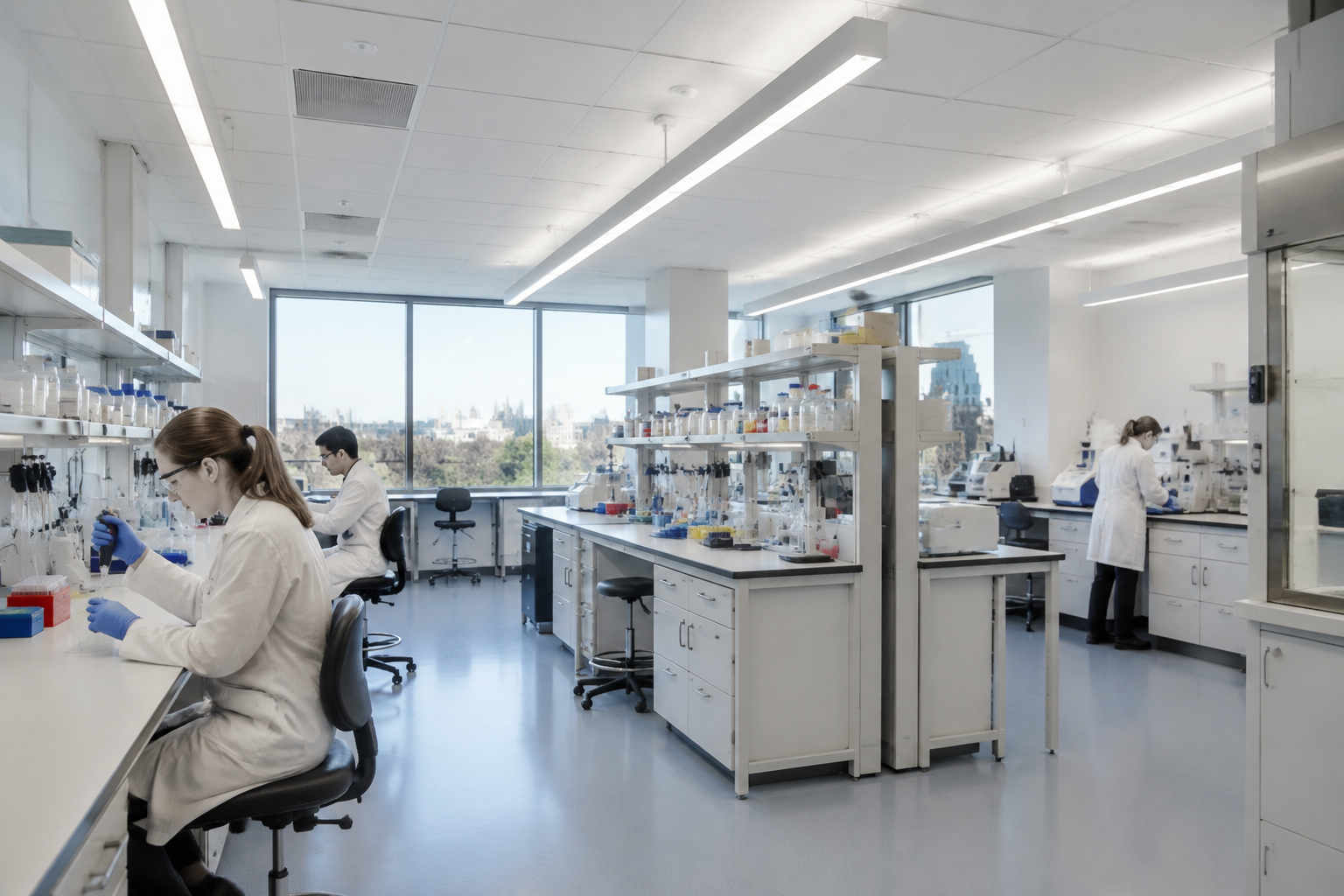 University Laboratory Lighting 2026: UGR<16, 500 lux Guide: Q: What is the ideal lux level for a university research lab?
Sources and Technical References
- EN 12464-1:2021: Light and lighting — Lighting of work places — Part 1: Indoor work places.
- IES RP-7-17: Recommended Practice: Lighting for Industrial Facilities (includes guidance for laboratories).
- WELL Building Standard v2: Light Concept (Features L01-L08).
- IEC 60529: Degrees of protection provided by enclosures (IP Code).
- IEC 62262: Degrees of protection provided by enclosures for electrical equipment against external mechanical impacts (IK Code).
- IES TM-30-18: IES Method for Evaluating Light Source Color Rendition.
- IEC 62386: Digital Addressable Lighting Interface (DALI).
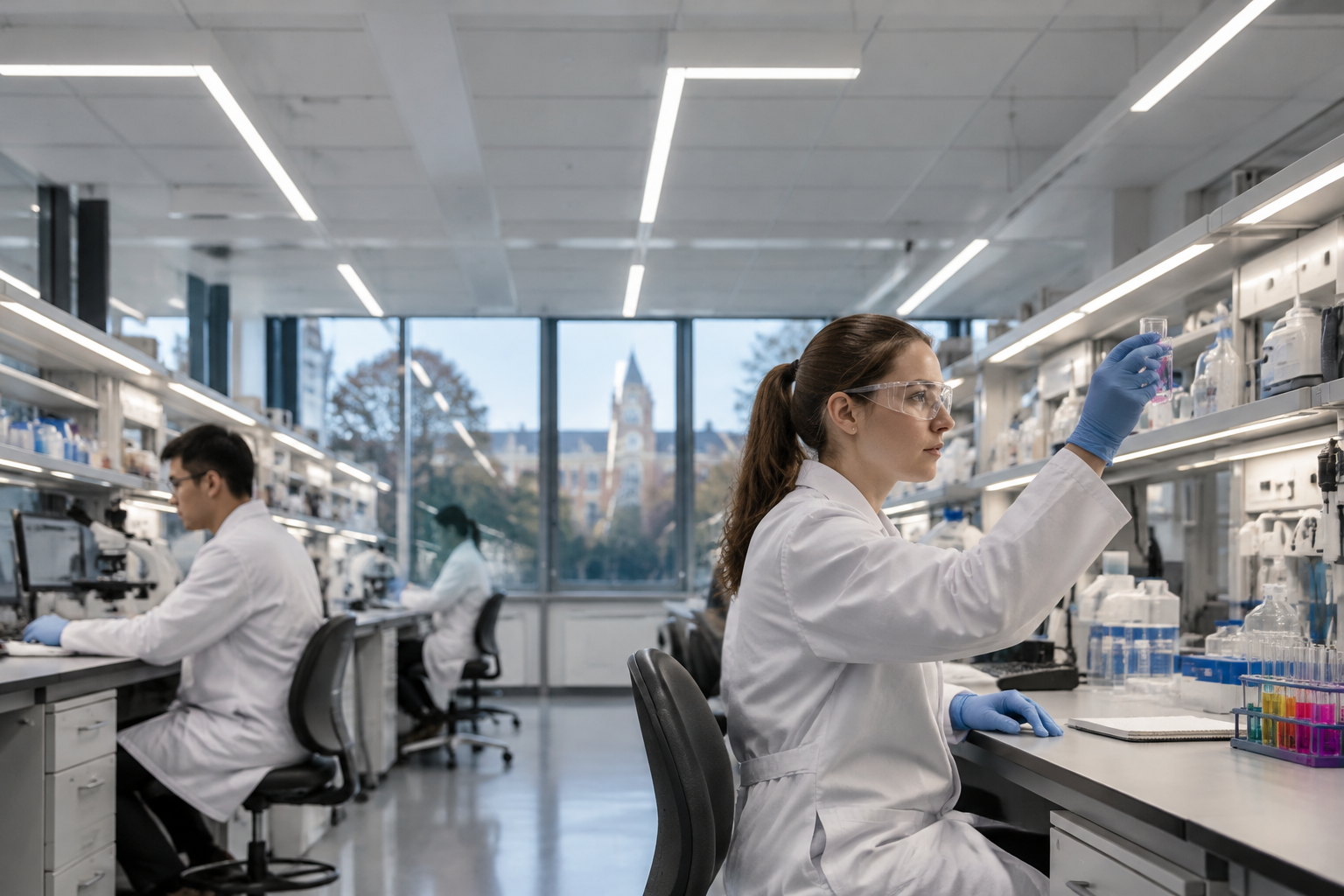 University Laboratory Lighting 2026: UGR<16, 500 lux Guide: Q: What is the difference between CRI and TM-30 for color quality?
Request a Custom Quote
At XHLWX (led-project-light.com), a Custom Indoor LED Lighting Manufacturer based in China, we specialize in developing and producing high-specification luminaires for technical environments like university laboratories. Our engineering team can assist with your project from specification to delivery, providing full DIALux simulation support, custom housing modifications, and seamless integration with control systems like DALI-2 and Casambi. Contact us today to discuss your project requirements and request a custom quote for a compliant, high-performance lighting solution tailored to the unique demands of your research facility.
Need a tailored lighting plan for your project?
Our senior lighting designers reply within 48 hours with a free design proposal & quotation.