
Warehouse High Bay Lighting Design 2026: lm/W & Sensor Guide
Quick answer
Master 2026 warehouse high bay lighting design. This guide covers EN 12464-1 standards, high-efficacy LED luminaire selection (>180 lm/W), sensor controls (DA
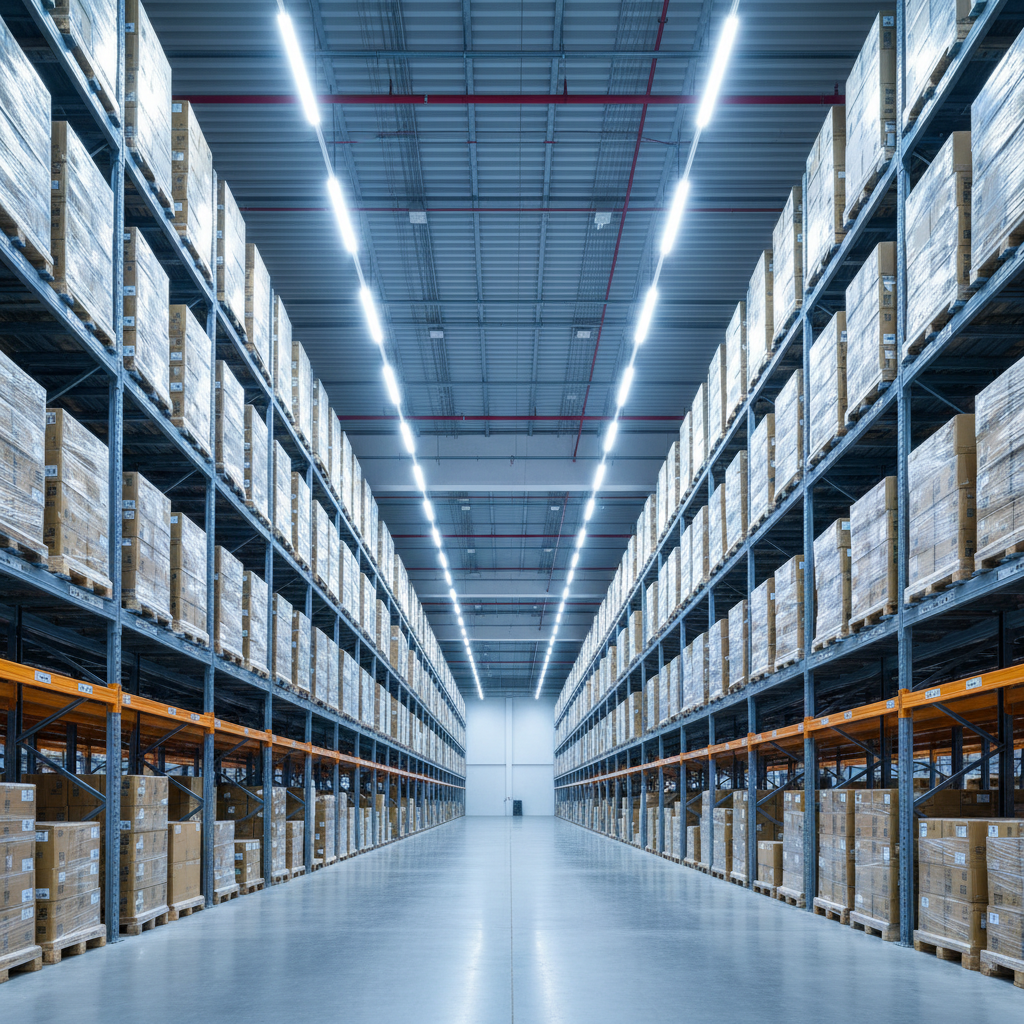
Introduction — the Design Problem in Logistics Spaces
At XHLWX (led-project-light.com), a Custom Indoor LED Lighting Manufacturer based in China, we understand that designing for modern logistics facilities is a complex balance of safety, efficiency, and operational cost. Warehouses, with their high ceilings, narrow racking aisles, and often 24/7 operational schedules, present unique challenges. The goal is no longer just to illuminate the floor, but to deliver high-quality, uniform light onto vertical surfaces, minimize glare for forklift operators, and slash energy consumption through intelligent controls. Migrating from legacy High-Intensity Discharge (HID) lighting to modern LED systems is not merely an upgrade; it is a fundamental redesign of the operational environment to boost productivity and reduce total cost of ownership (TCO).
Lighting Criteria and Standards for Warehouse Applications
Effective warehouse lighting must meet stringent international standards for safety and visual performance. For facilities in the European Union, EN 12464-1:2021 is the primary standard, mandating specific illuminance levels, uniformity, and glare control for different zones. For example, it specifies a maintained average illuminance (Ēm) of at least 150 lux for general racking and gangway areas, and 200 lux for loading bays. In the United States, IES RP-7-17 provides similar recommendations. A critical but often overlooked metric is the Unified Glare Rating (UGR), which must be kept below 25 (UGR ≤ 25) in most industrial settings to ensure visual comfort and safety. Adhering to these standards is not optional; it is essential for regulatory compliance and creating a productive work environment.
| Parameter | Recommended Specification | Governing Standard | Notes |
|---|---|---|---|
| System Efficacy | > 180 lm/W | ErP (EU) 2019/2020 | Design target for new builds. High efficacy directly translates to lower operational expenditure and faster ROI. |
| Optics & Glare | Asymmetric / Oval (30°x70°) | EN 12464-1 | The beam must match aisle geometry to maximize vertical illuminance and minimize light waste. UGR must be ≤ 25. |
| Color Quality | CCT: 4000K–5000K, CRI: Ra > 80 | IES TM-30, WELL v2 | CRI > 80 is crucial for accurate color rendering of labels and safety signage. 4000K is a balanced neutral white. |
| Control Protocol | DALI-2 D4i / Zhaga-D4i | IEC 62386 | Enables individual luminaire addressability, energy monitoring, and seamless integration of sensors for maximum savings. |
| Housing & Chipset | IP65, IK08, Samsung® LEDs | IEC 60529, IEC 62262 | IP65 is vital for dust/moisture protection. IK08 ensures durability against impacts. Premium chips ensure long lifetime. |
| Certification | CE / RoHS / ErP / ISO9001 | EU Directives / ISO | Mandatory for EU market access and demonstrates adherence to quality, safety, and environmental manufacturing standards. |
Luminaire Selection and Optics
Selecting the correct luminaire and beam angle is the most critical decision for aisle lighting. The outdated approach of using round 'UFO' high bays in racking aisles is highly inefficient, casting most of its light on the floor and the tops of racks, leaving the crucial vertical faces poorly lit. Modern logistics facilities demand purpose-built linear high bays with specialized optics. These luminaires precisely control the light distribution to create a rectangular footprint that aligns perfectly with the aisle, maximizing vertical illuminance where it matters most—on the product labels.
| Luminaire Type | Best For | Pros | Cons | Verdict |
|---|---|---|---|---|
| Round (UFO) High Bay | Open areas, cross-aisles | Cost-effective, simple installation, wide beam options (60/90/120°). | Inefficient for aisles; creates 'scalloping' glare and poor vertical illuminance. | Sub-optimal for Racking Aisles. |
| Linear High Bay (Symmetric) | Open production areas, low-mid bays | Excellent uniformity over wide areas, good heat dissipation. | Wastes significant light into the top of racks and ceiling in narrow aisles. | Better, but not ideal for aisles. |
| Linear High Bay (Asymmetric/Oval) | High racking aisles (>8m) | Precisely directs light onto vertical rack faces, maximizes uniformity (Uo), high efficiency. | Higher initial cost, requires careful photometric planning and placement. | The Gold Standard for Aisle Lighting. |
| LED Trunking System | New builds, large-scale facilities | Integrated power/control bus, flexible luminaire placement, clean aesthetics. | Less suitable for retrofitting existing wiring, can be more complex to specify initially. | Excellent for large-scale, flexible deployments. |
How Does Mounting Height Affect High Bay Luminaire Choice?
Mounting height directly dictates the required lumen output and beam angle for effective coverage. As the mounting height increases, the light has further to travel, meaning more powerful luminaires (higher lumen output) are needed to achieve the target lux level on the ground, per the inverse-square law. More importantly, the beam angle must be narrowed to concentrate the light effectively. For example, a warehouse with 8-12 meter ceilings might use a 90° beam, while a distribution center with 15-20 meter ceilings would require a 60° or even a specialized 30° x 70° oval beam to prevent light from spilling and losing intensity.
What Is the Ideal Correlated Color Temperature (CCT) for a Warehouse?
A CCT of 4000K or 5000K is the industry standard for warehouse environments. A 4000K (neutral white) light source provides excellent color rendering and a clean, comfortable visual environment suitable for most tasks. For facilities operating 24/7, a 5000K (cool white) source can enhance alertness and perceived brightness, potentially improving productivity during night shifts. CCTs below 4000K can appear yellow and dim, while CCTs above 5700K can feel harsh and clinical, contributing to eye strain and glare. The final choice often depends on operational hours and corporate wellness standards like the WELL v2 standard.
Why Is Vertical Illuminance Crucial in Racking Aisles?
High vertical illuminance ensures workers can accurately read labels and identify products on shelves from top to bottom. In a racking aisle, the primary visual task is not on the floor but on the vertical face of the rack. Inadequate vertical light leads to picking errors, reduced productivity, and increased risk of accidents as operators strain to read information. Standards like DIN EN 12464-1 recognize this by specifying illuminance on vertical surfaces. This is precisely why asymmetric linear high bays, which direct light sideways and downwards, are vastly superior to round high bays for this application.
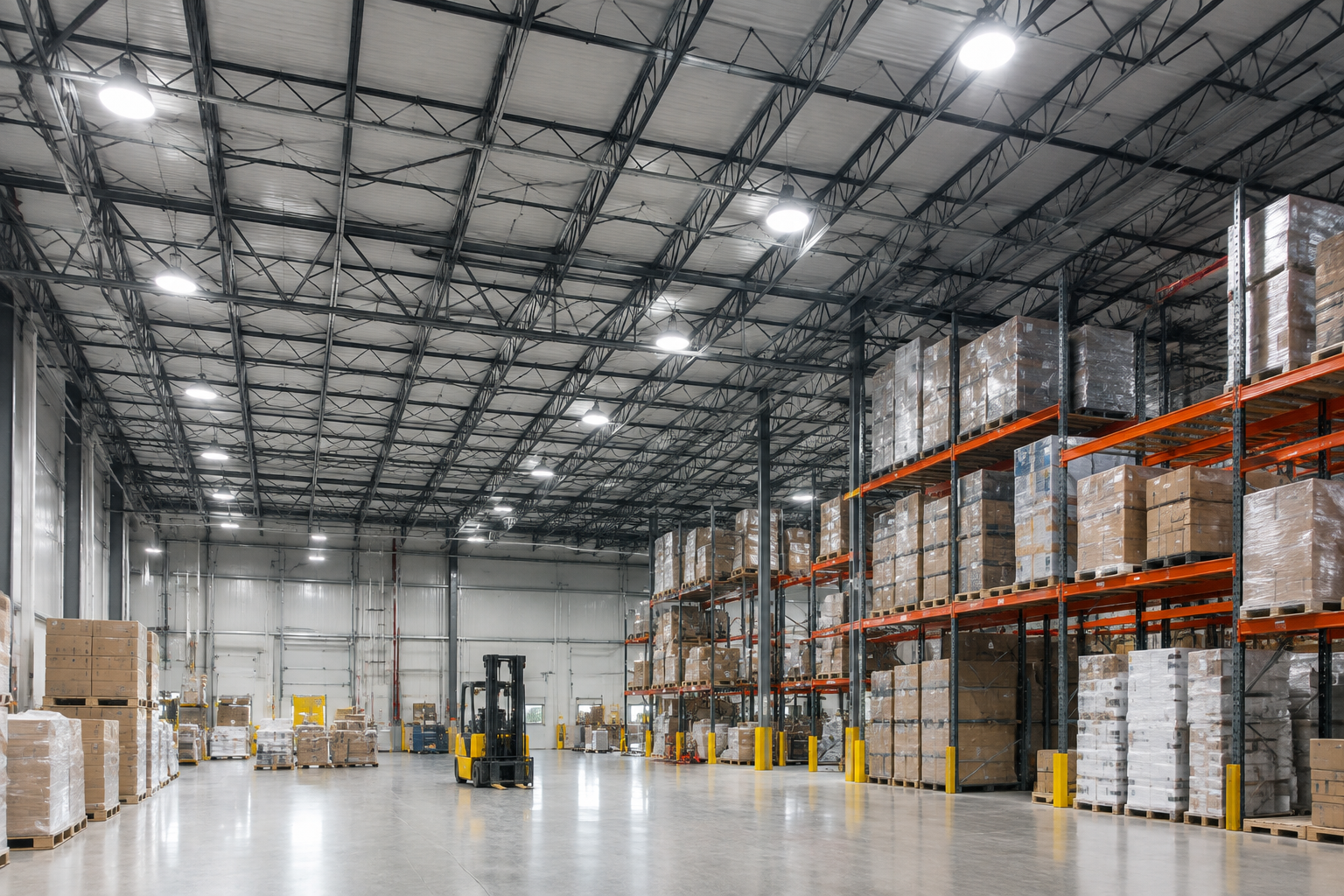 Warehouse High Bay Lighting Design 2026: lm/W & Sensor Guide: How does mounting height affect high bay luminaire choice?
Controls, Energy, and Commissioning
Intelligent lighting controls can deliver energy savings exceeding 70% in typical warehouse applications. The intermittent and zonal nature of warehouse activity makes it a perfect candidate for dynamic control. A 'dumb' lighting system running at 100% capacity in an empty aisle is a massive source of wasted energy. Modern control strategies tied to DALI-2 or wireless systems like Casambi transform lighting into a smart, responsive network.
Key control strategies include:
-
Presence Sensing: Using integrated microwave or PIR sensors to activate or increase light levels only when an aisle is occupied. Microwave sensors are often preferred in high-bay applications for their superior sensitivity over long distances and ability to detect motion around minor obstructions.
-
Daylight Harvesting: In facilities with skylights or large windows, photosensors can automatically dim luminaires when sufficient natural light is available, saving significant energy without any impact on operations., 80% output to achieve 200 lux).
This saves energy from day one and extends the life of the LEDs.
DALI-2 (Digital Addressable Lighting Interface) is the premier wired control standard, allowing each luminaire to be individually addressed, controlled, and monitored. The inclusion of D4i, a DALI-2 extension for intra-luminaire components, means that fixtures can report back their own energy usage, temperature, and operating hours, enabling true preventative maintenance and data-driven optimization.
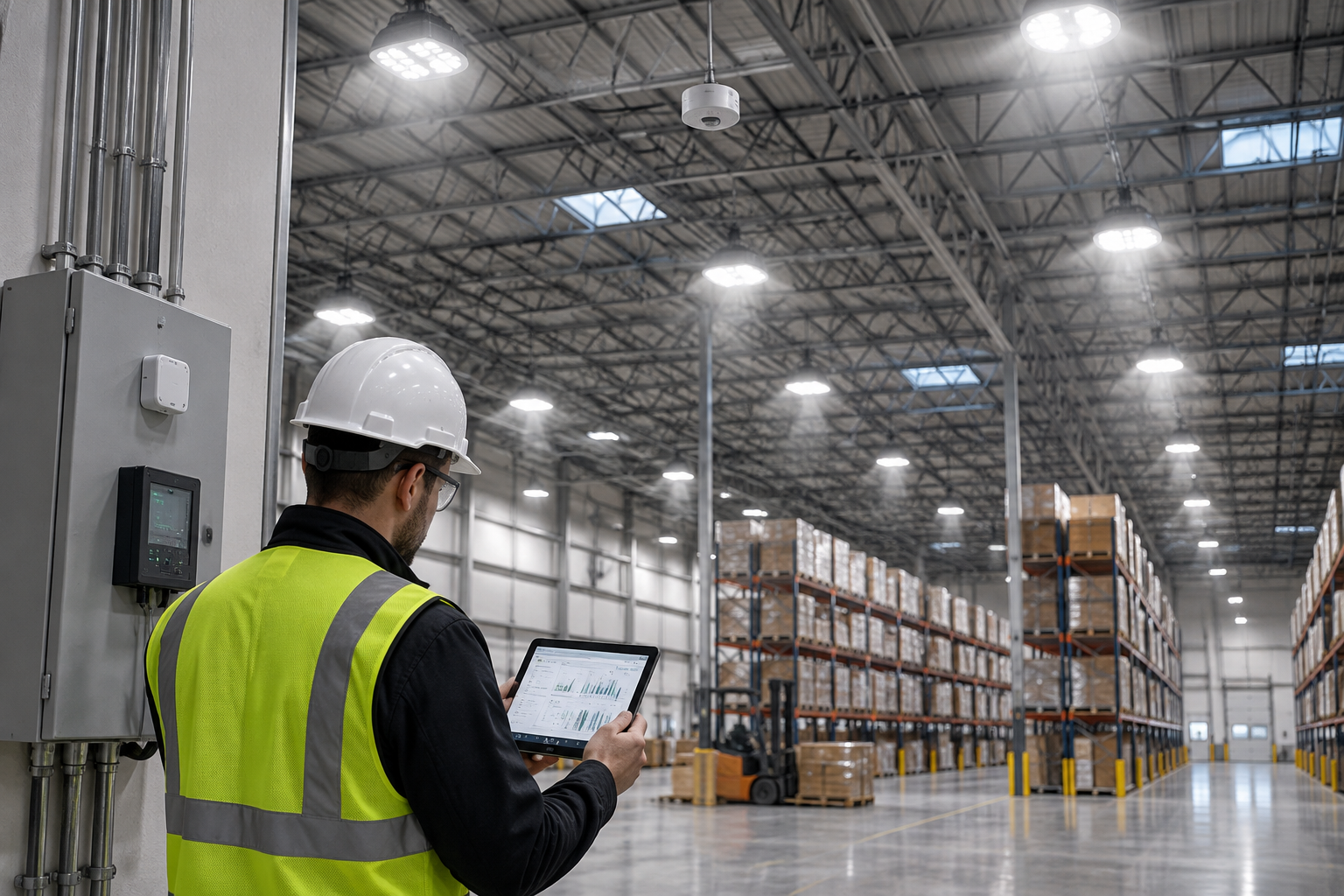 Warehouse High Bay Lighting Design 2026: lm/W & Sensor Guide: Controls, Energy, and Commissioning
Photometric Files & Compliance
Professional lighting design relies on standardized photometric files and simulation software for validation. A luminaire's performance is captured in a photometric data file, typically in IES (Illuminating Engineering Society) format for North America or LDT format for Europe. These files are the digital DNA of a light fixture, describing exactly how it distributes light in three-dimensional space.
At XHLWX, our lighting design process is built on this data. We use software like DIALux to build a precise 3D model of the client's warehouse, including racking dimensions, surface reflectances, and ceiling heights.
By importing the IES or LDT files for our proposed luminaires, we can run detailed simulations to predict the exact lighting performance. This simulation generates reports showing illuminance levels, uniformity ratios, and UGR values, proving that the design will meet or exceed the requirements of EN 12464-1 before a single fixture is ordered.
This process eliminates guesswork and ensures full compliance with all relevant European market directives, including CE (safety), RoHS (hazardous substances), and ErP (energy efficiency).
Frequently Asked Questions
Q: How Many High Bay Lights Do I Need for My Warehouse?
The quantity depends on ceiling height, required lux level (e.g., 150 lux), and luminaire output. A professional DIALux simulation using photometric files is the only accurate method. As a rough guide for open areas, a 150W LED high bay with 180 lm/W efficacy and a 90° beam might cover a 10m x 10m area when mounted at 10 meters to achieve 200 lux.
Q: What Is the Benefit of a High CRI (>80) in a Warehouse?
A high Color Rendering Index (CRI) of over 80 ensures colors are rendered accurately. This is critical for correctly identifying color-coded labels, packaging, and safety warnings, reducing picking errors by up to 25% in some studies. It helps workers instantly distinguish between red and orange warning signs, a task that is difficult under the poor color rendering of legacy HPS lighting.
Q: Are Wireless Controls Like Casambi Reliable for a Large Warehouse?
Yes, modern wireless mesh systems like Casambi are extremely reliable for industrial applications. Each luminaire or sensor acts as a node, relaying the signal to extend the network range automatically. This self-healing mesh topology ensures no single point of failure, making it a robust and cost-effective solution for large facilities, often reducing installation labor costs by over 30% compared to wired DALI systems.
Q: What Does an IP65 Rating Mean for a High Bay Light?
An IP65 rating indicates the luminaire is fully protected against dust ingress (the '6') and can withstand low-pressure water jets from any direction (the '5'). This is essential in warehouses where dust from cardboard and pallets is common, or where cleaning may occur. This protection ensures the long-term reliability of the electronics and optics, safeguarding a design lifetime of over 100,000 hours (L80B10).
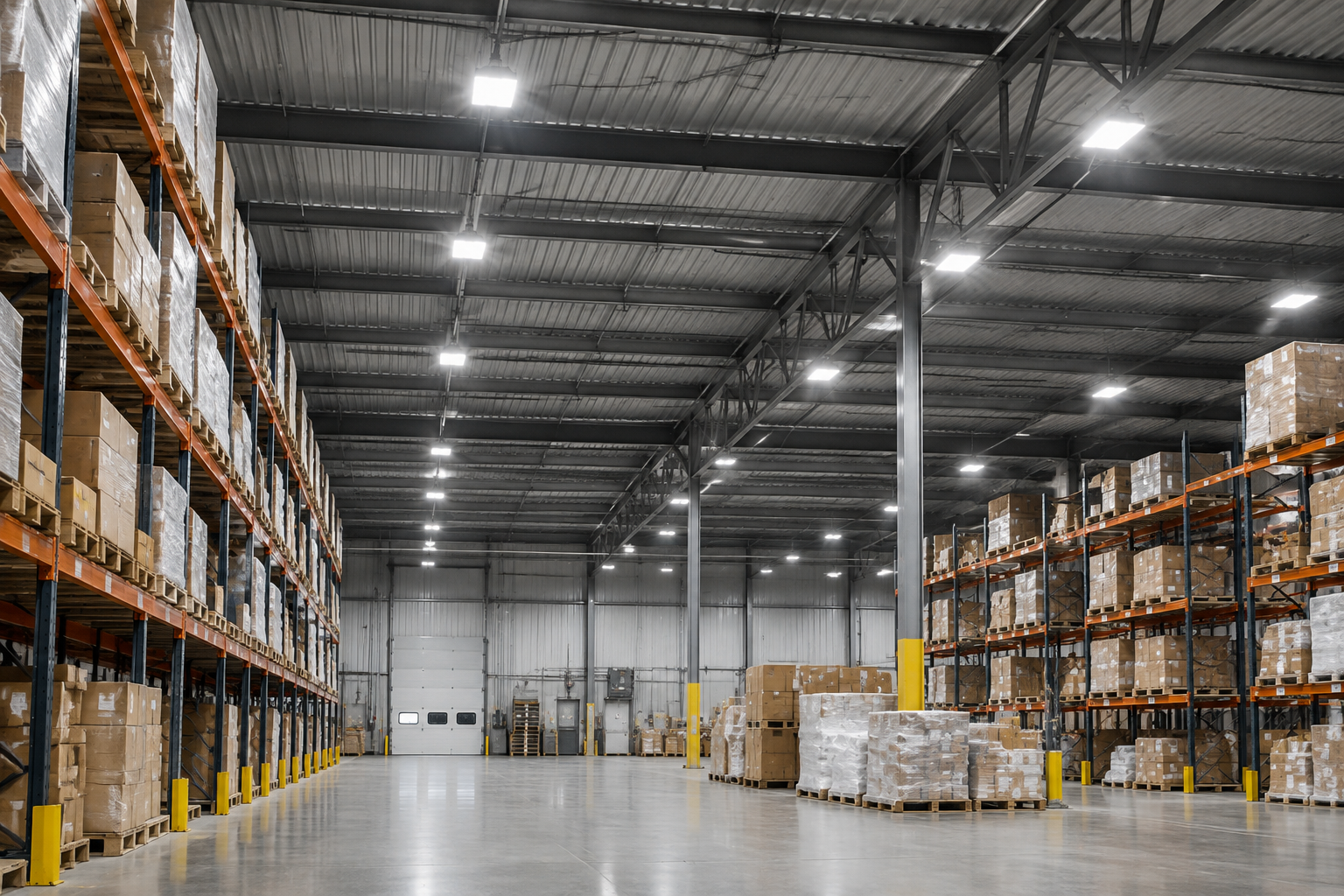 Warehouse High Bay Lighting Design 2026: lm/W & Sensor Guide: Q: How many high bay lights do I need for my warehouse?
Sources and Technical References
- CIE S 025/E:2015: Test Method for LED Lamps, LED Luminaires and LED Modules
- EN 12464-1:2021: Light and lighting — Lighting of work places — Part 1: Indoor work places
- IES RP-7-17: Recommended Practice: Lighting for Industrial Facilities
- IES TM-30-18: IES Method for Evaluating Light Source Color Rendition
- WELL Building Standard v2: Light Concept
- IEC 62386: Digital Addressable Lighting Interface (DALI)
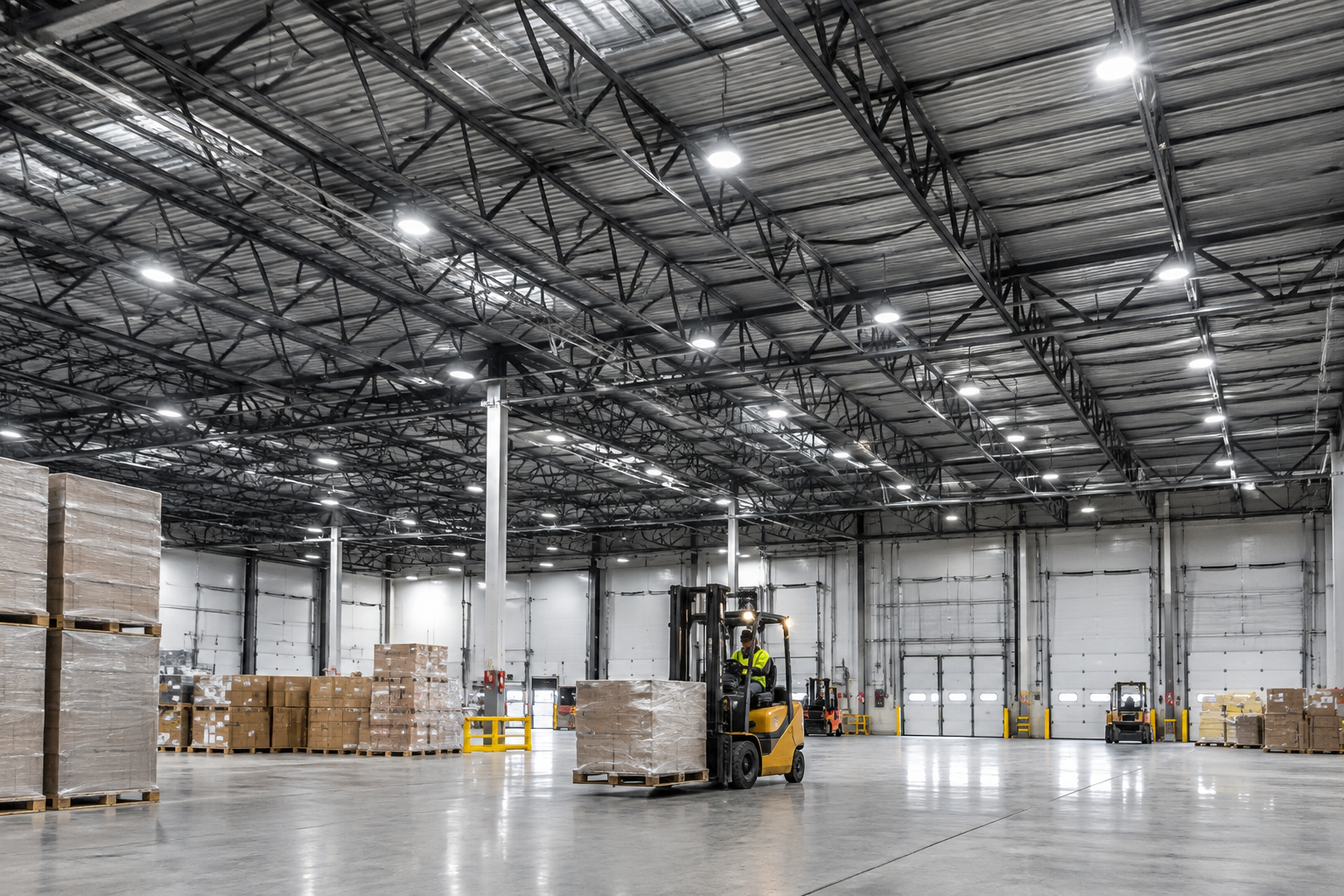 Warehouse High Bay Lighting Design 2026: lm/W & Sensor Guide: Q: What does an IP65 rating mean for a high bay light?
Request a Custom Quote
Upgrading your warehouse lighting is one of the highest-return investments you can make in your facility's safety, productivity, and energy efficiency. A professional design based on photometric simulation is the key to unlocking maximum value. For a data-driven lighting solution tailored to your facility's unique geometry and operational needs, consult our experts. At XHLWX (led-project-light.com), a Custom Indoor LED Lighting Manufacturer based in China, we provide comprehensive DIALux simulation services and specification-grade luminaires to clients across the EU, US, and Middle East.
Need a tailored lighting plan for your project?
Our senior lighting designers reply within 48 hours with a free design proposal & quotation.