
Wine Cellar & Bar Lighting 2026: UV-Free Warm-Dim Guide
Quick answer
Expert guide to wine cellar and bar lighting design. Learn to specify UV-free, low-heat LED solutions with warm-dim technology for bottle preservation and amb
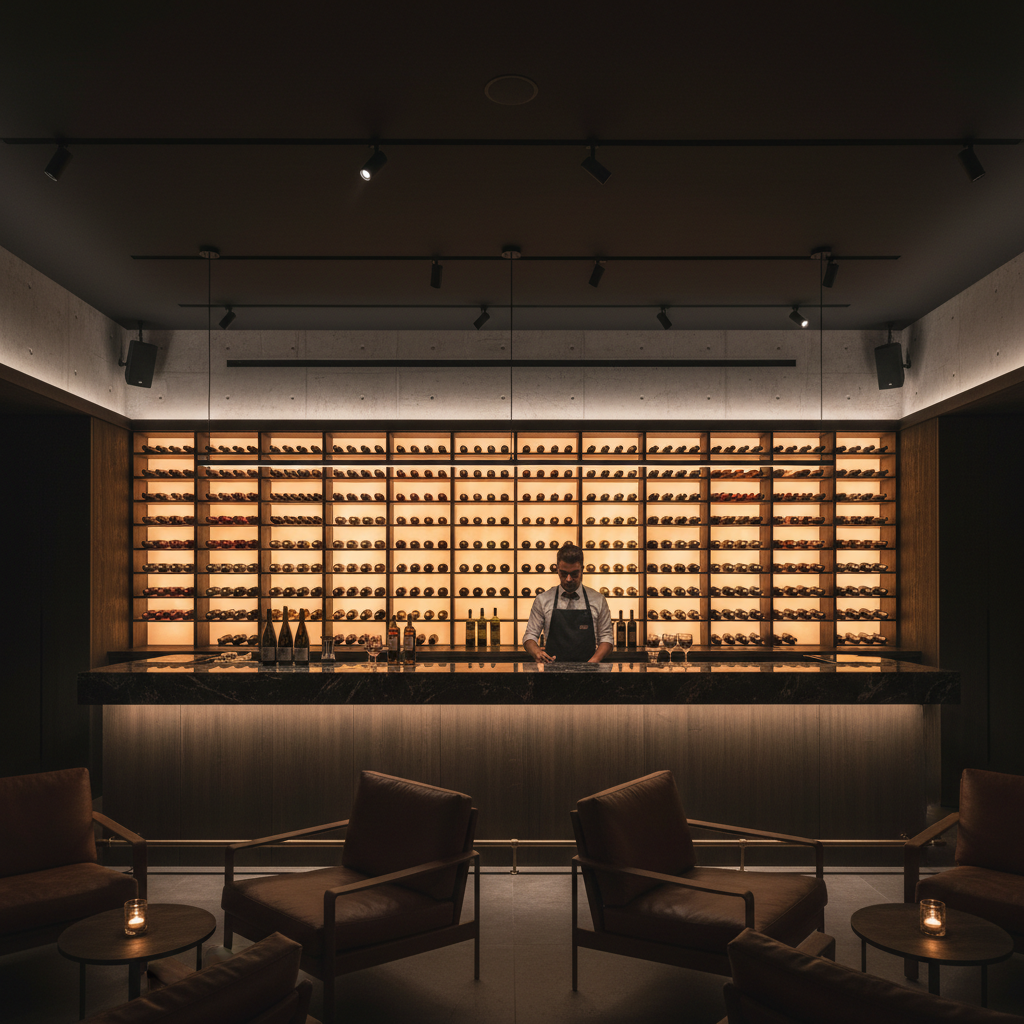
Introduction — the Design Problem in Wine Cellars & Bars
com), a Custom Indoor LED Lighting Manufacturer based in China, we understand that designing lighting for a wine cellar and bar requires balancing two conflicting goals: the archival preservation of a valuable wine collection and the creation of a luxurious, welcoming atmosphere for guests. The core challenge lies in protecting light-sensitive wine from degradation caused by ultraviolet (UV) radiation and thermal stress, while simultaneously providing high-quality, visually comfortable, and emotionally resonant illumination.
Traditional light sources like halogen are unacceptable due to their high UV and infrared (heat) output. Modern, specialized LED solutions are the only viable path forward, offering precise control over spectrum, intensity, and distribution to satisfy both the wine and the guests.
Lighting Criteria and Standards for This Application
Adhering to specific lighting criteria is crucial for both wine safety and visual comfort. The primary goal is preservation.
Wine is susceptible to "light-struck" faults when exposed to radiation, particularly wavelengths below 500nm, which includes all UV (<400nm) and significant blue light. This exposure can damage the wine's phenolic compounds, altering its flavor and aroma.
Consequently, all lighting within the cellar, especially that which directly or indirectly illuminates the bottles, must be 100% UV-free and generate minimal radiant and conducted heat. Recommended illuminance levels on stored bottles should be extremely low, ideally below 50 lux.
, 200-300 lux for bars) and glare (UGR < 19) to ensure patron comfort. Color quality is paramount for rendering the rich tones of wine labels, wood finishes, and food, demanding a Color Rendering Index (CRI) above 95 and favorable TM-30 metrics.
| Parameter | Recommended Specification | Standard / Protocol | Notes |
|---|---|---|---|
| CCT & Color Fidelity | 2200K-3000K, Warm-Dim 3000K-1800K, CRI >95, R9 >90, TM-30 Rf>92, Rg>100 | WELL v2 (Feature L04) | Ultra-warm CCT mimics candlelight and minimizes blue light, which can affect wine. High R9 is vital for rendering red tones in labels and wood finishes. |
| UV & IR Output | Zero UV output (<400nm), minimal conducted heat via thermally optimized fixtures | Internal QA / IES TM-21 | Standard LEDs have negligible UV, but must be verified. Low-heat design is critical; specify remote drivers or thermally managed fixtures. |
| Optical Control | Narrow beams (10°-15°) for accents, Asymmetric for wall grazing, UGR <19 (bar area) | EN 12464-1 / DIN EN 12464-1 | Precise optics prevent light spill onto sensitive bottles while highlighting textures. Low UGR is essential for guest comfort at the bar seating. |
| Dimming & Control | DALI-2 DT8 (Warm-Dim) or Casambi Wireless | DALI-2 IEC 62386, Bluetooth Mesh | DALI-2 offers robust scene control and diagnostics. Casambi provides flexible wireless control ideal for retrofits or complex layouts. |
| Chip & Driver | Osram, Samsung, or Bridgelux COB; Tridonic or Mean Well Driver | Manufacturer Spec | Using premium components ensures long-term color consistency, reliability, and dimming performance, backed by a 5-year warranty. |
| Certifications & Housing | CE, RoHS, ErP; IP20 (min), IK03 | EU/Global Standards | Certifications are mandatory for EU/US/ME market access. IP20 is suitable for dry indoor use; higher ratings may be needed near sinks. |
Luminaire Selection and Optics
The right luminaire combines precise optics with minimal physical intrusion to enhance the architecture. The lighting design for a wine cellar and bar should be layered, using different fixture types to perform distinct functions: creating ambiance, providing task lighting, and accentuating architectural features or the wine collection itself.
The key is to hide the light source whenever possible, letting the light's effect take center stage. This means integrating light into coves, millwork, and shelving, and using deeply regressed, low-glare luminaires for any direct downlighting.
The choice of optics is as important as the luminaire; narrow beams create drama, while asymmetric lenses provide smooth, even washes on bottle walls.
| Luminaire Type | Application | Pros | Cons | Verdict |
|---|---|---|---|---|
| Miniature Adjustable Spotlight (e.g., XHLWX-SDL-Series) | Accent lighting for specific bottles, art, or architectural details. | Highly precise beam control (10°-38°); low glare with snoots/louvers; excellent for creating drama. | Can create harsh shadows or "scalloping" if not spaced correctly; requires careful aiming. | Essential for creating focal points and layers of light. Use sparingly for maximum impact on non-sensitive targets or with very low output on bottles. |
| Concealed Linear LED Profile (e.g., XHLWX-LNR-Series) | Integrated into wine racks, shelving, coves, and toe-kicks for indirect, seamless light. | Provides continuous, even illumination; can be cut to custom lengths; available in asymmetric profiles. | Requires detailed millwork integration; can be visually distracting if the LED diodes are directly visible. | The Workhorse for ambient and architectural lighting. Specify a high-density chip and diffused cover for a dot-free, high-end appearance. |
| Warm-Dim Downlight (e.g., XHLWX-DDL-Series) | General illumination over tasting tables, bar counters, and circulation paths. | Mimics halogen dimming curve (e.g., 3000K to 1800K), creating an intimate atmosphere at lower levels. | Higher cost than single-CCT fixtures; requires compatible dimming system (DALI-2 DT8, 0-10V). | Highly Recommended for social areas. The warm-dim effect is key to transitioning a space from functional tasting to relaxed socializing. |
| Decorative Pendants | Feature lighting over a bar or central tasting table. | Acts as a visual centerpiece; contributes to the overall interior design aesthetic. | Often provides poor functional light; can be a major source of glare if the bulb is exposed. | Situational. Select carefully, ensuring the light source is shielded, dimmable, and uses a high-quality, low-UV LED lamp with excellent color rendering. |
How Do You Light a Wine Bottle Wall Without Damaging the Wine?
Lighting a bottle wall safely requires using indirect, low-intensity, UV-free LED sources with precise optical control. The best practice is to graze the wall with light from a concealed linear LED profile with an asymmetric lens, mounted either above or below the wine racks.
This technique illuminates the labels and bottle forms without directing high-intensity light into the wine itself. The design target illuminance on the bottles should remain under 50 lux.
Any accent spotlights must be used with extreme care, with very narrow beams and low output, aimed at the rack structure rather than the glass.
What Is Warm-dim Technology and Why Is It Ideal for Bars?
Warm-dim technology automatically reduces a light's color temperature as it dims, mimicking the warm glow of candlelight or an incandescent bulb., 1800K) when dimmed.
This is perfect for a bar, allowing for brighter, more functional light during setup and cleaning, which can then be smoothly transitioned to a cozy, inviting atmosphere for evening service. This effect is most reliably achieved using luminaires with DALI-2 DT8 control.
Which Beam Angle Is Best for Wine Cellar Accent Lighting?
A very narrow beam angle, typically between 10° and 15°, is best for wine cellar accent lighting. This tight beam creates a dramatic "punch" of light on a single bottle, a label, or a small display, minimizing light spill onto adjacent bottles and surfaces.
This high-contrast approach, known as "painting with light," builds visual interest and a sense of drama without raising the overall ambient light level. This protects the wider collection from unnecessary light exposure.
For even greater precision, accessories like honeycomb louvers or snoots can be fitted to spotlights to further eliminate stray light.
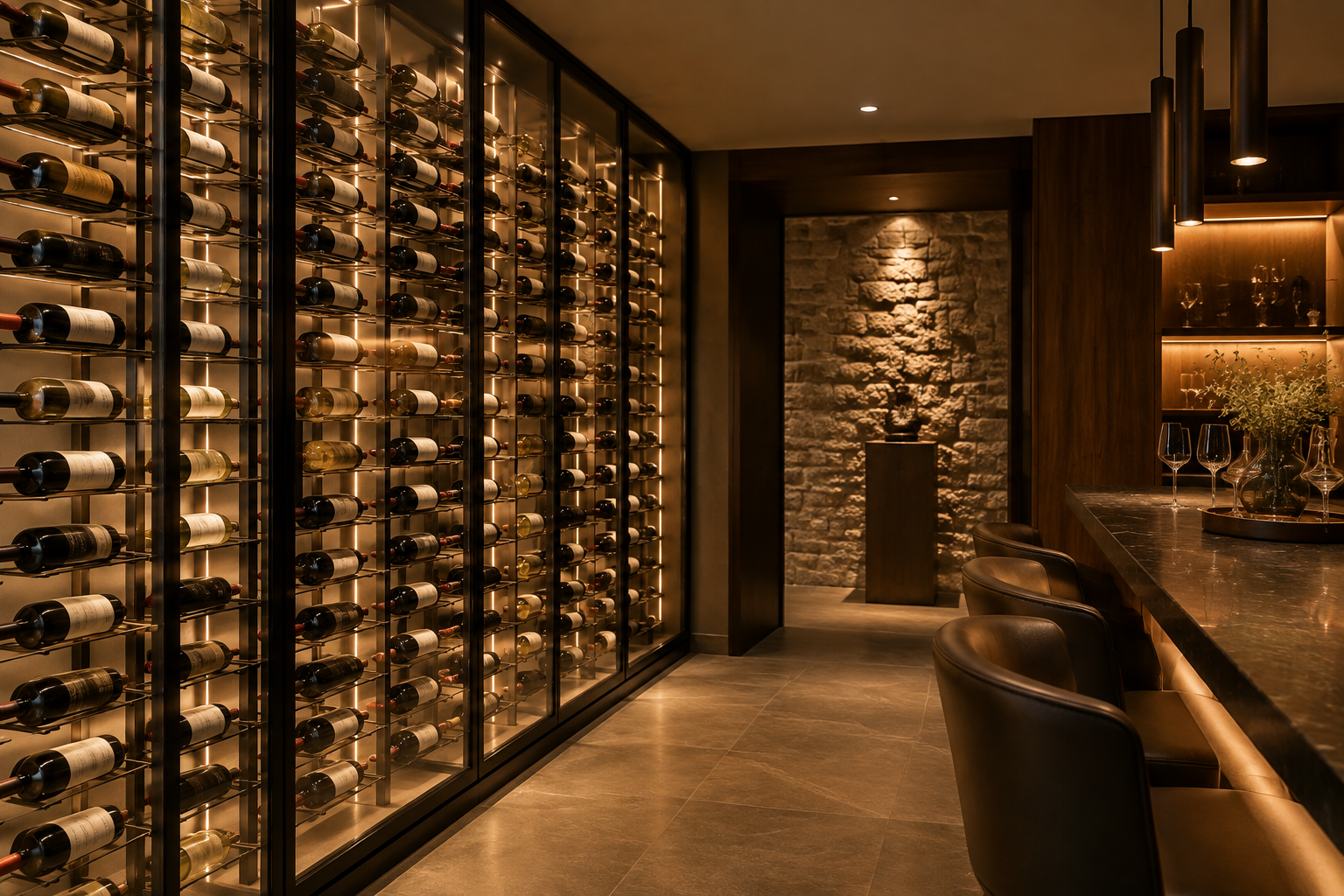 Wine Cellar & Bar Lighting 2026: UV-Free Warm-Dim Guide: How do you light a wine bottle wall without damaging the wine?
Controls, Energy, and Commissioning (DALI-2 / Casambi / Sensors)
An advanced lighting control system is non-negotiable for delivering ambiance, energy savings, and operational flexibility. For a high-end installation, a DALI-2 (Digital Addressable Lighting Interface) system is the gold standard.
It allows for individual control of every luminaire, enabling the creation of multiple, precisely programmed scenes—for example, a bright "Cleaning" scene, a medium "Tasting" scene, and a very low, warm "Evening Service" scene. DALI-2 also supports DT8, the protocol for controlling warm-dim and tunable white fixtures seamlessly.
In situations where running new control wiring is difficult, such as in a historic cellar retrofit, a wireless system like Casambi (Bluetooth Mesh) offers incredible flexibility. Finally, occupancy sensors are critical in storage areas to ensure lights are on only when a person is present, drastically reducing the wine's total light exposure over its lifetime and saving energy.
Photometric Files & Compliance (IES / LDT / DIALux / CE / RoHS / ErP)
Verified photometric data and compliance certifications are essential for predictable results and market access. Professional lighting design is not guesswork.
At XHLWX, we provide IES and LDT photometric files for all our architectural luminaires. These data files are the digital DNA of a fixture, describing exactly how it distributes light.
Lighting designers import these files into simulation software like DIALux to build a virtual 3D model of the wine cellar and bar. This simulation allows them to verify illuminance levels on bottles and bar tops, check for compliance with UGR targets from standards like EN 12464-1, and visualize the interplay of light and shadow before a single fixture is ordered.
Furthermore, all products for the EU market must carry CE (safety), RoHS (restriction of hazardous substances), and ErP (energy-related products) compliance markings. Our ISO9001-certified manufacturing process ensures these standards are met with every shipment.
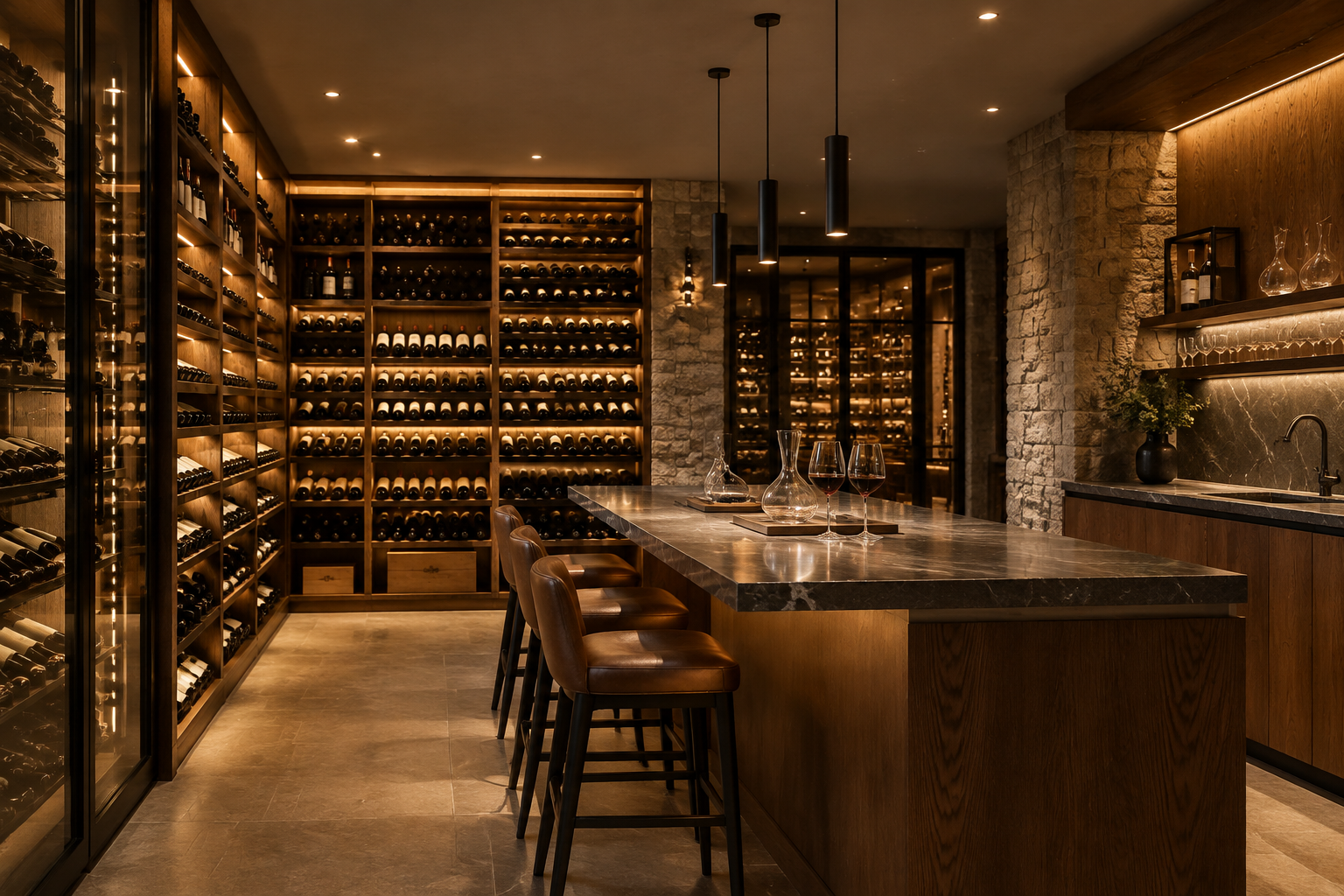 Wine Cellar & Bar Lighting 2026: UV-Free Warm-Dim Guide: Photometric Files & Compliance (IES / LDT / DIALux / CE / RoHS / ErP)
Frequently Asked Questions
Q: How Much Light Is Safe for Long-term Wine Storage?
For long-term archival storage, illuminance should be kept below 50 lux on the bottles. This minimizes the risk of "light-struck" faults. Always use 100% UV-free LED sources and limit the duration of exposure by using occupancy sensors. For short-term display in a bar setting, slightly higher levels are acceptable if exposure is temporary.
Q: Can I Use Standard LED Strip Lights for My Wine Rack?
It is not recommended for high-end applications. Standard strips often have poor color rendering (CRI <90), lack precise optical control, and may not be certified for long-term color stability. For best results, use architectural-grade linear profiles with a CRI of 95+, a high R9 value (>90), a diffused cover for a dot-free look, and proper thermal management.
Q: What's the Difference Between CRI and TM-30 for Wine Cellar Lighting?
CRI (Color Rendering Index) primarily measures color fidelity on a scale to 100. TM-30 is more comprehensive, providing a fidelity score (Rf) and a gamut score (Rg) that indicates color saturation. For rendering rich wine labels and wood tones, look for CRI >95, a TM-30 Rf >92, and an Rg >100 to ensure colors are both accurate and vibrant.
Q: Does a DALI-2 System Cost More Than a 0-10V System?
Initially, a DALI-2 system may have a higher component cost due to intelligent drivers and controllers. However, it often reduces wiring complexity and labor costs, especially for multi-scene control. Its total cost of ownership is frequently lower due to superior flexibility, energy management, and diagnostics over a basic 0-10V setup.
Sources and Technical References
- EN 12464-1:2021: Light and lighting — Lighting of work places — Part 1: Indoor work places.
- The IES Lighting Handbook, 10th Edition: Reference and Application.
- The WELL Building Standard v2: Feature L04 Electric Light Quality.
- DALI Alliance (IEC 62386): Digital Addressable Lighting Interface technical specifications.
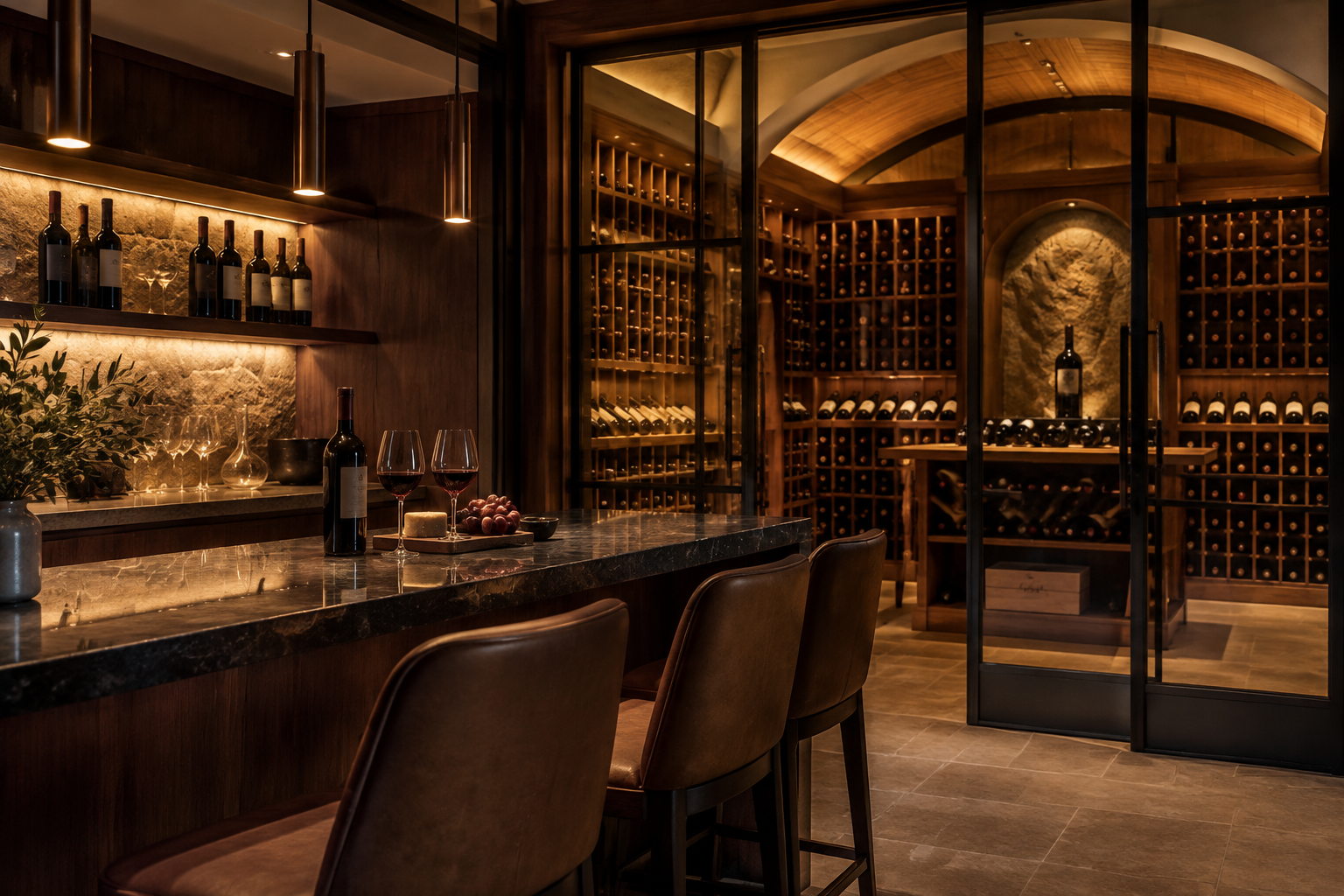 Wine Cellar & Bar Lighting 2026: UV-Free Warm-Dim Guide: Q: What's the difference between CRI and TM-30 for wine cellar lighting?
Request a Custom Quote
Preserving a priceless collection while delighting patrons is a complex lighting challenge that demands specialist solutions. Standard, off-the-shelf products often fail to deliver the required performance in terms of spectral safety, optical precision, or control integration.
com), a Custom Indoor LED Lighting Manufacturer based in China, we specialize in creating tailored LED solutions for demanding hospitality environments like wine cellars and bars. Our engineering team can modify CCT, CRI, optics, and drivers to meet your exact project specifications.
Contact us to discuss your project and receive a no-obligation quote and photometric design support.
Need a tailored lighting plan for your project?
Our senior lighting designers reply within 48 hours with a free design proposal & quotation.